Просмотр новости
Найдите то, что Вас интересует
 Спутники
 РН
РН SpaceX
 Роскосмос
 NASA
NASA
СпутникиРНSpaceXРоскосмосNASAIn a video that has garnered over 49 million views on Instagram, "doctor" Huang explains how to "dissolve" kidney stones with coconut water, olive oil, and lemon juice in just three days. Needless to say, the remedy is fake, but this doctor doesn't exist either. His videos are generated with artificial intelligence, just like those from 25 other Instagram accounts that call themselves “doctor” or “dr.”and that usually appear wearing a white coat and a stethoscope, providing medical advice. The accounts have amassed over 3.6 million followers as of July 2026, even though 96% of them are less than a year old.In Spain article 403 of the Penal Code punishes those who perform "acts proper" to a profession such as the medical one without holding the corresponding degree, and it punishes more severely those who publicly claim to be doctors without possessing the qualifications. Furthermore, the Supreme Court has assessed in its rulings that some convicted of this crime had taken advantage of the deception by creating "the widespread belief" that they were doctors through a "staged act". This is illegal in real life, and also illegal online.Among the accounts identified by Maldita.es is common to see them in a consultation room, next to a patient on a stretcher, or carrying items traditionally associated with healthcare professionals.The AI-generated doctor featured in the videos of the Felipe Nutrition account, for example, wears a stethoscope in his profile picture and sometimes a white coat and sterile gloves. The first line of his Instagram bio is "cardiology," and his advice in Spanish has over 650,000 followers.<img src="https://public.flourish.studio/visualisation/29760144/thumbnail" width="100%" alt="cards visualization" />64% of these “doctors” sell products on their Instagram profileIn his account description, Felipe Nutrition includes links to his "favorite remedy," which is sold on Amazon. This is the same thing that other AI-generated profiles like Dr. Kendrick Harris or Dr. Marcus Wolfe, but in this case what they sell is "Yerba Magic", a product described as a "super instant powder drink" that provides "clean energy, mental clarity, and gut health." The product is promoted by several of these accounts (20%) but it is by no means the only thing they sell."Doctor Salori”, for example, promotes to his more than 700,000 followers a "superfood" of "bee bread formula for energy, immunity and vitality support”, whose purported benefits for the immune system are not supported by scientific evidence. On Amazon's website, almost all products advertised by these accounts carry a warning which says they have not been evaluated by health authorities and that they "do not intend to diagnose, treat, cure, or prevent any disease or health condition”.Legal disclaimer Amazon uses of the productsThe vast majority of products promoted by the accounts are different types of food supplements, although some also promote their own "advice" books and specific products such as serums against baldness.
Social Media doesn't care. We do. Help us fight their indifference.
DONATE
What does Instagram do? Some accounts even show Meta’s blue verification badgePracticing medicine without a license is a crime in Spain, as is advertising products "with a purported health purpose (...) that claim to provide testimonies from healthcare professionals”. Additionally, Instagram has been designated as a “very large online platform” in the European Union, which means it has a legal obligation to have effective measures in place to mitigate systemic risks such as the dissemination of illegal content on throughout its service, or the real or foreseeable negative effects it might have on the protection of health or consumer rights.If that weren't enough, Meta's own rules for its platforms, including Instagram, state that Instagram will restrict accounts that make a “deceptive representation of identity to deceive or confuse”. That rule doesn't seem to be enforced, since three of the accounts we monitored even display the blue check that should signify that the real identity of the users has been verified. In Maldita.es we have already investigated how Meta verified accounts that do not belong to the people they claim to represent and are used for scams and other deceptions. In late 2025, the European Commission imposed a fine of 120 million euros to X for not complying with the Digital Services Regulation. Specifically, for the misleading design of its "blue checks". The investigation concluded that X did not meaningfully verify who was behind each account that obtained the insignia, even through paid subscriptions.The blue verification badge is not the only strategic use that the 25 accounts have made of the platform's resources. Their reach is impossible to achieve without the amplification offered by the platform through its recommendation algorithms. Several have a number of views more than 200 times greater than their number of followers. They also make continuous calls for interaction, offering rewards to users who comment on their videos. That is a common technique to get the algorithms to provide more visibility.If the platform wanted to design an effective risk reduction strategy for this type of phenomenon, there would be no shortage of places to start: perhaps special care should be taken with usernames that have formal elements such as “doctor” or “dr.”, or with avatars that display elements associated with health professionals such as stethoscopes and white robes. Controls could also be improved over accounts that advertise through links to third-party platforms that issue warnings about products saying they have not undergone health checks and that “they do not intend to diagnose, treat, cure, or prevent any disease or health condition.”The accounts we tracked in this part of the investigation share many of these indicators and others that platforms could easily detect. They all deal with a particularly sensitive topic like health and constantly publish AI-generated content. Also, although 96% of the 25 accounts analyzed are less than a year old, 44% have already changed their name at least once, and the content some others publish make it impossible for them to belong to a real doctor.The “Dr. Marlon Campbell” account changing its appearance over the course of six monthsThe account now belonging to “Dr. Marlon Campbell” promotes a brand of dietary supplements, began by posting videos featuring a lemon dressed in a white coat and surgical scrubs. It then transitioned to a doctor with Asian features and is now an American with African American features. Information published by Meta reveals that the account has changed its name three times since January, but Instagram doesn't allow users to see the specific names it used before.
En corto:
We tracked 25 Instagram accounts that identify themselves as doctors and give health advice, but are actually AI-generated personas.
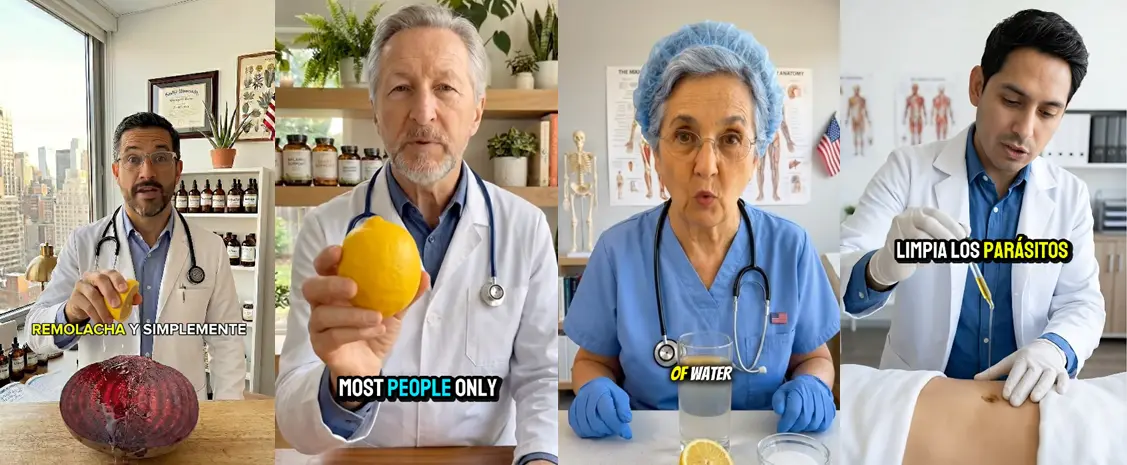
In a video that has garnered over 49 million views on Instagram, "doctor" Huang explains how to "dissolve" kidney stones with coconut water, olive oil, and lemon juice in just three days. Needless to say, the remedy is fake, but this doctor doesn't exist either. His videos are generated with artificial intelligence, just like those from 25 other Instagram accounts that call themselves “doctor” or “dr.”and that usually appear wearing a white coat and a stethoscope, providing medical advice. The accounts have amassed over 3.6 million followers as of July 2026, even though 96% of them are less than a year old.
In Spain article 403 of the Penal Code punishes those who perform "acts proper" to a profession such as the medical one without holding the corresponding degree, and it punishes more severely those who publicly claim to be doctors without possessing the qualifications. Furthermore, the Supreme Court has assessed in its rulings that some convicted of this crime had taken advantage of the deception by creating "the widespread belief" that they were doctors through a "staged act". This is illegal in real life, and also illegal online.
Among the accounts identified by Maldita.es is common to see them in a consultation room, next to a patient on a stretcher, or carrying items traditionally associated with healthcare professionals.The AI-generated doctor featured in the videos of the Felipe Nutrition account, for example, wears a stethoscope in his profile picture and sometimes a white coat and sterile gloves. The first line of his Instagram bio is "cardiology," and his advice in Spanish has over 650,000 followers.
64% of these “doctors” sell products on their Instagram profileIn his account description, Felipe Nutrition includes links to his "favorite remedy," which is sold on Amazon. This is the same thing that other AI-generated profiles like Dr. Kendrick Harris or Dr. Marcus Wolfe, but in this case what they sell is "Yerba Magic", a product described as a "super instant powder drink" that provides "clean energy, mental clarity, and gut health." The product is promoted by several of these accounts (20%) but it is by no means the only thing they sell.
"Doctor Salori”, for example, promotes to his more than 700,000 followers a "superfood" of "bee bread formula for energy, immunity and vitality support”, whose purported benefits for the immune system are not supported by scientific evidence. On Amazon's website, almost all products advertised by these accounts carry a warning which says they have not been evaluated by health authorities and that they "do not intend to diagnose, treat, cure, or prevent any disease or health condition”.
 Legal disclaimer Amazon uses of the products
The vast majority of products promoted by the accounts are different types of food supplements, although some also promote their own "advice" books and specific products such as serums against baldness.
What does Instagram do? Some accounts even show Meta’s blue verification badgePracticing medicine without a license is a crime in Spain, as is advertising products "with a purported health purpose (...) that claim to provide testimonies from healthcare professionals”. Additionally, Instagram has been designated as a “very large online platform” in the European Union, which means it has a legal obligation to have effective measures in place to mitigate systemic risks such as the dissemination of illegal content on throughout its service, or the real or foreseeable negative effects it might have on the protection of health or consumer rights.
If that weren't enough, Meta's own rules for its platforms, including Instagram, state that Instagram will restrict accounts that make a “deceptive representation of identity to deceive or confuse”. That rule doesn't seem to be enforced, since three of the accounts we monitored even display the blue check that should signify that the real identity of the users has been verified. In Maldita.es we have already investigated how Meta verified accounts that do not belong to the people they claim to represent and are used for scams and other deceptions. In late 2025, the European Commission imposed a fine of 120 million euros to X for not complying with the Digital Services Regulation. Specifically, for the misleading design of its "blue checks". The investigation concluded that X did not meaningfully verify who was behind each account that obtained the insignia, even through paid subscriptions.
The blue verification badge is not the only strategic use that the 25 accounts have made of the platform's resources. Their reach is impossible to achieve without the amplification offered by the platform through its recommendation algorithms. Several have a number of views more than 200 times greater than their number of followers. They also make continuous calls for interaction, offering rewards to users who comment on their videos. That is a common technique to get the algorithms to provide more visibility.
If the platform wanted to design an effective risk reduction strategy for this type of phenomenon, there would be no shortage of places to start: perhaps special care should be taken with usernames that have formal elements such as “doctor” or “dr.”, or with avatars that display elements associated with health professionals such as stethoscopes and white robes. Controls could also be improved over accounts that advertise through links to third-party platforms that issue warnings about products saying they have not undergone health checks and that “they do not intend to diagnose, treat, cure, or prevent any disease or health condition.”
The accounts we tracked in this part of the investigation share many of these indicators and others that platforms could easily detect. They all deal with a particularly sensitive topic like health and constantly publish AI-generated content. Also, although 96% of the 25 accounts analyzed are less than a year old, 44% have already changed their name at least once, and the content some others publish make it impossible for them to belong to a real doctor.
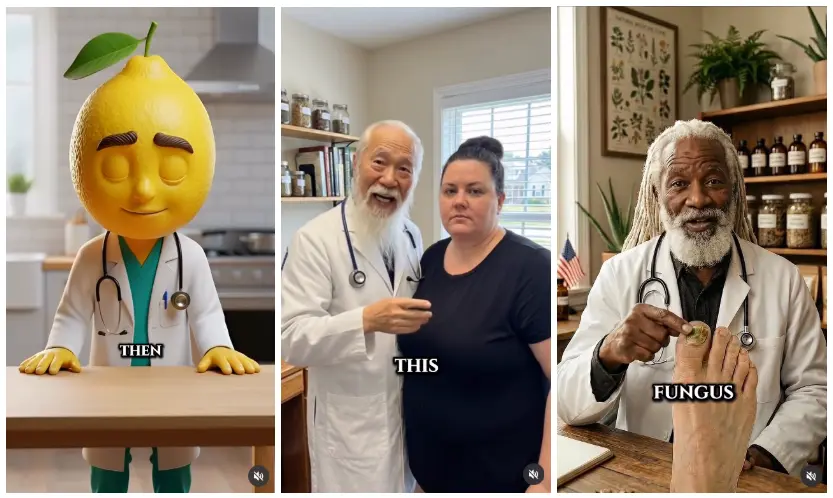 The “Dr. Marlon Campbell” account changing its appearance over the course of six months
The account now belonging to “Dr. Marlon Campbell” promotes a brand of dietary supplements, began by posting videos featuring a lemon dressed in a white coat and surgical scrubs. It then transitioned to a doctor with Asian features and is now an American with African American features. Information published by Meta reveals that the account has changed its name three times since January, but Instagram doesn't allow users to see the specific names it used before.