Просмотр новости
Найдите то, что Вас интересует
 Спутники
 РН
РН SpaceX
 Роскосмос
 NASA
NASA
СпутникиРНSpaceXРоскосмосNASAThe Netherlands has reported one more hantavirus infection in a crew member who left the MV Hondius cruise ship in the Canary Islands.
 CDC / Heinz F. Eichenwald
As the nation moves closer to topping last year’s measles total in just the first half of 2026, the Centers for Disease Control and Prevention (CDC) today confirmed 59 new cases in a nationwide outbreak that has now reached 1,952 infections.
All but nine cases are locally acquired, with the rest related to international travel. The total for all of last year was 2,288 confirmed cases.
The agency reported two new outbreaks, for a total of 29. Last year the nation saw 48 outbreaks.
Of this year’s cases, 21% involve children younger than 5 years, and 72% involve kids and young adults up to 19 years. Among all 2026 patients, 92% have been unvaccinated or have an unknown vaccine status. Six percent of patients this year have been hospitalized, compared with 11% last year.
Largest numbers in South Carolina, UtahAccording to the CDC measles map, South Carolina has recorded the most cases so far this year, at 669, though its outbreak is now over. Utah is next, with 482 cases—although the Utah health department lists 474, eight more than last week. Parents with students at schools in Heber City in Wasatch County, Utah, are being encouraged to keep unvaccinated children home after two new cases in students.
Texas has 182 cases, and Florida 135, three of them new, according to the CDC map.
Arizona confirmed two new cases, bringing its total to 95. Washington state officials have reported a new case, bringing the state’s total to 45. Pennsylvania has confirmed three new cases in the Susquehanna Valley, and three family members in Atlanta, Georgia, have also tested positive.
In international news, measles deaths in Bangladesh have risen to 499 (11 new), and officials in Mexico have documented four measles deaths in the past month, for a total of 40 in 2025 and 2026.
 NIAID
NIAID
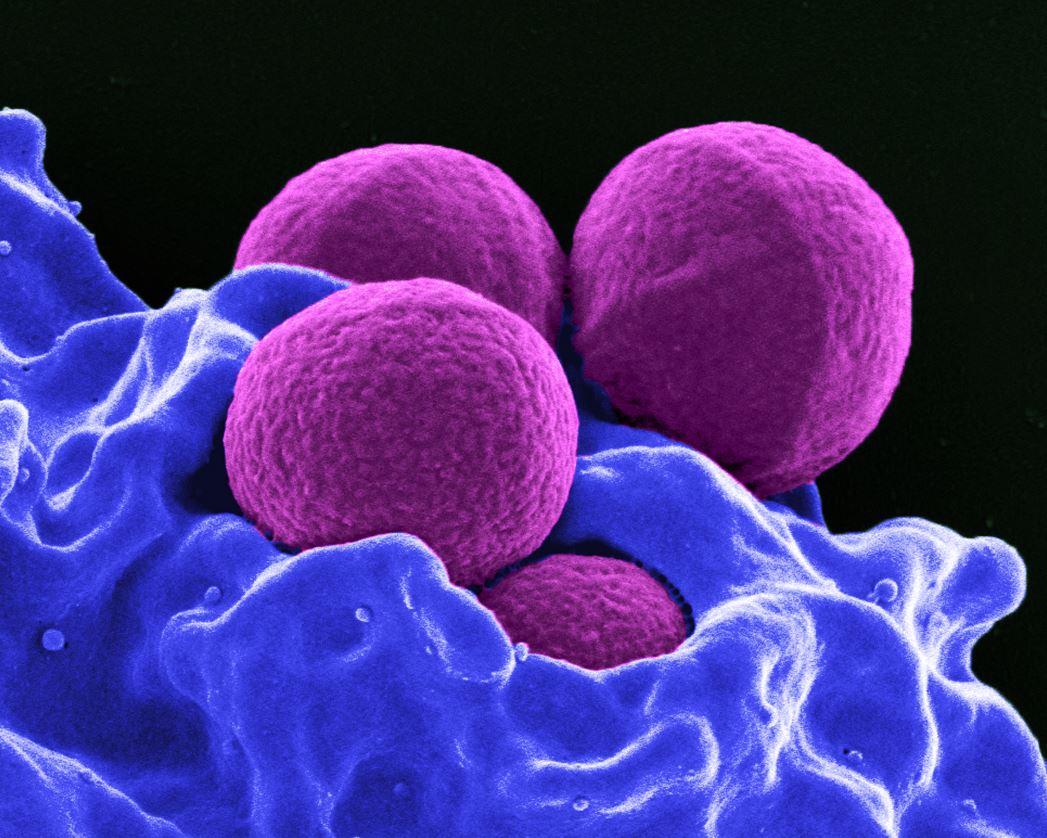
Global deaths from Staphylococcus aureus–associated lower respiratory tract infections (LRTIs) in older adults nearly tripled from 1990 to 2021, according to a study published yesterday in BMC Infectious Diseases.
Using data from the MICROBE (Multidisciplinary Investigation of Clinical Research Outcomes and Burden Estimates) database, Chinese researchers analyzed estimates on deaths and disability-adjusted life years (DALYs) associated with 22 pathogens and 84 drug-pathogen combinations across 204 countries. They focused specifically on S aureus, including deaths and DALYs attributable to methicillin-resistant S aureus (MRSA).
S aureus colonizes skin and mucosal surfaces, and the researchers note that older adults are particularly vulnerable to S aureus LRTIs because of the deterioration of the immune system that accompanies aging, the prevalence of comorbidities, and frequent contact with healthcare facilities. MRSA compounds the problem by limiting treatment options.
“The global spread of antimicrobial resistance (AMR) in S. aureus, especially methicillin resistance (MRSA), represents a critical public health issue,” they wrote.
MRSA contributes significantly to mortalityS aureus–associated LRTI deaths in older adults (age 70 and older) rose from 83,363 in 1990 to 250,347 in 2021, and the mortality rate increased from 41.3 per 100,000 to 50.6. DALYs rose from 1.15 million to 3.29 million. MRSA contributed significantly to mortality. Deaths from MRSA LRTIs in older adults rose from 22,481 in 1990 to 75,038 in 2021, and death rates from 11.1 per 100,000 to 15.2 per 100,000.
In 2021, MRSA mortality among older adults was 6.7 times higher than in adults aged 50 to 69, 9.5-fold higher than in children under 5 years, and more than 70-fold higher than in those aged 5 to 49. DALYs mirrored these trends. The highest mortality burden in 2021 was seen in high-income countries, a finding the study authors attribute in part to rapid demographic aging, while countries in sub-Saharan Africa recorded the highest DALY rate.
“This analysis demonstrates increasing S. aureus LRTIs burden in older adults globally,” the authors concluded. “Our findings underscore the urgent need to prioritize targeted interventions and antimicrobial stewardship to prevent the growing burden of resistant pathogens.”