Просмотр новости
Найдите то, что Вас интересует
 Спутники
 РН
РН SpaceX
 Роскосмос
 NASA
NASA
СпутникиРНSpaceXРоскосмосNASA
Formula 1 has always been a sport of speed, precision, and marginal gains. Behind every driver is a sprawling operation of engineers, strategists, designers, and factory teams looking for tiny advantages wherever they can find them. That has made F1 an attractive proving ground for technology companies, including a growing number of AI firms now working with teams across the grid.
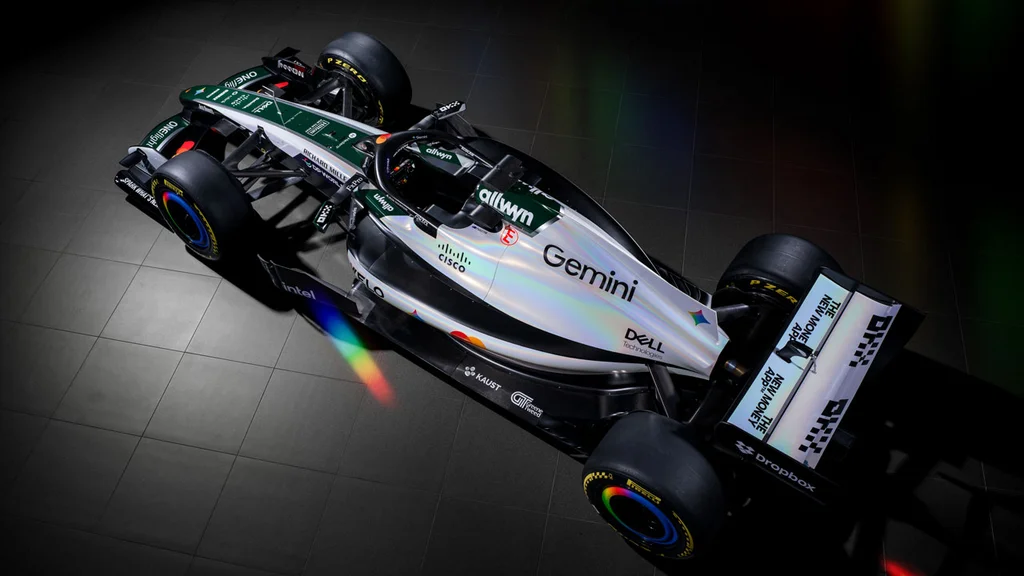
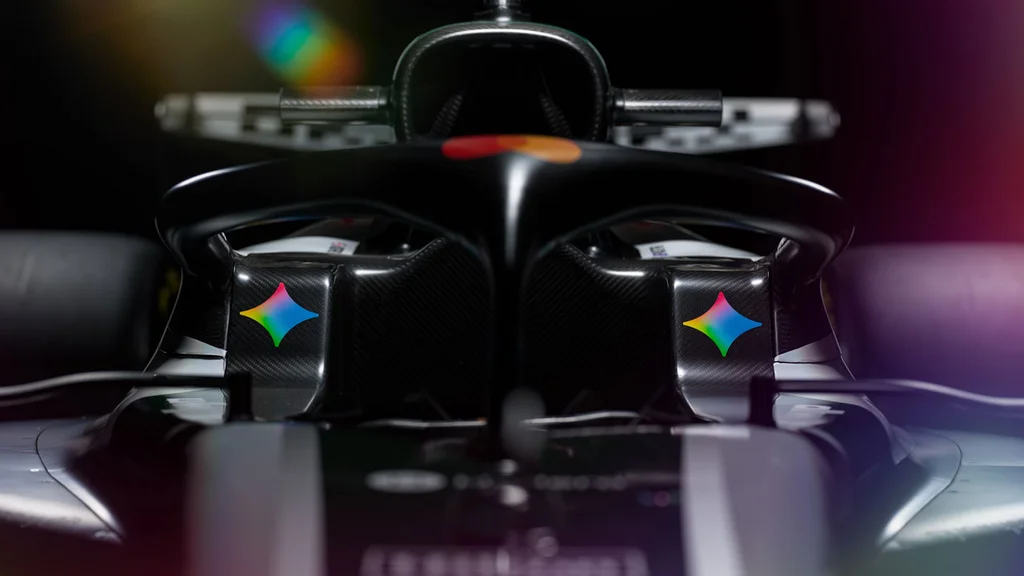
The McLaren Mastercard Formula 1 Team, the second-oldest team in the sport, is one example. Ahead of this year’s British Grand Prix, McLaren is unveiling a special livery, the exterior design of its cars, created in partnership with Google Gemini. The design draws inspiration from McLaren’s first Formula 1 car, the McLaren M2B, and is meant to nod to the team’s history while highlighting its current push into AI-assisted performance tools.
The original M2B. The first Formula 1 car driven by Bruce McLaren in 1966 [Photo: McLaren]
“It’s an authentic partnership, and everything we’re doing with Google, particularly Gemini has a clear objective to make the car go faster and gives us access to some of the best technology in the world in an industry that’s moving incredibly fast,” says Dan Keyworth, McLaren’s executive director of performance technology.
The livery is the most visible part of the partnership, but the more consequential work is happening behind the scenes. As part of a four-year partnership extension, McLaren has worked with Google Cloud to build custom Gemini-powered tools, including a live data interface used during race weekends. The system pulls information from multiple sources during a session and allows members of the McLaren team to query that data in natural language.
“So if you take a qualifying session that’s happened on a Saturday, it used to take us a long time to compare data between two competitors,” says Keyworth. “And, [it] would take a huge amount of human power as well. Now, they can compare with other drivers and competitors and give us insights on how we can improve ourselves.”
[Photo: McLaren]
McLaren is part of a broader shift across Formula 1, where teams are treating AI as another source of marginal gains. Oracle Red Bull Racing is developing an AI-powered strategy agent, Mercedes-AMG Petronas is using Microsoft Azure to expand AI-supported simulation and race modeling, and Aston Martin Aramco has signed AI partnerships with Cohere and Arm.
[Photo: McLaren]
In a sport where small delays can change the outcome of a race, faster access to information can matter. The tools are mainly used by the engineering teams working behind the drivers, but McLaren says the effects can filter down to race strategy, setup decisions, and calls made from the pit wall. Oscar Piastri says a major part of his job is explaining what he needs from the car, describing how he wants it to behave, and helping engineers connect those impressions to the data they see.
“A lot of the information about how I try [to] do my job and how I improve comes through the team,” says Piastri. “All the [technical] analysis we do, summarizing meetings and briefings, all that information I get through the team. Now, with AI … it improves efficiency.”
McLaren is also using Gemini to help staff navigate Formula 1’s rulebook. Its regulation bot is designed to help the team search through new FIA regulations and quickly identify relevant sections, a task that can otherwise require combing through large and technical documents.
Oscar Piastri (right) [Photo: McLaren]
“There’s a lot of new rules and regulations and lots and lots of pages,” says Piastri. “I think AI is a great way of being able to find out information quickly, especially when it comes to knowing some of the more unique rules and the ones you don’t often run into every day.”
That kind of speed does not replace the judgment required during a race weekend, but it can change how quickly teams arrive at useful answers. At the British Grand Prix at Silverstone, which runs July 3 to 5, McLaren’s special livery will serve as a public-facing symbol of a quieter shift already underway: AI is becoming part of how the team sorts information, interprets performance, and looks for incremental gains.
“I think that kind of capability can expand in the future to lots of different areas, finding solutions quickly, ” says Piastri. “We’ll have to see where the technology goes.”
Formula 1 has always been a sport of speed, precision, and marginal gains. Behind every driver is a sprawling operation of engineers, strategists, designers, and factory teams looking for tiny advantages wherever they can find them. That has made F1 an attractive proving ground for technology companies, including a growing number of AI firms now working with teams across the grid.
The McLaren Mastercard Formula 1 Team, the second-oldest team in the sport, is one example. Ahead of this year’s British Grand Prix, McLaren is unveiling a special livery, the exterior design of its cars, created in partnership with Google Gemini. The design draws inspiration from McLaren’s first Formula 1 car, the McLaren M2B, and is meant to nod to the team’s history while highlighting its current push into AI-assisted performance tools.
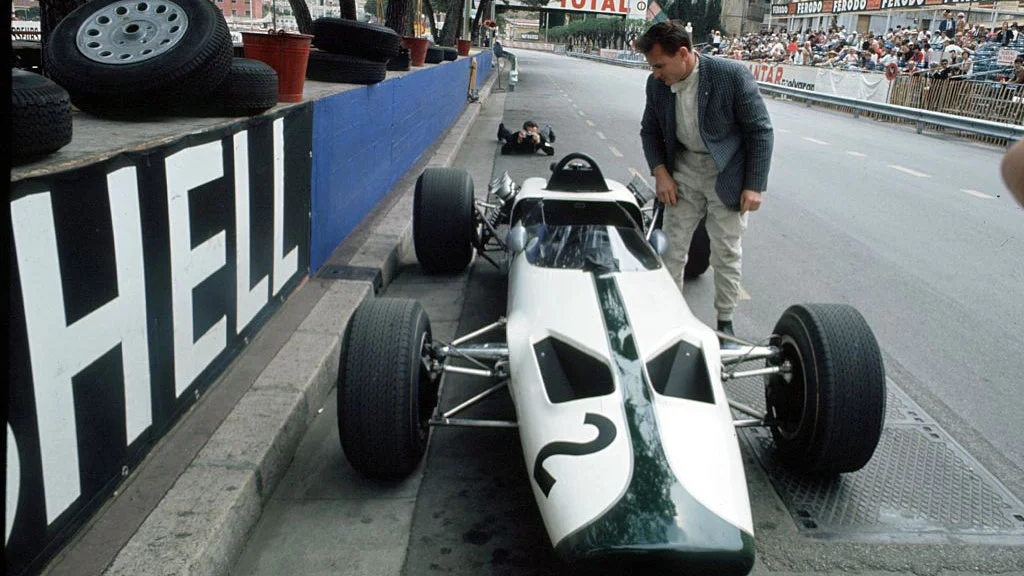 The original M2B. The first Formula 1 car driven by Bruce McLaren in 1966 [Photo: McLaren]
“It’s an authentic partnership, and everything we’re doing with Google, particularly Gemini has a clear objective to make the car go faster and gives us access to some of the best technology in the world in an industry that’s moving incredibly fast,” says Dan Keyworth, McLaren’s executive director of performance technology.
The livery is the most visible part of the partnership, but the more consequential work is happening behind the scenes. As part of a four-year partnership extension, McLaren has worked with Google Cloud to build custom Gemini-powered tools, including a live data interface used during race weekends. The system pulls information from multiple sources during a session and allows members of the McLaren team to query that data in natural language.
“So if you take a qualifying session that’s happened on a Saturday, it used to take us a long time to compare data between two competitors,” says Keyworth. “And, [it] would take a huge amount of human power as well. Now, they can compare with other drivers and competitors and give us insights on how we can improve ourselves.”
 [Photo: McLaren]
McLaren is part of a broader shift across Formula 1, where teams are treating AI as another source of marginal gains. Oracle Red Bull Racing is developing an AI-powered strategy agent, Mercedes-AMG Petronas is using Microsoft Azure to expand AI-supported simulation and race modeling, and Aston Martin Aramco has signed AI partnerships with Cohere and Arm.
 [Photo: McLaren]
In a sport where small delays can change the outcome of a race, faster access to information can matter. The tools are mainly used by the engineering teams working behind the drivers, but McLaren says the effects can filter down to race strategy, setup decisions, and calls made from the pit wall. Oscar Piastri says a major part of his job is explaining what he needs from the car, describing how he wants it to behave, and helping engineers connect those impressions to the data they see.
| # | Наименование новости | Тональность | Информативность | Дата публикации |
|---|---|---|---|---|
| 1 | You know OpenAI and Nvidia. These are the AI companies building everything else | 0 | 7 | 26-06-2026 |
| 2 | Figma CEO says AI superintelligence is not a looming threat to the company | 0 | 5 | 31-07-2025 |
| 3 | Fans don't get a true picture of driver performance with 2026 F1 rules – but it's fixable, says Haas boss | 0 | 9.12 | 24-07-2026 |
| 4 | Maszyna predykcyjna i algorytm mistrza | 5 | 7 | 27-06-2026 |
| 5 | The housecleaning is free—but it will cost you your most intimate data | -2 | 6 | 28-06-2026 |
| 6 | F1 | McLaren, il segreto di Stella: la ricerca della perfezione sta facendo la differenza | 0 | 6.4 | 27-07-2026 |
| 7 | F1 make SWEEPING rule changes ahead of Miami Grand Prix as chiefs bow to pressure from Max Verstappen and Lando Norris during polarising start to 2026 campaign | 0 | 5 | 20-04-2026 |
| 8 | Painters, nursing assistants, and more: Microsoft's top 10 most AI-safe careers | 0 | 7 | 31-07-2025 |
| 9 | Microsoft ends tradition of naming competitors in regulatory filings | 0 | 5 | 31-07-2025 |
| 10 | My AI Night Shift | 2 | 6 | 29-06-2026 |