Просмотр новости
Найдите то, что Вас интересует
 Спутники
 РН
РН SpaceX
 Роскосмос
 NASA
NASA
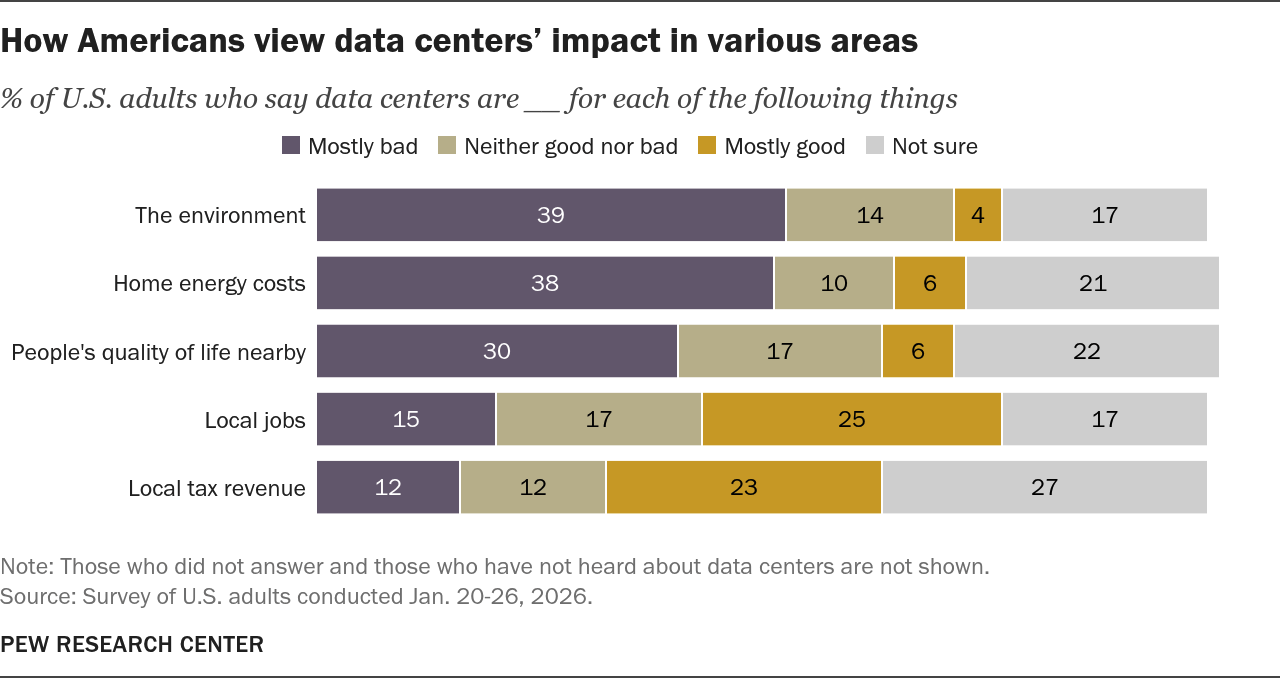
СпутникиРНSpaceXРоскосмосNASAMore Americans say data centers have a negative effect on the environment, home energy costs and people’s quality of life nearby than say they have a positive effect.
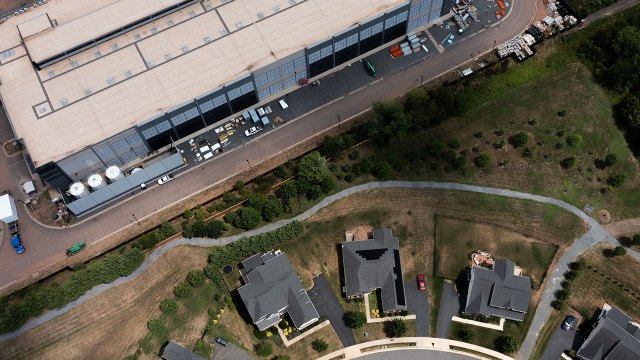 An Amazon Web Services data center located next to single-family homes in Stone Ridge, Virginia. (Nathan Howard/Getty Images)
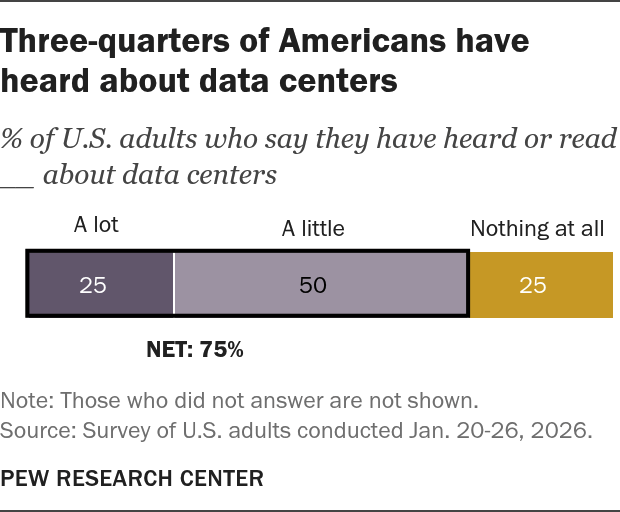
A broad majority of Americans have heard about data centers – the often-sprawling computing facilities that are popping up nationwide.
But the public has mixed opinions about data centers’ impact in various areas, according to a new Pew Research Center survey. Attitudes are more negative than positive when it comes to these facilities’ impact on the environment, home energy costs and people’s quality of life nearby. In turn, larger shares of Americans view their economic effects as mostly positive than negative.
About this researchThis Pew Research Center analysis looks at Americans’ awareness of data centers and their opinions about these facilities’ impact on the environment, home energy costs, people’s quality of life nearby, local jobs and local tax revenue.
Why did we do this?
Pew Research Center does research to help the public, media and decision-makers understand important topics. This research builds on our recent work about artificial intelligence.
Learn more about Pew Research Center and our work on AI.
How did we do this?
We surveyed 8,512 U.S. adults from Jan. 20 to 26, 2026. Everyone who took part in this survey is a member of the Center’s American Trends Panel. The survey represents the views of the full U.S. adult population.
Here are the survey questions we used for this analysis, the detailed responses and the survey methodology.
This is the first time the Center has explored U.S. public opinion about data centers. The survey was conducted Jan. 20-26, 2026, among 8,512 adults. Among the key findings:
Three-quarters of Americans have heard about data centers
% of U.S. adults who say they have heard or read __ about data centers
Note: Those who did not answer are not shown.
Source: Survey of U.S. adults conducted Jan. 20-26, 2026.
PEW RESEARCH CENTER
Three-quarters of Americans have heard about data centers
% of U.S. adults who say they have heard or read __ about data centers
| A lot | A little | Nothing at all | |
|---|---|---|---|
| U.S. adults | 25 | 50 | 25 |
Note: Those who did not answer are not shown.
Source: Survey of U.S. adults conducted Jan. 20-26, 2026.
PEW RESEARCH CENTER
How Americans view data centers’ impact in various areas
% of U.S. adults who say data centers are __ for each of the following things
Note: Those who did not answer and those who have not heard about data centers are not shown.
Source: Survey of U.S. adults conducted Jan. 20-26, 2026.
PEW RESEARCH CENTER
How Americans view data centers’ impact in various areas
% of U.S. adults who say data centers are __ for each of the following things
| Mostly bad | Neither good nor bad | Not sure | Mostly good | |
|---|---|---|---|---|
| The environment | 39% | 14% | 17% | 4% |
| Home energy costs | 38% | 10% | 21% | 6% |
| People’s quality of life nearby | 30% | 17% | 22% | 6% |
| Local jobs | 15% | 17% | 17% | 25% |
| Local tax revenue | 12% | 12% | 27% | 23% |
Note: Those who did not answer and those who have not heard about data centers are not shown.
Source: Survey of U.S. adults conducted Jan. 20-26, 2026.
PEW RESEARCH CENTER
Data centers have long housed the infrastructure for the internet and cloud computing. But they have drawn new attention in recent years as the global race to develop artificial intelligence intensifies. Tech companies have invested hundreds of billions of dollars to construct the buildings, which are filled with computer equipment that can help train and run AI models (among many other functions).
The United States now has more than 4,000 such facilities, with especially large numbers in Virginia, Texas and California. The rapid spread of data centers has prompted debates over their effects on local communities.
Partisan differences over data centers’ impactDemocrats and Democratic-leaning independents generally view the impact of data centers more negatively than Republicans and Republican leaners do.
Democrats are more likely than Republicans to see negative effects from data centers
% of U.S. adults who say data centers are mostly bad for each of the following

Note: Those who gave other responses or have not heard of data centers are not shown.
Source: Survey of U.S. adults conducted Jan. 20-26, 2026.
PEW RESEARCH CENTER
Democrats are more likely than Republicans to see negative effects from data centers
% of U.S. adults who say data centers are mostly bad for each of the following
| Dem/Lean Dem | Rep/Lean Rep | |
|---|---|---|
| The environment | 50% | 31% |
| Home energy costs | 44% | 33% |
| People’s quality of life nearby | 37% | 24% |
| Local jobs | 18% | 12% |
| Local tax revenue | 15% | 10% |
Note: Those who gave other responses or have not heard of data centers are not shown.
Source: Survey of U.S. adults conducted Jan. 20-26, 2026.
PEW RESEARCH CENTER
Take their effect on the environment. Half of Democrats say data centers are mostly bad for the environment, compared with 31% of Republicans. Earlier Pew Research Center surveys have shown that Democrats tend to be more concerned than Republicans about the environment in general.
Democrats are also more likely than Republicans to say data centers are mostly bad for home energy costs (44% vs. 33%) and people’s quality of life nearby (37% vs. 24%).
Few Democrats and Republicans alike say data centers are mostly good for the environment, home energy costs and people’s quality of life. Republicans are more likely to say that the facilities’ impact in these areas is neither good nor bad, or that they are not sure.
Liberal Democrats stand out for their negative views about data centers’ impact in all five areas we asked about. For example, majorities of liberal Democrats say these facilities are mostly bad for the environment (66%) and home energy costs (57%). Far fewer moderate or conservative Democrats share these views (38% and 35%). Republicans differ little by ideology in the shares who see negative effects.
Age differences over data centers’ impactYounger adults also tend to have more negative views of data centers than older adults do.
For example, 54% of adults under 30 say data centers have a mostly negative effect on the environment. That compares with 44% of adults ages 30 to 49, 35% of those 50 to 64 and 26% of those 65 and older.
The age pattern is similar on the other items in the survey.
How awareness of data centers relates to views of their impactSome groups of Americans are more likely than others to say they’ve heard a lot about data centers. These groups include men, people in upper-income households and college graduates (a common pattern we’ve seen).
Chart: Awareness of data centers varies by demographic, political group
Americans who have heard more about data centers are more negative about their effects
% of U.S. adults who say data centers are mostly bad for each of the following, among those who have heard or read __ about them

Note: Those who gave other responses or have not heard of data centers are not shown.
Source: Survey of U.S. adults conducted Jan. 20-26, 2026.
PEW RESEARCH CENTER
Americans who have heard more about data centers are more negative about their effects
% of U.S. adults who say data centers are mostly bad for each of the following, among those who have heard or read __ about them
| A lot | A little | |
|---|---|---|
| Home energy costs | 67% | 42% |
| The environment | 63% | 48% |
| People’s quality of life nearby | 51% | 35% |
| Local jobs | 26% | 16% |
| Local tax revenue | 23% | 13% |
Note: Those who gave other responses or have not heard of data centers are not shown.
Source: Survey of U.S. adults conducted Jan. 20-26, 2026.
PEW RESEARCH CENTER
Americans who have heard a lot about data centers are more likely than those who have heard a little to say the facilities have a negative impact in all five areas we asked about.
For instance, two-thirds of adults who have heard a lot about data centers say they’re mostly bad for home energy costs, compared with 42% of those who have heard a little. And 63% of those who have heard a lot about the facilities say they’re mostly bad for the environment, compared with 48% of those who have heard a little.
Americans who have heard a lot about data centers are also less likely than those who have heard a little to say they’re not sure about the effects of these facilities.
Note: Here are the survey questions we used for this analysis, the detailed responses and the survey methodology.

John Gramlich is an associate director at Pew Research Center.

Brian Kennedy is a senior researcher focusing on science and society research at Pew Research Center.

Colleen McClain is a senior researcher focusing on internet and technology research at Pew Research Center.

Galen Stocking is an associate director focusing on science research at Pew Research Center.