Просмотр новости
Найдите то, что Вас интересует
 Спутники
 РН
РН SpaceX
 Роскосмос
 NASA
NASA
СпутникиРНSpaceXРоскосмосNASA
NASA's Voyager 2 probe, which launched in 1977, can keep operating its last science instruments after a power reduction operation performed in interstellar space.
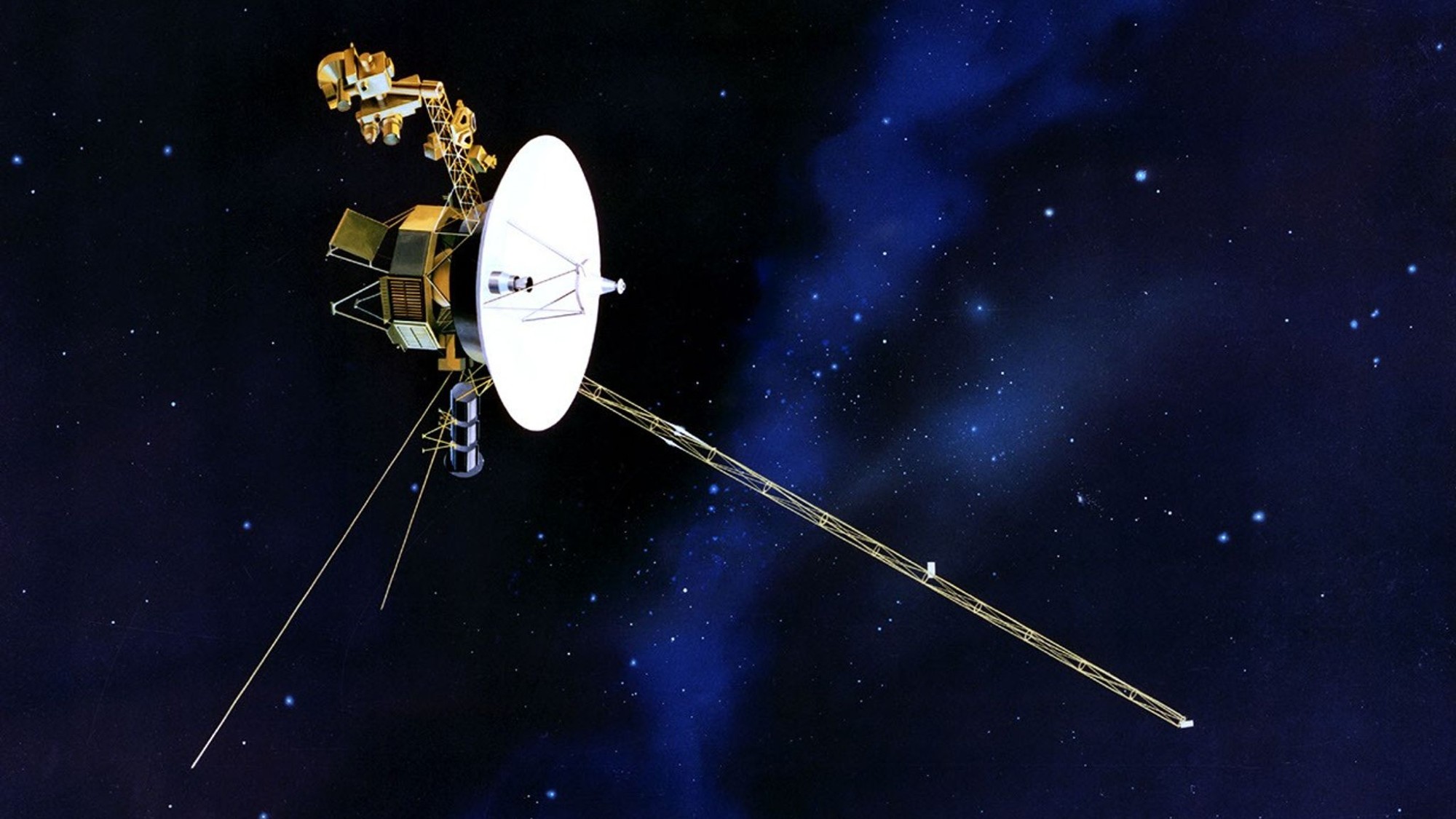 An artist's depiction of NASA's Voyager 2 probe.
(Image credit: NASA/JPL-Caltech)
An artist's depiction of NASA's Voyager 2 probe.
(Image credit: NASA/JPL-Caltech)
NASA just made an interstellar tweak to the Voyager 2 spacecraft, known as the "Big Bang", to keep its remaining 50-year-old science instruments running a little longer.
Voyager 2 and its twin launched in 1977, called Voyager 1, rely on a form of nuclear battery known as a radioisotope thermoelectric generator that uses the heat produced by the decay of plutonium. But the supply of plutonium on each probe drops at about four watts a year on each spacecraft.
To keep the probe running on this dwindling power supply, engineers recently reduced Voyager 2's power requirements by turning off a few non-science devices and using "lower-power alternatives" that are still effective enough to keep the spacecraft warm while it's so far from the sun, NASA officials said in a statement. "The spacecraft power margins have grown razor thin, requiring the team to conserve energy by shutting off non-essential devices and systems," NASA officials wrote of the mission, which is managed by the agency's Jet Propulsion Laboratory.
The drop in power is having a measurable science impact on both spacecraft — each has turned off two of their science instruments since 2024 alone. While some of these instruments were shut off after the spacecraft finished their historic planetary flybys decades ago, others were turned off due to power requirements.
Each spacecraft initially launched with 10 instruments, and Voyager 2 is now down to only three instruments. At first it looked as though Voyager 2 would have to shut down another of these instruments later this year, but luckily, the new power shifts will allow all three to operate "for at least another year," NASA said.
Voyager 1 will be tasked to do the same "Big Bang" power change "in the coming months." A signal to each spacecraft takes nearly 24 hours (or one light-day) to make a one-way journey, and officials noted Voyager 1 is further from Earth than its twin. (Voyager 2 is at about 142 astronomical units or sun-Earth distances, while Voyager 1 is nearing 171 AU.)
The two spacecraft initially launched to take advantage of a rare alignment between the outer solar system gas giant planets, which in order of distance from the sun are Jupiter, Saturn, Uranus and Neptune. Each Voyager spacecraft first flew past Jupiter and Saturn, taking unprecedented imagery of the planets and their moons.
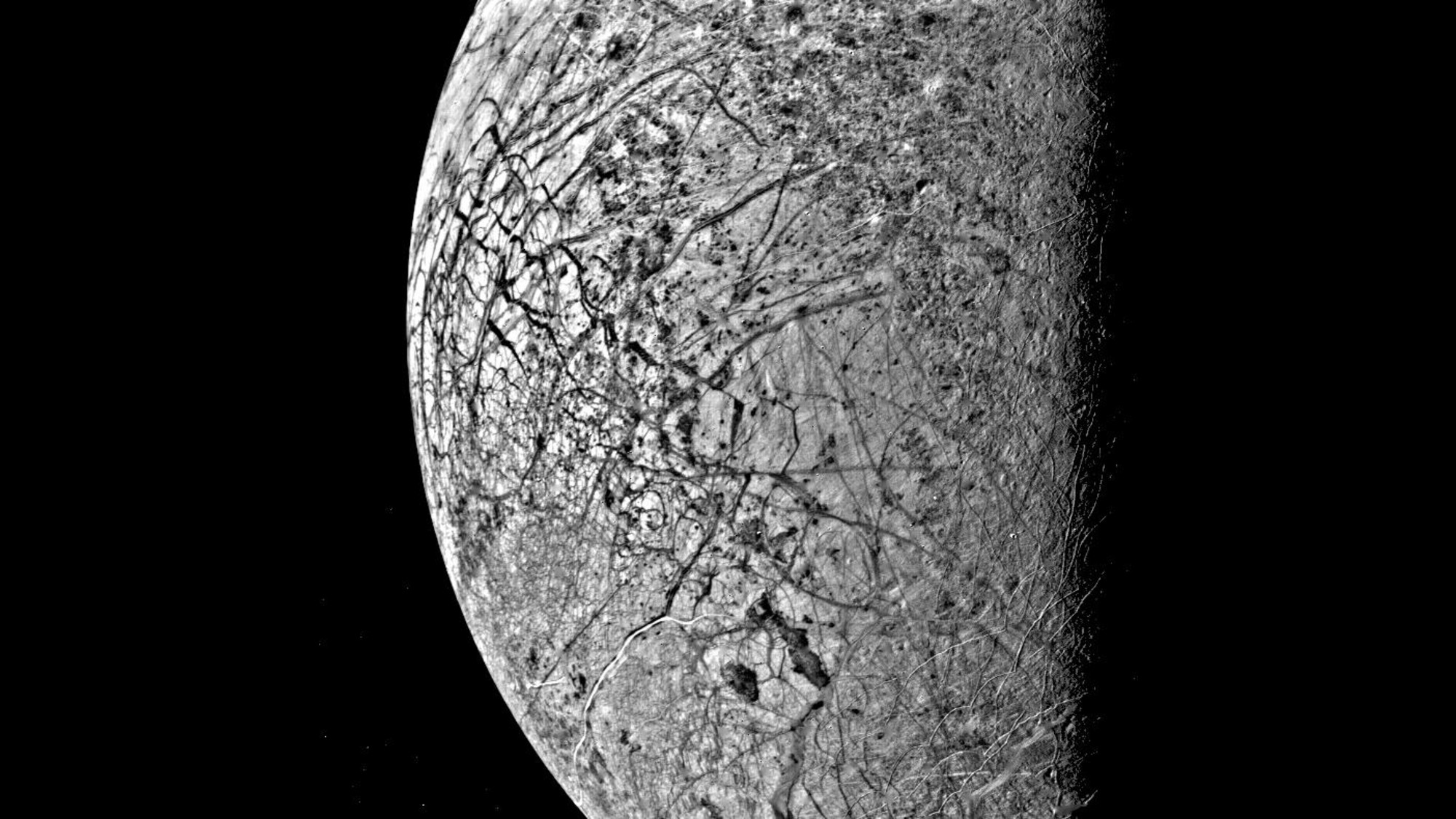
Next, Voyager 1 was directed to fly above the plane of the solar system (also known as the ecliptic) while Voyager 2 continued flying past Uranus and Neptune, becoming the first spacecraft to see these worlds and their moons. Voyager 2's last planetary flyby was in 1989.
The two spacecraft continue to send scientific data from interstellar space; Voyager 1 passed into that region in 2012, while Voyager 2 did so in 2018. Voyager 1 is Earth's most distant spacecraft, currently around 15.9 billion miles (25.5 billion kilometers) away from us, according to NASA.
Elizabeth Howell (she/her), Ph.D., was a staff writer in the spaceflight channel between 2022 and 2024 specializing in Canadian space news. She was contributing writer for Space.com for 10 years from 2012 to 2024. Elizabeth's reporting includes multiple exclusives with the White House, leading world coverage about a lost-and-found space tomato on the International Space Station, witnessing five human spaceflight launches on two continents, flying parabolic, working inside a spacesuit, and participating in a simulated Mars mission. Her latest book, "Why Am I Taller?" (ECW Press, 2022) is co-written with astronaut Dave Williams.
| # | Наименование новости | Тональность | Информативность | Дата публикации |
|---|---|---|---|---|
| 1 | NASA shuts down 49-year-old Voyager 1 instrument to keep it alive | 0 | 7.92 | 04-05-2026 |
| 2 | Инженерам NASA удалось на один год продлить срок службы зонда «Вояджер-2» | 0 | 11.67 | 14-08-2026 |
| 3 | NASA продлевает миссию Voyager 2: ещё год исследований в космосе ... | 0 | 10.13 | 05-08-2026 |
| 4 | Инженерам НАСА удалось ещё немного продлить время жизни «Вояджера-2» Инженеры ... | 0 | 7.52 | 11-08-2026 |
| 5 | Voyager 1 Shuts Down Another Instrument | 0 | 12.96 | 27-04-2026 |
| 6 | НАСА продлило миссию Voyager 2 | 0 | 30 | 07-08-2026 |
| 7 | NASA спасла «Вояджер-2»: как модернизация продлила жизнь легендарному зонду | 0 | 6.85 | 10-08-2026 |
| 8 | НАСА обновило ПО Вояджера-2, чтобы продлить его работу еще на один год | 0 | 7.9 | 17-08-2026 |
| 9 | Станция Voyager-2 США не выполнила штатный маневр и расходует слишком много энергии | 0 | 0 | 30-01-2020 |
| 10 | Аппарат Voyager 2 находится в космосе почти 50 лет, но уходить на покой пока не собирается. NASA недавно внесла изменения в его настройки в рамках операции под названием "Большой взрыв",... | 0 | 14.29 | 12-08-2026 |