Просмотр новости
Найдите то, что Вас интересует
 Спутники
 РН
РН SpaceX
 Роскосмос
 NASA
NASA
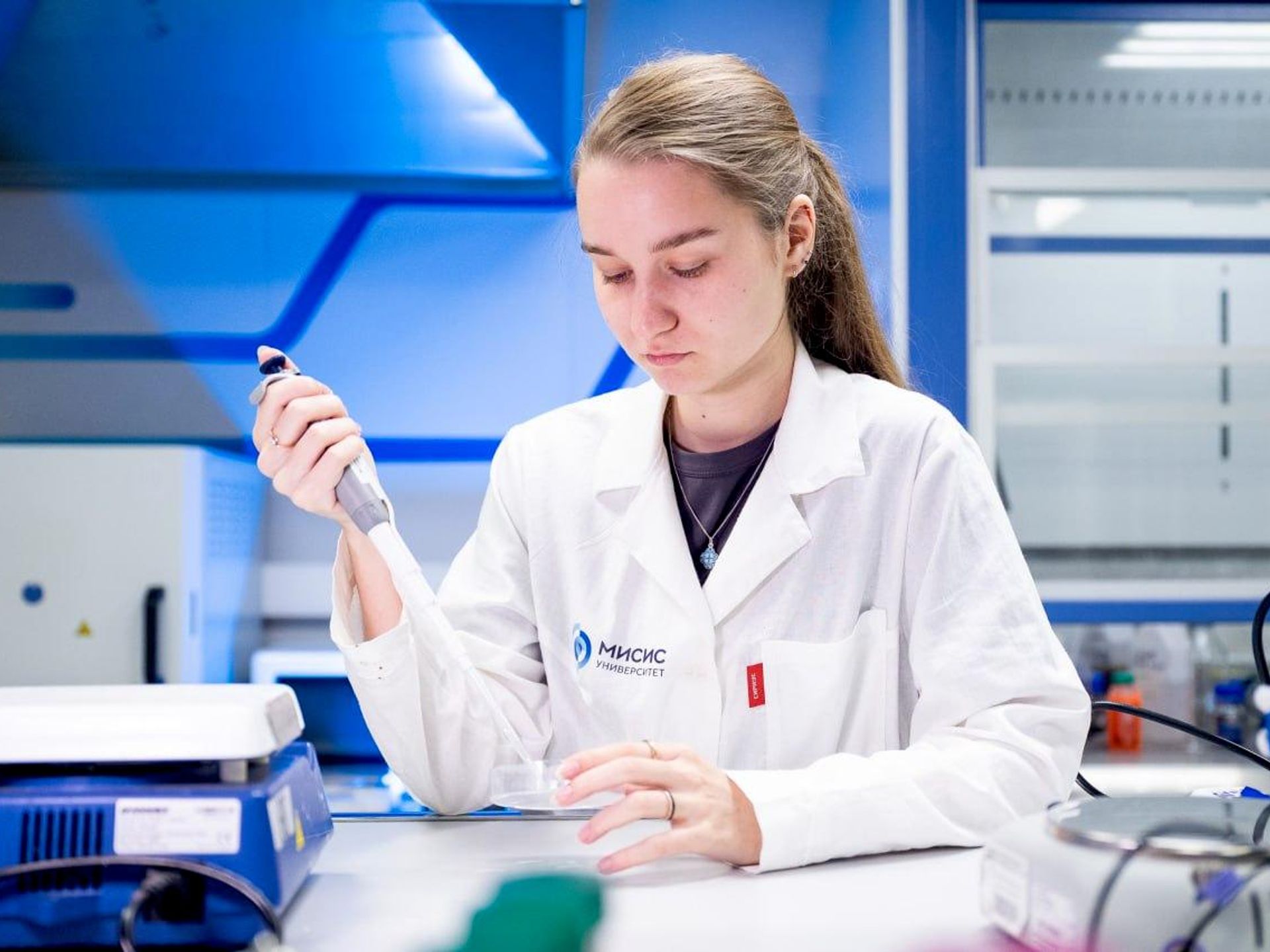
СпутникиРНSpaceXРоскосмосNASABioengineers at NUST MISIS have created a new gel for rapid wound healing based on a food thickener derived from algae. The agent helps cells cope with the inflammation that arises immediately after an injury and, under unfavorable conditions, can hinder skin recovery, the university’s press service told RIA Novosti.
https://sputnikglobe.com/20260813/russia-creates-wound-healing-gel-from-algae-1124566060.html
Russia Creates Wound-Healing Gel From Algae
Russia Creates Wound-Healing Gel From Algae
Sputnik International
Bioengineers at NUST MISIS have created a new gel for rapid wound healing based on a food thickener derived from algae. The agent helps cells cope with the inflammation that arises immediately after an injury and, under unfavorable conditions, can hinder skin recovery, the university’s press service told RIA Novosti.
2026-08-13T04:50+0000
2026-08-13T04:50+0000
2026-08-13T04:50+0000
russia
science & tech
russia
russian national university of science and technology (misis)
https://cdn1.img.sputnikglobe.com/img/07ea/08/0c/1124566411_0:0:1281:721_1920x0_80_0_0_fcad57715ba106cba58e13b69fa124d5.jpg
The inflammatory phase of wound healing begins immediately after skin damage and can last from three to five days, after which it moves intointo the recovery phase. This phase is necessary for wound debridement, without which repair of damaged tissues cannot begin — a process that can be impeded by microorganisms, foreign bodies, or vascular insufficiency, the National University of Science and Technology MISIS explained.NUST MISIS bioengineers have proposed a hydrogel to combat oxidative stress and “normalize” the wound-healing process. It is based on sodium alginate, which is obtained from brown algae of the class Phaeophyceae and used in the pharmaceutical, food, and cosmetic industries. To “quench” reactive oxygen species, substances that mimic the body’s natural enzyme defense have been added to the gel.“Reactive oxygen species in the body are neutralized by certain enzymes, including superoxide dismutase — we added a metalloporphyrin that works in exactly the same way. In order to deliver as much of this substance as possible to the inflamed area, we placed it in capsules and incorporated them into the alginate matrix,” Yabbarov added.This method allowed the metalloporphyrin to be released gradually — the most of it entered the wound in a controlled manner within the first 24 hours after the hydrogel was applied. During this period, cells are most susceptible to oxidative stress, the university noted.According to experiments, the material has no toxic effect on human skin cells. Their viability remaines high even after several days of contact with the hydrogel. It demonstrated integrity and stability throughout this period.According to Fyodor Senatov, Director of the Institute of Biomedical Engineering at NUST MISIS, the new hydrogel is a foundation for creating modern biocompatible wound dressings. In the future, this technology could form the basis of materials for repairing skin and mucous membranes, for which it is necessary to simultaneously control inflammation, protect cells from oxidative damage, and stimulate natural regenerative processes.The work was carried out within the framework of NUST MISIS’s strategic technological project “Biomedical Engineering and Biomaterials” under the Priority 2030 program.
https://sputnikglobe.com/20190307/scientists-metro-tunnels-1073025605.html
russia
Sputnik International
feedback@sputniknews.com
+74956456601
MIA „Rossiya Segodnya“
2026
Sputnik International
feedback@sputniknews.com
+74956456601
MIA „Rossiya Segodnya“
News
en_EN
Sputnik International
feedback@sputniknews.com
+74956456601
MIA „Rossiya Segodnya“
Sputnik International
feedback@sputniknews.com
+74956456601
MIA „Rossiya Segodnya“
science & tech, russia, russian national university of science and technology (misis)
science & tech, russia, russian national university of science and technology (misis)
Bioengineers at NUST MISIS have created a new gel for rapid wound healing based on a food thickener derived from algae. The agent helps cells cope with the inflammation that arises immediately after an injury and, under unfavorable conditions, can hinder skin recovery, the university’s press service told RIA Novosti.
The inflammatory phase of wound healing begins immediately after skin damage and can last from three to five days, after which it moves intointo the recovery phase. This phase is necessary for wound debridement, without which repair of damaged tissues cannot begin — a process that can be impeded by microorganisms, foreign bodies, or vascular insufficiency, the National University of Science and Technology MISIS explained.
“If inflammation drags on, excessive reactive oxygen species accumulate in the tissues, damaging proteins, lipids, and other molecules in the cells. This oxidative stress can lead to long-term health consequences,” said project participant Nikita Yabbarov, Associate Professor at the Institute of Biomedical Engineering of NUST MISIS, emphasizing that prolonged inflammation is especially dangerous in chronic skin injuries.
NUST MISIS bioengineers have proposed a hydrogel to combat oxidative stress and “normalize” the wound-healing process. It is based on sodium alginate, which is obtained from brown algae of the class Phaeophyceae and used in the pharmaceutical, food, and cosmetic industries. To “quench” reactive oxygen species, substances that mimic the body’s natural enzyme defense have been added to the gel.
“Reactive oxygen species in the body are neutralized by certain enzymes, including superoxide dismutase — we added a metalloporphyrin that works in exactly the same way. In order to deliver as much of this substance as possible to the inflamed area, we placed it in capsules and incorporated them into the alginate matrix,” Yabbarov added.
This method allowed the metalloporphyrin to be released gradually — the most of it entered the wound in a controlled manner within the first 24 hours after the hydrogel was applied. During this period, cells are most susceptible to oxidative stress, the university noted.
“Another important result was the material’s effect on immune cells — macrophages. They play a key role in wound healing: some types prolonginflammation, while others, in contrast, promote tissue repair. The developed hydrogel stimulated the transition of macrophages to a pro-regenerative state associated with the new tissue formation and the resolution of the inflammatory process,” added project executor Daria Zinovieva, a student at the Institute of Biomedical Engineering of NUST MISIS.
According to experiments, the material has no toxic effect on human skin cells. Their viability remaines high even after several days of contact with the hydrogel. It demonstrated integrity and stability throughout this period.
According to Fyodor Senatov, Director of the Institute of Biomedical Engineering at NUST MISIS, the new hydrogel is a foundation for creating modern biocompatible wound dressings. In the future, this technology could form the basis of materials for repairing skin and mucous membranes, for which it is necessary to simultaneously control inflammation, protect cells from oxidative damage, and stimulate natural regenerative processes.
The work was carried out within the framework of NUST MISIS’s strategic technological project “Biomedical Engineering and Biomaterials” under the Priority 2030 program.

| # | Наименование новости | Тональность | Информативность | Дата публикации |
|---|---|---|---|---|
| 1 | Биоинженеры МИСИС создали гель из водорослей для быстрого заживления ран | 0 | 9.91 | 13-08-2026 |
| 2 | В Москве создали ранозаживляющий гель из водорослей | 0 | 8.03 | 13-08-2026 |
| 3 | Гель из водорослей. Ученые создали средство для быстрого заживления ран | 0 | 8 | 13-08-2026 |
| 4 | Новый гидрогель для заживления ран стимулирует регенерацию клеток и запускает восстановление тканей | 0 | 8.43 | 17-08-2026 |
| 5 | A gel for wounds that won’t heal | 0 | 14.39 | 17-02-2026 |
| 6 | В России создали наночастицы для заживления хронических ран и тяжелых ожогов | 0 | 0 | 01-11-2025 |
| 7 | В России разработали инжектор для восстановления тканей после мастэктомии | 0 | 13.31 | 26-08-2026 |
| 8 | В МИСИС создали пластырь, сокращающий кровопотерю в шесть раз | 7 | 8 | 18-07-2026 |
| 9 | В НИТУ МИСИС создали пластырь для остановки крови и защиты ран | 5 | 7 | 18-07-2026 |
| 10 | В РФ разработали биосорбент для ликвидации аварийных нефтяных разливов | 0 | 0 | 10-04-2025 |