Просмотр новости
Найдите то, что Вас интересует
 Спутники
 РН
РН SpaceX
 Роскосмос
 NASA
NASA
СпутникиРНSpaceXРоскосмосNASACreating a new film version of The Odyssey that is evidently technically great but completely misses the point of the story (according to the book’s award winning translator’s review; I haven’t seen it yet) seems to go perfectly with the gigantic pilfering of ancient archeological material to give rich people fancy things, including the stars […]
The post Lifestyles of the Rich and Famous in the New Gilded Age appeared first on Lawyers, Guns & Money.
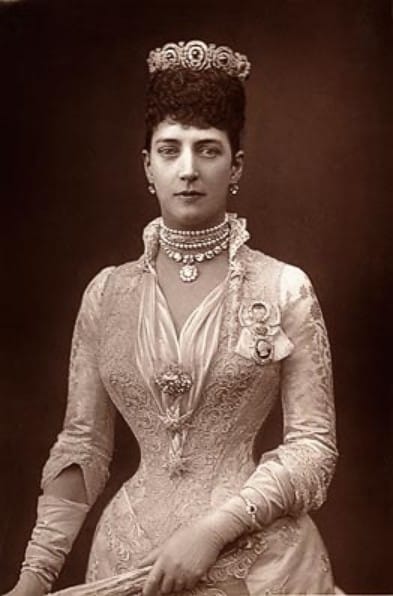
Creating a new film version of The Odyssey that is evidently technically great but completely misses the point of the story (according to the book’s award winning translator’s review; I haven’t seen it yet) seems to go perfectly with the gigantic pilfering of ancient archeological material to give rich people fancy things, including the stars of the film.
Barron London is an antiques and jewelry business located in Mayfair, one of the London’s wealthiest neighborhoods. At first glance its storefront seems inconspicuous — walk past in a hurry and you are unlikely to notice anything at all. But behind this unassuming facade is a private showroom containing a jaw-dropping collection of precious jewels, antiques, and artifacts, many of which date back multiple millennia.
Barron is just one of London’s many dealerships catering to the booming market for rare artifacts and antiques. However, the gallery has found itself coming under scrutiny this month thanks to a pair of ancient Persian earrings loaned to the actress Zendaya for her appearance at the London premiere of Christopher Nolan’s The Odyssey.
According to their official listing, the earrings were originally discovered in 1946 near the Ziwiyeh Castle in northwestern Iran and are believed to date back to around 700 BCE. Given this unique provenance, historians have been quick to criticize Zendaya’s decision to wear the precious items on the red carpet. Many have also pointed out the particular irony of an American actress wearing precious items belonging to civilization that her country’s president — just months earlier — threatened to bomb into the Stone Age.
Of course, there is nothing new about the commodification of historical artifacts. Nor is Zendaya the only offender. On the same red carpet as Zendaya, costar Anne Hathaway was photographed wearing a diamond-encrusted watch constructed from an ancient Roman coin. Four months earlier, Margot Robbie attended the premiere of Wuthering Heights in Cartier’s Taj Mahal diamond necklace, which features a heart-shaped stone that belonged to the fourth Mughal emperor, Jahangir, during the seventeenth century.
Away from Hollywood, many other historical artifacts have also been repurposed as luxury commodities. Just down the road from Barron London, showrooms like the Charles Ede and Barakat galleries routinely acquire and sell textile fragments, carvings, sculptures, and architectural reliefs as decorative art objects to ultrawealthy customers looking to accumulate their own collections. Items currently being advertised online include an authentic Egyptian mummy mask that dates to 664 BCE, a Bronze Age idol that dates back to 2100 BCE, and a yet-untranslated cuneiform tablet that dates back to 2027 BCE.
And this is all a symptom of the poison of capitalism that has created the New Gilded Age, where like the first, the super rich could do whatever they wanted to whatever they wanted and get away with it.
Under capitalism, it is clear that history, much like everything else, is up for sale — and without regulation, current trends threaten to return us to the eighteenth century, when such items could only be viewed within the private collections of the wealthy. It was in response to this undemocratic system that national museums were first established, positing the radical idea that heritage is the shared property of all people. Today, however, it seems that this vision has suffered at the hands of a more market-oriented understanding of what makes historical objects valuable.
Over the last fifteen years, museums across Europe and America have been the subject of bruising criticism. Many progressive academics have sought to emphasize the entanglement of these institutions with the violence of colonial extraction, and the ways in which such violence has been reproduced in harmful narratives about non-Western civilizations. These are certainly valid criticisms. However, the controversies surrounding the Ziwiyeh earrings or Gus the dinosaur point toward an even more sinister alternative. Indeed, the market for artifacts is rapidly converting historical objects into commodities to be displayed at the whim of the individual. This process represents its own form of extraction and, if left unchecked, will eventually separate the public from their own history. Within this new world there will be no debate about the rightful owners or historical artifacts, only the brutal law of the market that states that anything is fair game to the highest bidder.
A side point here–in my post the other day, a few commenters claimed that the capitalists of the Gilded Age were a little better than the ones we have today because they created some libraries and museums. My friends, please. No. Absolutely not. Note that these earlier capitalists used state police forces to murder workers. Whatever you want to say about Thiel and Musk and Zuckerberg, they have not yet done that. Note as well that erasing time and context doesn’t serve us well when discussing the past. Yes, the Frick Museum is nice but no one during Henry Clay Frick’s lifetime would have said a single nice thing about him, including Henry Clay Frick (unlike Andrew Carnegie and his blood libraries, he was honest about himself). Henry Clay Frick was also responsible for the death of over 2,200 people because he refused to fix the dam at the hunting club for the rich he ran and that caused the Johnstown Flood when it burst. His response was to send a few blankets to survivors. It’s entirely possible that in 150 years, people will be visiting the Bezos Museum and talking incorrectly about how this was a real philanthropist/capitalist, unlike the scumbags of 2266. It won’t make any sense then either.
This div height required for enabling the sticky sidebar
| # | Наименование новости | Тональность | Информативность | Дата публикации |
|---|---|---|---|---|
| 1 | Greed in the New Gilded Age | 0 | 5.21 | 18-05-2026 |
| 2 | The Real Racism | 0 | 8.13 | 17-05-2026 |
| 3 | The Odyssey and the Bronze Age Collapse | 0 | 7.93 | 11-08-2026 |
| 4 | 2025 Oscars gift bags are worth over $200K and include lipo | 0 | 0 | 28-02-2025 |
| 5 | Solo о «золотом составе» Virtus.pro: «Мы рассматривали Года и Хвоста, но Sneg надавил на то, чтобы делали команду без старичков» | 0 | 0 | 20-02-2025 |
| 6 | В ТВЕРСКОЙ ОБЛАСТИ СОВЕТНИКИ ДИРЕКТОРОВ ПО ВОСПИТАНИЮ ОБСУДИЛИ ВОПРОСЫ ПРИВЛЕЧЕНИЯ ... | 0 | 0 | 21-02-2025 |
| 7 | Магия этой жизни - в том, что ты всегда на ... | 0 | 0 | 09-03-2023 |
| 8 | Мошенники заставляют орловцев менять исправные электросчетчики | 0 | 0 | 03-02-2020 |
| 9 | СамНЦ РАН | 0 | 0 | 05-12-2012 |
| 10 | Comment on Charlotte’s Web(page): Inboundgeo’s Tech Spider Directly Targets Site Visitors by Michael Sitarzewski | 0 | 0 | 09-11-2018 |