Просмотр новости
Найдите то, что Вас интересует
 Спутники
 РН
РН SpaceX
 Роскосмос
 NASA
NASA
СпутникиРНSpaceXРоскосмосNASAWho opens a brewery in today’s market? This analysis looks at recent brewery opening trends, including the rise of taproom and brewpub models, shifting geographic patterns, modest first-year production expectations, and the role of additional locations from existing breweries. Through data and real-world examples from new breweries in Illinois and Virginia, the post explores what today’s openings reveal about the future of craft beer: less about chasing scale, and more about hospitality, place, and finding the right customer occasion.
The post Sunrise: Brewery Openings appeared first on Brewers Association.
Who in their right mind would open a brewery in 2026?
The popular narrative around craft beer recently is less about the next big opening than it is about the latest painful closing. Costs of doing business are up, consumer demand is more fragmented, the distribution landscape is becoming ever more complex, and the category has lost some of the momentum it carried a decade ago.
And yet, breweries are still opening.
In the western suburbs of Chicago, on a late January afternoon earlier this year, Michael Ferris and his business partner AJ Blume officially welcomed the first visitors to Blume & Ferris Public House. Blume & Ferris is styled as an Irish country pub, the kind Michael’s grand uncle owned and Michael worked while growing up in Ireland.
Less than two months later in Herndon, Virginia (one of the final Silver Line stops before arriving at Dulles Airport in metro Washington D.C.), Hawkley Brewing opened its doors for the first time. Located at a site of craft beer historical importance (the original home of Aslin Beer Company) the taproom has found new life, and a new concept, in the hands of Monte Hawkins and his business partners.
Michael and Monte are just two of the many entrepreneurs who observe today’s headwinds with open eyes, but who remain undeterred. There has been much coverage about the rate of craft brewery closures, but one of the data points I’ve found most interesting over the past couple years is how that relates to brewery openings.
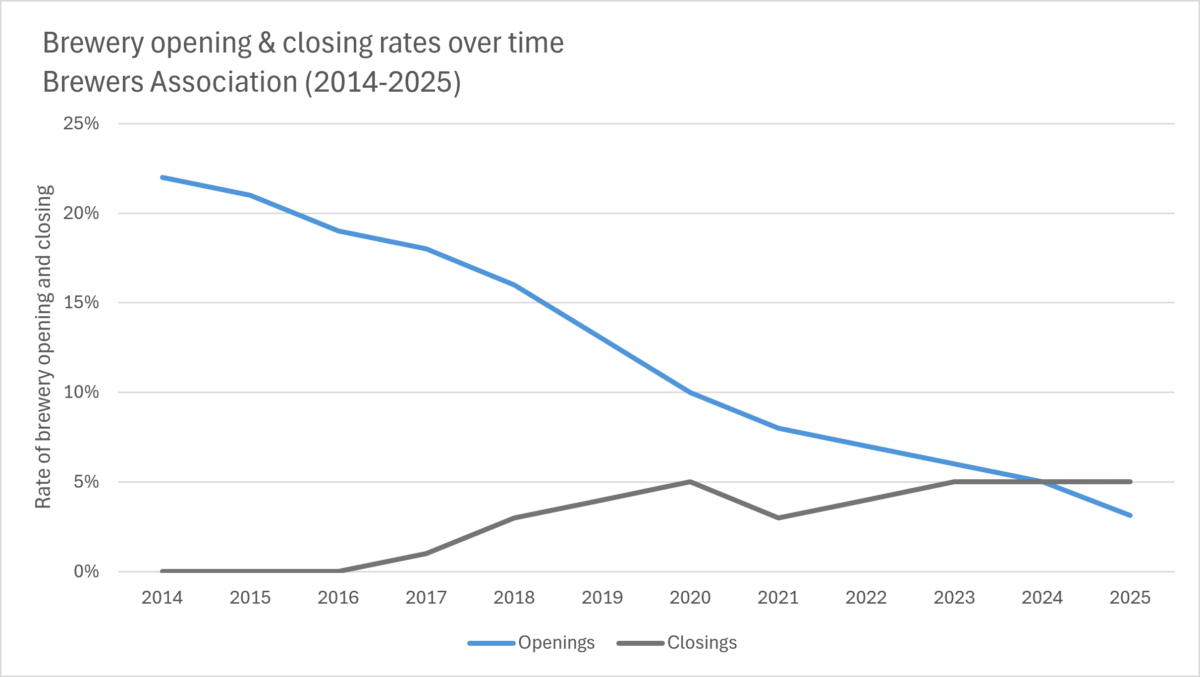
While the rate of brewery closures has remained relatively steady the past few years, the rate of brewery openings has fallen off of a cliff. However, by looking at who is still opening, where they are opening, and what kind of businesses they are building, we can get a better sense of what the industry may look like in the future.
Brewery TypeBoth Hawkley and Blume & Ferris are beginning, intentionally, with the on-site model.
For Hawkley, the long-term vision could eventually include franchises. For Blume & Ferris, the goal is more contained. When asked what success looks like down the road, Michael simply reiterated that the goal is to have a country pub.
There are still some new entrants looking to gain production scale and compete in distribution, but that share has been steadily declining.
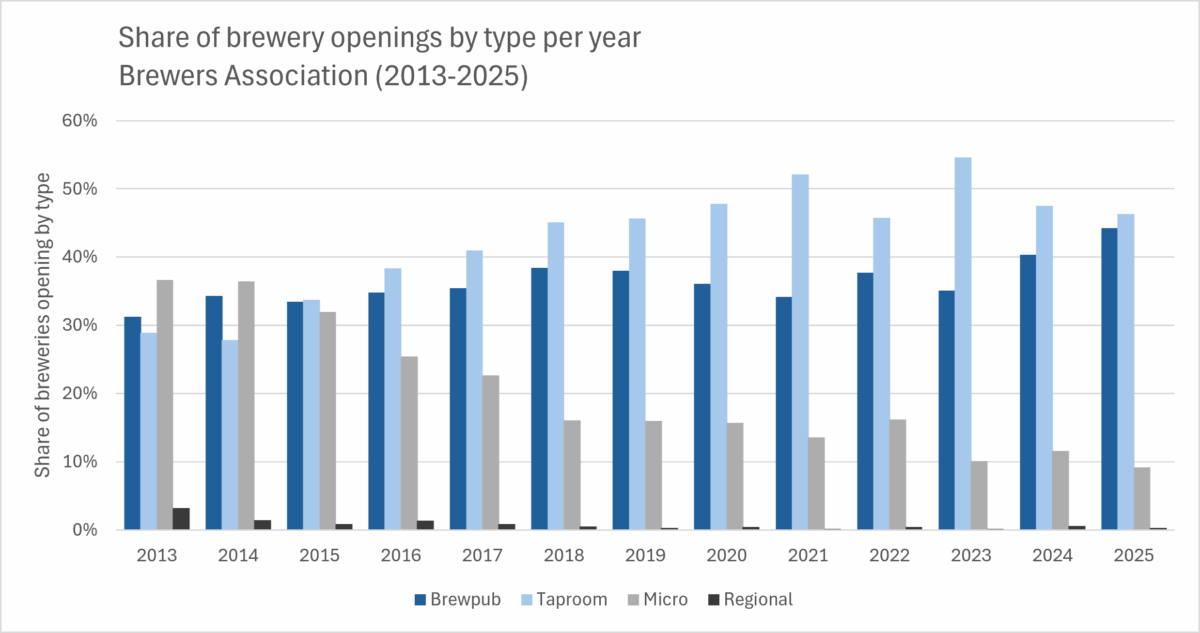
In 2015, 33% of breweries that opened were categorized as distribution-focused models, either microbreweries or regional breweries. Another 33% were brewpubs, and 34% were taprooms. By 2025, that had shifted to 9% distribution-focused, 44% brewpubs, and 46% taprooms.
The brewery opening in 2026 is less likely to be built around scale, and is more likely to be built around a welcoming space, a neighborhood, and a honed customer occasion. Good beer of course still matters, but for many new breweries, hospitality is the business model.
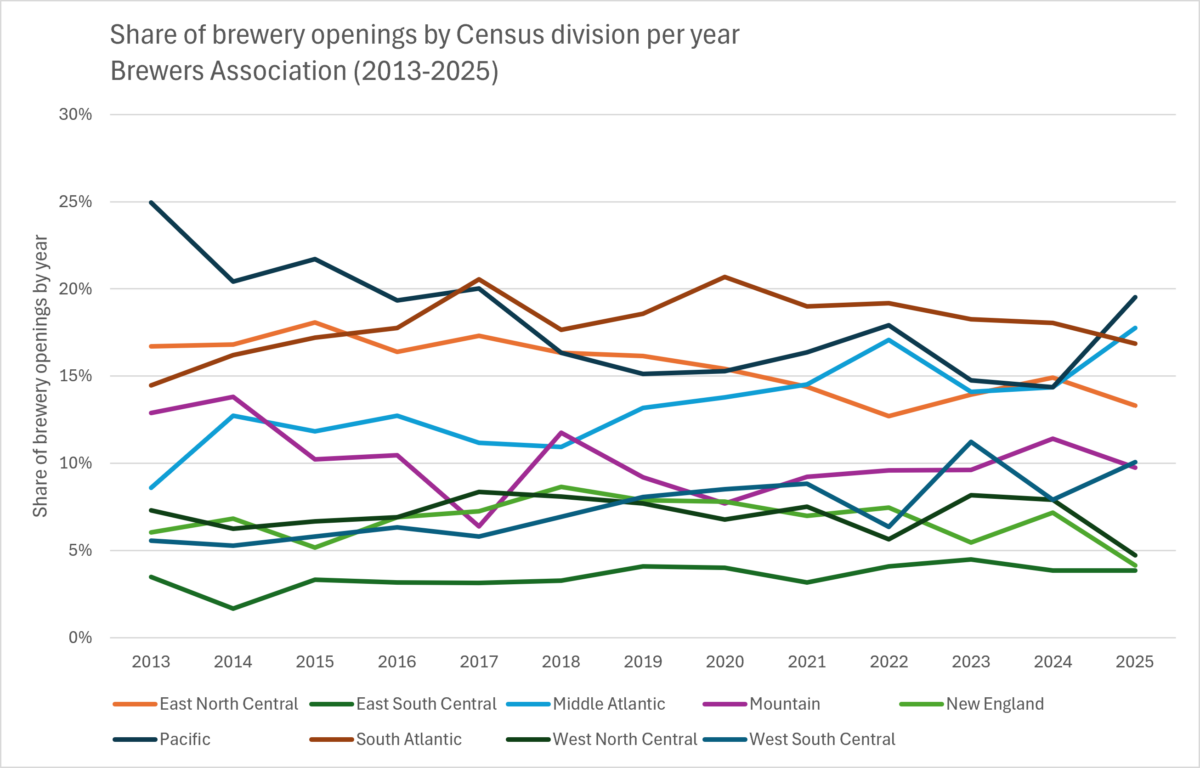
LocationThe hot spots of brewery openings around the country over time resemble something of a shifting amoeba. There are patterns, but it is consistently dynamic.
Over the past decade-plus, the Pacific, South Atlantic, and East North Central divisions have generally taken a higher share of openings, while West North Central, New England, and East South Central have tended to take a lower share.
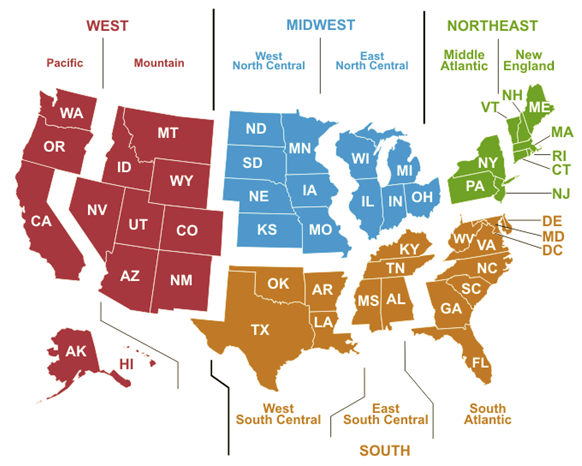 Map Source: U.S. Energy Information Administration
For Hawkley, the Herndon location is central to the potential success of the business for two reasons. First, according to Monte, the area has seen significant growth in a younger demographic since the Silver Line connected the suburb all the way into D.C. Second, the brewery’s proximity to Dulles Airport (less than ten minutes driving) allows the space to become something of a “de facto cell phone lot.”
These are the kinds of practical, site-specific opportunities that matter more in today’s market. It’s less common to expect consumers to go out of their way to a brewery location than it is for them to visit a brewery in an area they already are for another reason.
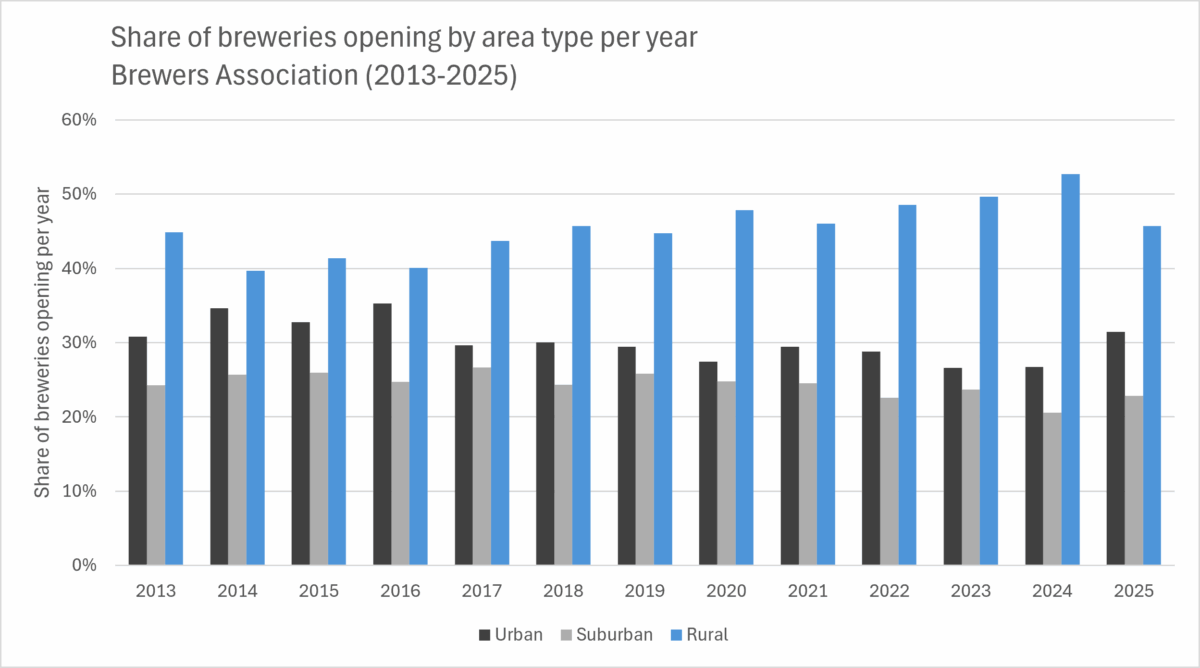
Additionally, we’ve seen openings in rural locations continue to capture share from urban and suburban locations. Breweries will continue to try to meet demand where it exists, so in some more densely-populated regions, the supply of breweries may already be nearing the point of saturation, leading new development in areas without a strong brewery presence already.
Time of YearOverall, openings by quarter have tended to be relatively evenly spread across the year. Between 2015 and 2023, the largest gap between quarters was seven percentage points (pp). The past two years have shown more stratification, with a 10pp difference between Q2 and Q1 in 2024 and a 12pp difference between Q1 and Q4 in 2025.
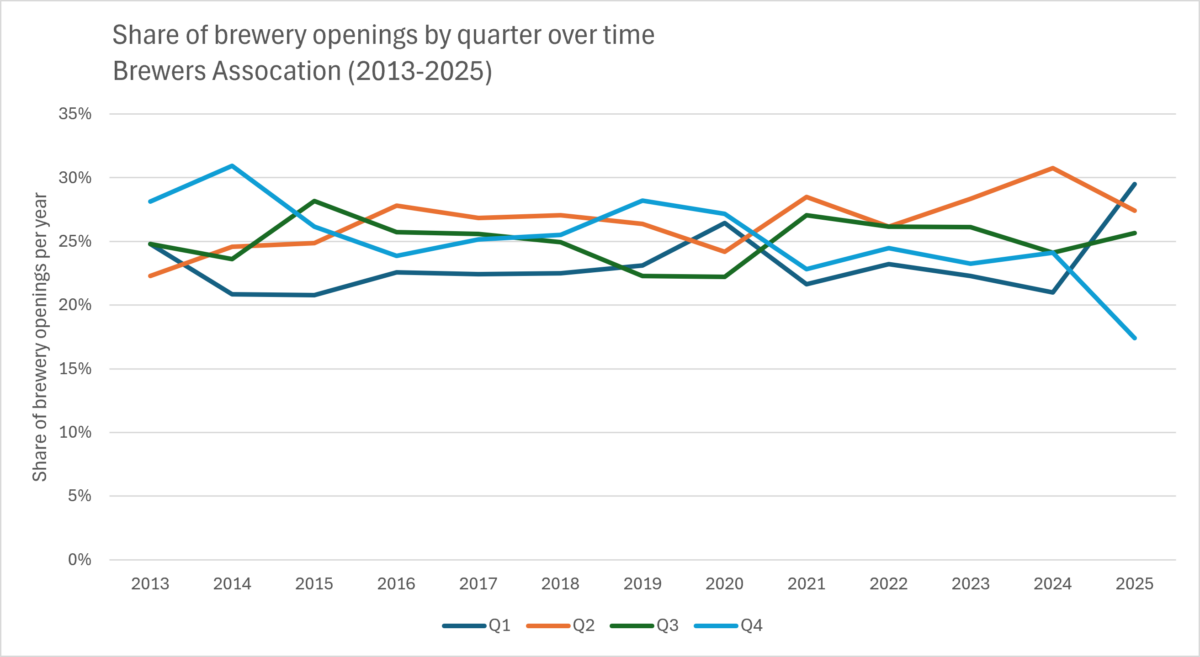
Q1 has historically been one of the quieter times to open, presumably because few entrepreneurs want their first months to be the slowest ones. Q2 and Q3, by contrast, tend to capture more openings during beer’s busiest months nationally.
Of course, breweries often do not open exactly when planned. Construction, permitting, licensing, staffing, and equipment delays keep their own calendar.
First-Year ProductionBoth Hawkley and Blume & Ferris are beginning with modest expectations for total production, largely because of their taproom models. Currently, neither is discussing distribution beyond very limited self-distro. Beyond the business model data shared above, this trend is reflected in production figures for first year breweries as well.
Median and average production in the first calendar year can be misleading because opening dates skew the numbers. A brewery opening in January has almost a full year to produce beer, while a brewery opening in December only has a few days.
So, another way to look at the data is production per day of operation in the first year. For the most recent four years, 2022 through 2025, that median was 0.5 barrels (BBL) produced per day of operation. In other words, a brewery opening January 1 would expect to produce a little over 180 BBL in its first calendar year. A brewery opening at the beginning of July would be closer to 90 BBL, and so on.
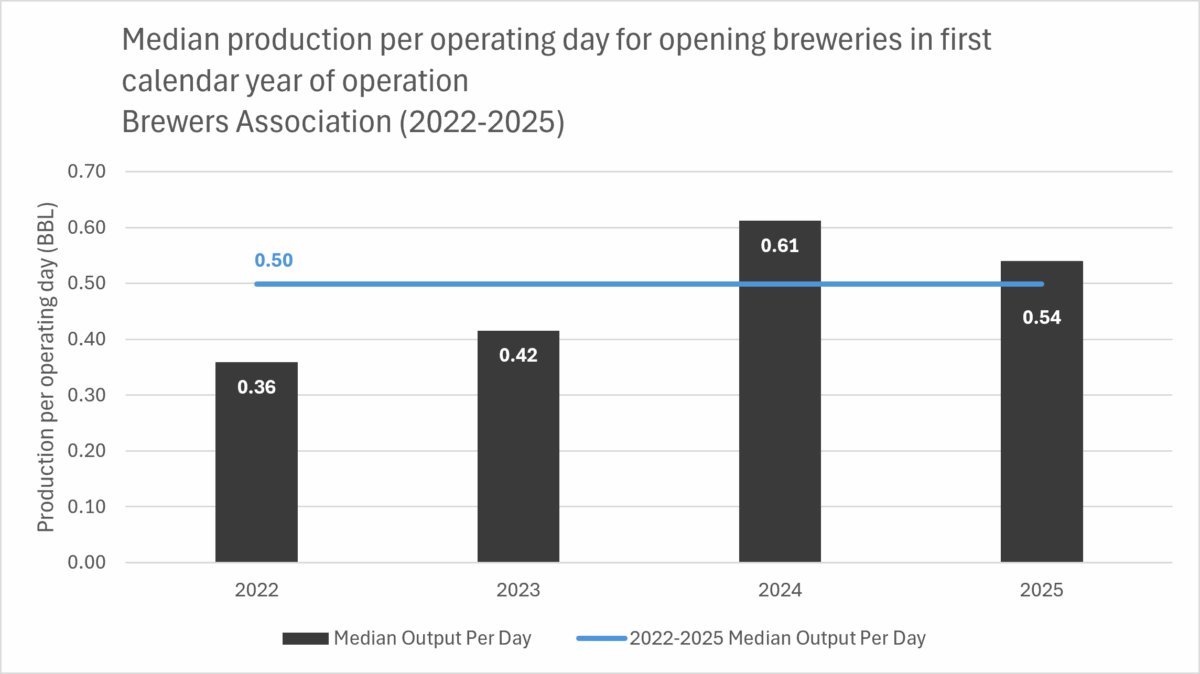
Of course, as with any median, 50% of first-year breweries produced more and 50% produced less, so there is significant variability. But comparing against already-operating breweries (which had a median production of 0.88 BBL/day between 2022-2025), we can expect somewhat of a ramp up in the ensuing years.
OwnershipWhile Hawkley and Blume & Ferris both have highly seasoned brewers creating their products, the businesses themselves are entirely new. This stand-alone status is still the case for the majority of new breweries opening, but there has been a rising share of breweries that are subsequent locations for an existing brewery.
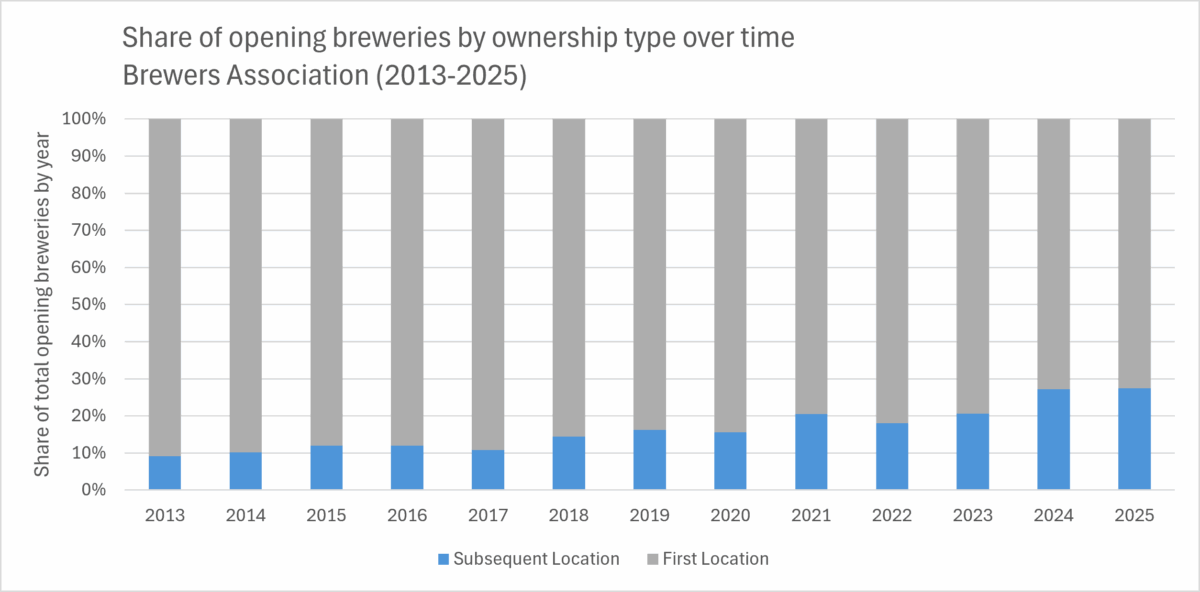
This trend is neither intrinsically good nor bad. A parent company finding enough success in today’s challenging environment to branch out further is a sign of life in a maturing industry. At the same time, it could indicate that barriers to entry for newcomers have become more substantial.
What Comes After SunriseAs you can imagine, a post with a title like “Sunrise” cannot be the end of the story. This is the first of a three-part series that’ll be released over the next couple of months exploring craft brewery stats by stage in the business lifecycle.
Coming next will be “Midday,” an exploration of breweries in sustained ongoing operations, followed by “Sunset,” a unique look at closures through the lens of voluntary exits from the industry. I hope you’ll join me on the rest of that journey.
Was this article helpful?
YesNo
| # | Наименование новости | Тональность | Информативность | Дата публикации |
|---|---|---|---|---|
| 1 | Brewery Visits Are Up. Wait, What? | 0 | 7.72 | 13-08-2026 |
| 2 | Redefining Success in Brewery Operations | 0 | 9.41 | 28-07-2026 |
| 3 | Your Servers Are Your Best Marketing — If You Train Them | 0 | 8.93 | 21-07-2026 |
| 4 | Cincy Light Vs. Cold Time: Two Lager Brands, Two Very Different Paths | 0 | 6.67 | 13-08-2026 |
| 5 | Rising to the Occasion: Positioning NA Beer | 0 | 9.9 | 28-05-2026 |
| 6 | Quick Take: Injury Rates in Breweries | 0 | 8.55 | 14-07-2026 |
| 7 | Hemp Beverages and the Future of Drinking | 0 | 8.77 | 23-04-2026 |
| 8 | Pair of Brunswick breweries get new homes | 0 | 5 | 02-07-2026 |
| 9 | What Firestone Walker Brewing Company Can Teach Every Brewery About Social Media | 0 | 6.41 | 10-08-2026 |
| 10 | Two more Rock Bottoms shutter, leaving one brewpub left in Colorado | 0 | 6.49 | 17-08-2026 |