Просмотр новости
Найдите то, что Вас интересует
 Спутники
 РН
РН SpaceX
 Роскосмос
 NASA
NASA
СпутникиРНSpaceXРоскосмосNASAA team at the Centro Nacional de Investigaciones Cardiovasculares Carlos III (CNIC) has identified a mechanism that protects the liver against age-associated damage and reduces the risk of liver tumors. The researchers have discovered a natural brake within liver mitochondria that delays the progression of chronic liver disease.The study shows that the mitochondrial protein OMA1, which is activated in response to cellular stress, can prevent chronic liver disease, including immune-system overactivation, liver fibrosis, and liver cancer. The findings, published in The EMBO Journa, show that loss of OMA1 triggers a cascade of events beginning with oxidative stress and hepatocyte injury and progressing to persistent inflammation, fibrosis, immune-cell exhaustion, and a higher incidence of primary liver tumors in experimental models. Chronic liver disease is responsible for two million deaths each year, accounting for 4% of global mortality. Aging is a major factor in disease progression, and without appropriate treatment the condition can progress to cirrhosis or liver cancer. The liver is continuously exposed to insults arising from metabolism, diet, and aging. Persistent exposure to these insults can promote the development of chronic liver disease, one of the leading causes of cirrhosis and hepatocellular carcinoma worldwide. Understanding the mechanisms that preserve liver tissue integrity is therefore a priority for the development of new therapeutic strategies. In this study, the researchers monitored genetically modified mice lacking the OMA1 protein over their lifespan. Although these animals reached adulthood without obvious abnormalities, they developed progressive liver damage, fibrosis, and a significantly higher incidence of primary liver tumors as they aged, accompanied by reduced survival.The study, led by José Antonio Enríquez, head of the Functional Genetics of the Oxidative Phosphorylation System group at the CNIC, shows that these alterations arise long before tumors appear. From an early age, the animals displayed signs of liver damage and persistent activation of the KEAP1-NRF2 pathway, which coordinates the cellular response to oxidative stress.Although this pathway normally protects cells from damage, sustained activation eventually leads to tissue injury and promotes the progression of liver disease.One of the study’s key findings is the link between mitochondrial metabolism and immune surveillance.The researchers found that the absence of OMA1 alters the ability of hepatocytes to interact with the immune system, increasing what is known as liver immunogenicity. As a consequence, T lymphocytes become persistently activated and eventually enter a state of functional exhaustion, characterized by a progressive loss of their ability to eliminate abnormal or potentially tumorigenic cells.The experiments further demonstrated that this phenomenon originates in hepatocytes themselves and does not result from an intrinsic defect in immune cells. Using experimental models in which OMA1 was deleted specifically in liver cells, the team confirmed that this alteration alone is sufficient to trigger oxidative stress, cell death, and T-cell exhaustion, reproducing the principal features observed in animals lacking the protein in all tissues.The authors also showed that experimentally reducing oxidative stress in hepatocytes diminishes the induction of T-cell exhaustion in cell cultures, further supporting the connection between mitochondrial function, oxidative stress, and regulation of the hepatic immune response.In addition to providing new insights into the mechanisms that drive chronic liver disease and liver cancer during aging, the study has implications for the development of new therapies. OMA1 is considered a potential pharmacological target in several disorders linked to mitochondrial function; however, these findings indicate that any strategy aimed at inhibiting this protein will need to carefully assess possible effects on the liver and immune system. The study places OMA1 at the center of the communication network linking mitochondria, cellular metabolism, and immune responses, and opens new avenues for investigating strategies to prevent the progression of chronic liver disease and the development of age-associated tumors. The study was supported by funding from the European Research Council (ERC) through an ERC Advanced Grant awarded to José Antonio Enríquez (ERC-2024 Advanced Grant, GA 101198761) and an ERC Consolidator Grant awarded to María Mittelbrunn (ERC-2021 Consolidator Grant, 101044248, Let T Be). Additional support came from the Spanish Ministry of Science, Innovation, and Universities (MICIU); the State Research Agency (AEI); the Biomedical Research Networking Center on Frailty and Healthy Aging (CIBERFES, CB16/10/00282); the “la Caixa” Foundation; and the Madrid regional government through the NutriSION-CM synergy program.Microscopy studies were conducted at the CNICMicroscopy & Dynamic Imaging Unit, part of the ICTS-ReDib infrastructure, co-funded by the Ministry of Science, Innovation, and Universities and the State Research AgencyMartí-Mateos Y, Muñoz-Hernández MM, Gómez de las Heras MM, Escrig-Larena JI, Cabrera-Alarcón JL, Acín-Pérez R, et al. OMA1 protects from liver injury and tumorigenesis during aging by controlling hepatic immunogenicity. *EMBO J*. 2026. doi:10.1038/s44318-026-00839-4.
A team at the Centro Nacional de Investigaciones Cardiovasculares Carlos III (CNIC) has identified a mechanism that protects the liver against age-associated damage and reduces the risk of liver tumors. The researchers have discovered a natural brake within liver mitochondria that delays the progression of chronic liver disease.
The study shows that the mitochondrial protein OMA1, which is activated in response to cellular stress, can prevent chronic liver disease, including immune-system overactivation, liver fibrosis, and liver cancer.
The findings, published in The EMBO Journa, show that loss of OMA1 triggers a cascade of events beginning with oxidative stress and hepatocyte injury and progressing to persistent inflammation, fibrosis, immune-cell exhaustion, and a higher incidence of primary liver tumors in experimental models.
Chronic liver disease is responsible for two million deaths each year, accounting for 4% of global mortality. Aging is a major factor in disease progression, and without appropriate treatment the condition can progress to cirrhosis or liver cancer.
The liver is continuously exposed to insults arising from metabolism, diet, and aging. Persistent exposure to these insults can promote the development of chronic liver disease, one of the leading causes of cirrhosis and hepatocellular carcinoma worldwide. Understanding the mechanisms that preserve liver tissue integrity is therefore a priority for the development of new therapeutic strategies.
In this study, the researchers monitored genetically modified mice lacking the OMA1 protein over their lifespan. Although these animals reached adulthood without obvious abnormalities, they developed progressive liver damage, fibrosis, and a significantly higher incidence of primary liver tumors as they aged, accompanied by reduced survival.
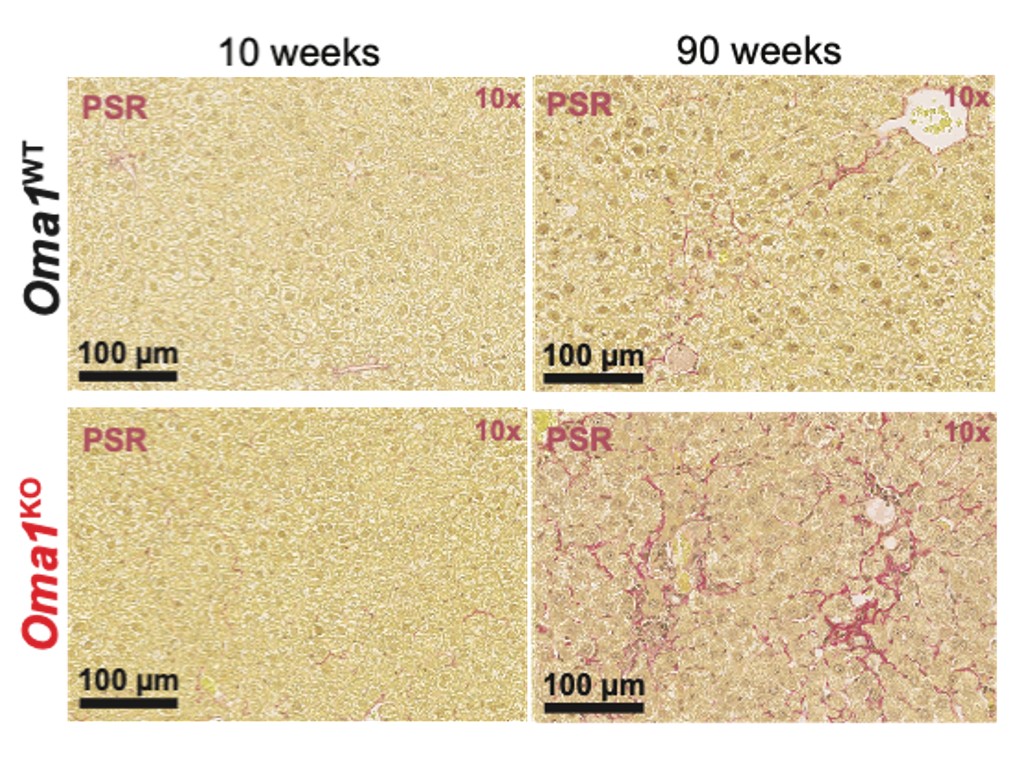
The study, led by José Antonio Enríquez, head of the Functional Genetics of the Oxidative Phosphorylation System group at the CNIC, shows that these alterations arise long before tumors appear. From an early age, the animals displayed signs of liver damage and persistent activation of the KEAP1-NRF2 pathway, which coordinates the cellular response to oxidative stress.
Although this pathway normally protects cells from damage, sustained activation eventually leads to tissue injury and promotes the progression of liver disease.One of the study’s key findings is the link between mitochondrial metabolism and immune surveillance.
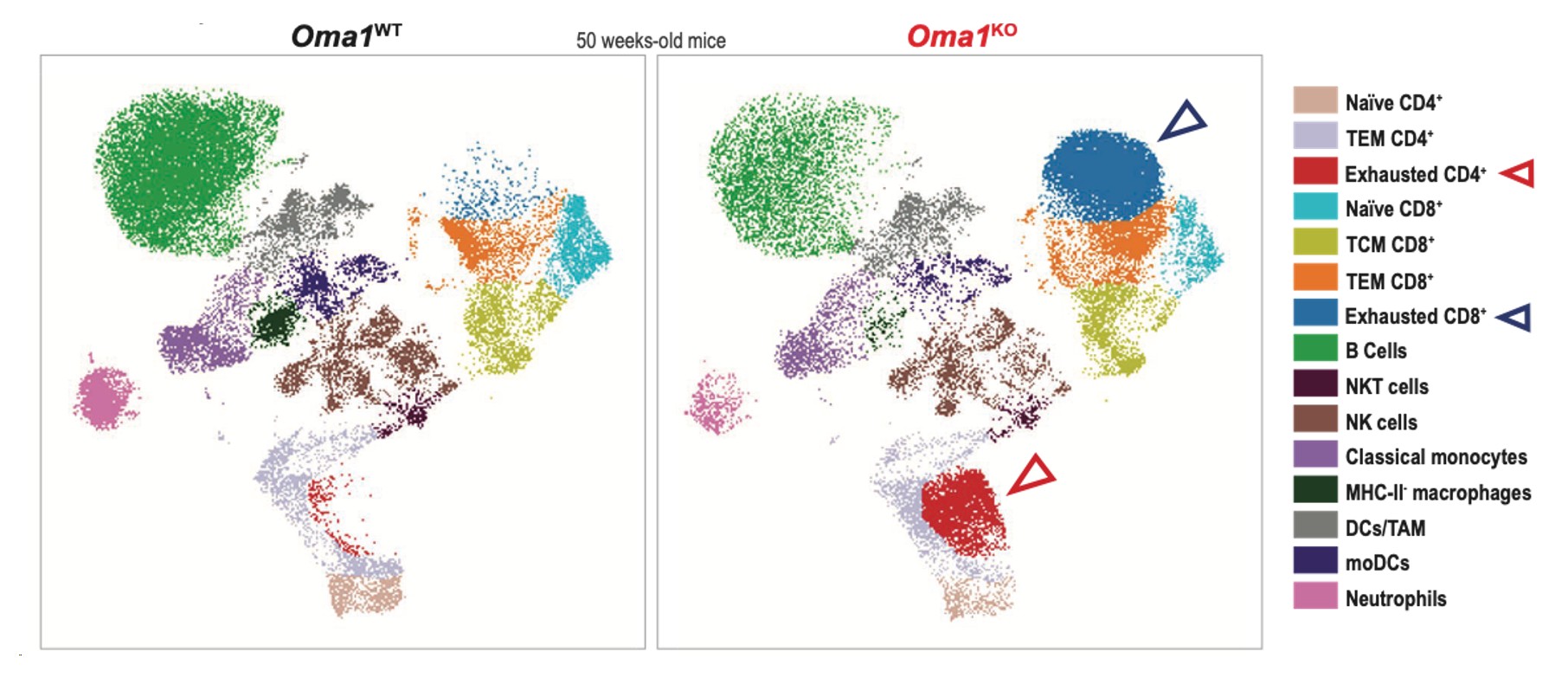
The researchers found that the absence of OMA1 alters the ability of hepatocytes to interact with the immune system, increasing what is known as liver immunogenicity. As a consequence, T lymphocytes become persistently activated and eventually enter a state of functional exhaustion, characterized by a progressive loss of their ability to eliminate abnormal or potentially tumorigenic cells.
The experiments further demonstrated that this phenomenon originates in hepatocytes themselves and does not result from an intrinsic defect in immune cells. Using experimental models in which OMA1 was deleted specifically in liver cells, the team confirmed that this alteration alone is sufficient to trigger oxidative stress, cell death, and T-cell exhaustion, reproducing the principal features observed in animals lacking the protein in all tissues.
The authors also showed that experimentally reducing oxidative stress in hepatocytes diminishes the induction of T-cell exhaustion in cell cultures, further supporting the connection between mitochondrial function, oxidative stress, and regulation of the hepatic immune response.
In addition to providing new insights into the mechanisms that drive chronic liver disease and liver cancer during aging, the study has implications for the development of new therapies. OMA1 is considered a potential pharmacological target in several disorders linked to mitochondrial function; however, these findings indicate that any strategy aimed at inhibiting this protein will need to carefully assess possible effects on the liver and immune system. The study places OMA1 at the center of the communication network linking mitochondria, cellular metabolism, and immune responses, and opens new avenues for investigating strategies to prevent the progression of chronic liver disease and the development of age-associated tumors.
The study was supported by funding from the European Research Council (ERC) through an ERC Advanced Grant awarded to José Antonio Enríquez (ERC-2024 Advanced Grant, GA 101198761) and an ERC Consolidator Grant awarded to María Mittelbrunn (ERC-2021 Consolidator Grant, 101044248, Let T Be). Additional support came from the Spanish Ministry of Science, Innovation, and Universities (MICIU); the State Research Agency (AEI); the Biomedical Research Networking Center on Frailty and Healthy Aging (CIBERFES, CB16/10/00282); the “la Caixa” Foundation; and the Madrid regional government through the NutriSION-CM synergy program.
Microscopy studies were conducted at the CNICMicroscopy & Dynamic Imaging Unit, part of the ICTS-ReDib infrastructure, co-funded by the Ministry of Science, Innovation, and Universities and the State Research Agency