Просмотр новости
Найдите то, что Вас интересует
 Спутники
 РН
РН SpaceX
 Роскосмос
 NASA
NASA
СпутникиРНSpaceXРоскосмосNASACAPE TOWN, SOUTH AFRICA — At least 242 million children in 85 countries had their schooling interrupted last year because of heat waves, cyclones, flooding and other extreme weather, the United Nations Children's Fund said in a new report Friday.
UNICEF said it amounted to one in seven school-going children across the world being kept out of class at some point in 2024 because of climate hazards.
The report also outlined how some countries saw hundreds of their schools destroyed by weather, with low-income nations in Asia and sub-Saharan Africa hit especially hard.
But other regions weren't spared the extreme weather, as torrential rains and floods in Italy near the end of the year disrupted school for more than 900,000 children. Thousands had their classes halted after catastrophic flooding in Spain.
While southern Europe dealt with deadly floods and Asia and Africa had flooding and cyclones, heatwaves were "the predominant climate hazard shuttering schools last year," UNICEF said, as the earth recorded its hottest year ever.
More than 118 million children had their schooling interrupted in April alone, UNICEF said, as large parts of the Middle East and Asia, from Gaza in the west to the Philippines in the southeast, experienced a sizzling weekslong heat wave with temperatures soaring above 40 degrees Celsius.
"Children are more vulnerable to the impacts of weather-related crises, including stronger and more frequent heat waves, storms, droughts and flooding," UNICEF executive director Catherine Russell said in a statement. "Children's bodies are uniquely vulnerable. They heat up faster, they sweat less efficiently and cool down more slowly than adults. Children cannot concentrate in classrooms that offer no respite from sweltering heat, and they cannot get to school if the path is flooded, or if schools are washed away."
Around 74% of the children affected in 2024 were in middle- and low-income countries, showing how climatic extremes continue to have a devastating impact in the poorest countries. Flooding ruined more than 400 schools in Pakistan in April. Afghanistan had heatwaves followed by severe flooding that destroyed over 110 schools in May, UNICEF said.
Months of drought in southern Africa exacerbated by the El Niño weather phenomenon threatened the schooling and futures of millions of children.
And the crises showed little sign of abating. The poor French territory of Mayotte in the Indian Ocean off Africa was left in ruins by Cyclone Chido in December and hit again by Tropical Storm Dikeledi this month, leaving children across the islands out of school for six weeks.
Cyclone Chido also destroyed more than 330 schools and three regional education departments in Mozambique on the African mainland, where access to education is already a deep problem.
UNICEF said the world's schools and education systems "are largely ill-equipped" to deal with the effects of extreme weather.
CAPE TOWN, SOUTH AFRICA —
At least 242 million children in 85 countries had their schooling interrupted last year because of heat waves, cyclones, flooding and other extreme weather, the United Nations Children's Fund said in a new report Friday.
UNICEF said it amounted to one in seven school-going children across the world being kept out of class at some point in 2024 because of climate hazards.
The report also outlined how some countries saw hundreds of their schools destroyed by weather, with low-income nations in Asia and sub-Saharan Africa hit especially hard.
But other regions weren't spared the extreme weather, as torrential rains and floods in Italy near the end of the year disrupted school for more than 900,000 children. Thousands had their classes halted after catastrophic flooding in Spain.
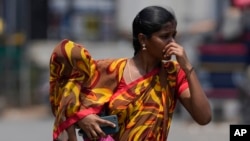
While southern Europe dealt with deadly floods and Asia and Africa had flooding and cyclones, heatwaves were "the predominant climate hazard shuttering schools last year," UNICEF said, as the earth recorded its hottest year ever.
More than 118 million children had their schooling interrupted in April alone, UNICEF said, as large parts of the Middle East and Asia, from Gaza in the west to the Philippines in the southeast, experienced a sizzling weekslong heat wave with temperatures soaring above 40 degrees Celsius.
"Children are more vulnerable to the impacts of weather-related crises, including stronger and more frequent heat waves, storms, droughts and flooding," UNICEF executive director Catherine Russell said in a statement. "Children's bodies are uniquely vulnerable. They heat up faster, they sweat less efficiently and cool down more slowly than adults. Children cannot concentrate in classrooms that offer no respite from sweltering heat, and they cannot get to school if the path is flooded, or if schools are washed away."
Around 74% of the children affected in 2024 were in middle- and low-income countries, showing how climatic extremes continue to have a devastating impact in the poorest countries. Flooding ruined more than 400 schools in Pakistan in April. Afghanistan had heatwaves followed by severe flooding that destroyed over 110 schools in May, UNICEF said.
Months of drought in southern Africa exacerbated by the El Niño weather phenomenon threatened the schooling and futures of millions of children.
And the crises showed little sign of abating. The poor French territory of Mayotte in the Indian Ocean off Africa was left in ruins by Cyclone Chido in December and hit again by Tropical Storm Dikeledi this month, leaving children across the islands out of school for six weeks.
Cyclone Chido also destroyed more than 330 schools and three regional education departments in Mozambique on the African mainland, where access to education is already a deep problem.
UNICEF said the world's schools and education systems "are largely ill-equipped" to deal with the effects of extreme weather.
| # | Наименование новости | Тональность | Информативность | Дата публикации |
|---|---|---|---|---|
| 1 | UNICEF: Nästan hälften av världens barn utsätts för minst tre klimathot | -2 | 6 | 16-06-2026 |
| 2 | Niñez latinoamericana muy expuesta a riesgos climáticos | 0 | 12.56 | 19-06-2026 |
| 3 | El Nino presents acute hunger threat to 49 million people – UN | 0 | 13.76 | 05-08-2026 |
| 4 | Oppressive heat, high humidity grip much of the US as students start a new school year | 0 | 7.79 | 14-08-2026 |
| 5 | South Africa: Children of Immigrants Forced to Leave South African Schools | 0 | 5 | 16-07-2026 |
| 6 | The Guardian: Сильная жара из-за Эль-Ниньо грозит голодом для 50 млн человек | 0 | 19.01 | 05-08-2026 |
| 7 | ООН предрекла острую нехватку продовольствия для 49 млн человек из-за Эль-Ниньо | 0 | 14.71 | 05-08-2026 |
| 8 | Photos: Spain and France battle record wildfires | 0 | 6.66 | 28-07-2026 |
| 9 | Hundreds dead across Europe as heatwave shatters records | -5 | 5 | 25-06-2026 |
| 10 | В европейские страны пришла новая волна аномальной жары под сорок ... | 0 | 7.09 | 13-08-2026 |