Просмотр новости
Найдите то, что Вас интересует
 Спутники
 РН
РН SpaceX
 Роскосмос
 NASA
NASA
СпутникиРНSpaceXРоскосмосNASAMacworld
The iPhone 18 Pro and iPhone 18 Pro Max are now on sale. They retain the 6.3-inch and 6.9-inch screen sizes and aluminum unibody design introduced with the previous generation, but Apple has made substantial changes to the cameras, processor, cooling, battery life and connectivity.
The biggest camera upgrade is a new 48MP Fusion Main camera with variable aperture, which can automatically move between ƒ/1.48, ƒ/1.8, ƒ/2.8 and ƒ/4 depending on lighting and depth of field. The widest aperture lets in more light for low-light photography, while new Pro controls let users manually adjust aperture, shutter speed and white balance, and view a histogram to assess exposure.
Inside is the A20 Pro, Apple’s first iPhone chip made using a 2nm process. It has a new six-core CPU, seven-core GPU, Dual 16-core Neural Engine and 50% more memory bandwidth than the A19 Pro. A larger vapor chamber and new M-series-inspired chip packaging also improve heat dissipation, with Apple claiming up to 40% better sustained performance than the iPhone 17 Pro.
Other major changes include up to 36 hours of Apple-rated video playback on the Pro and 45 hours on the Pro Max on eSIM-only models, faster wired charging, and a redesigned Dynamic Island capable of showing three Live Activities simultaneously. The smaller iPhone 18 Pro also introduces Apple’s C2 cellular modem (Apple’s documentation doesn’t make it clear if this features in the Pro Max).
iPhone 18 Pro/Max vs iPhone 17 Pro/Max: Top 10 changes at a glance
iPhone 18 Pro vs iPhone 17 ProFoundry
The five biggest changes are the variable-aperture camera, A20 Pro, improved cooling, longer battery life and redesigned Dynamic Island/connectivity system. Here is an overview of what’s new compared to the previous generation.
FeatureiPhone 18 Pro / Pro MaxiPhone 17 Pro / Pro MaxWhat’s changedMain camera48MP, variable ƒ/1.48–ƒ/4 aperture48MP, fixed apertureMajor new photographic controlProcessorA20 Pro, 2nmA19 ProNew manufacturing processGPU7-core, up to 40% faster6-coreSignificant graphics boostNeural EngineDual 16-core / 32 cores total16-coreAround 2x AI computeCoolingVapor chamber with 3x surface areaFirst-gen vapor chamberUp to 40% better sustained performancePro Max battery45 hours video39 hours+6 hoursPro batteryUp to 36 hours video on eSIM model33 hoursUp to +3 hoursWired charging50% in around 15 minutes50% in around 20 minutesFaster chargingModemApple C2 (in Pro, unconfirmed in Pro Max)Qualcomm modemPro switches to an Apple-designed modemDynamic IslandRedesigned, 3 Live ActivitiesPrevious design, up to 2More information displayed simultaneously
Apple has added a 2TB option to the smaller Pro for the first time, while retaining 256GB as the entry-level capacity.
iPhone 18 Pro and Pro Max: Release date and availability
The iPhone 18 Pro and iPhone 18 Pro Max were announced on Wednesday, September 9, 2026. They started shipping from Friday, September 18, 2026 in more than 65 countries and regions and in another 20 countries from September 25.
You can buy the phones directly from Apple online or at Apple Stores, as well as through mobile networks and authorized Apple retailers. Apple sells unlocked iPhones directly through its website and stores.
Buy iPhone 18 Pro and Max at Apple U.S.
Buy iPhone 18 Pro and Max at Apple U.K.
We recommend: Apple iPhone 18 Pro
We recommend: Apple iPhone 18 Pro Max
iPhone 18 Pro/Max design: What does it look like?
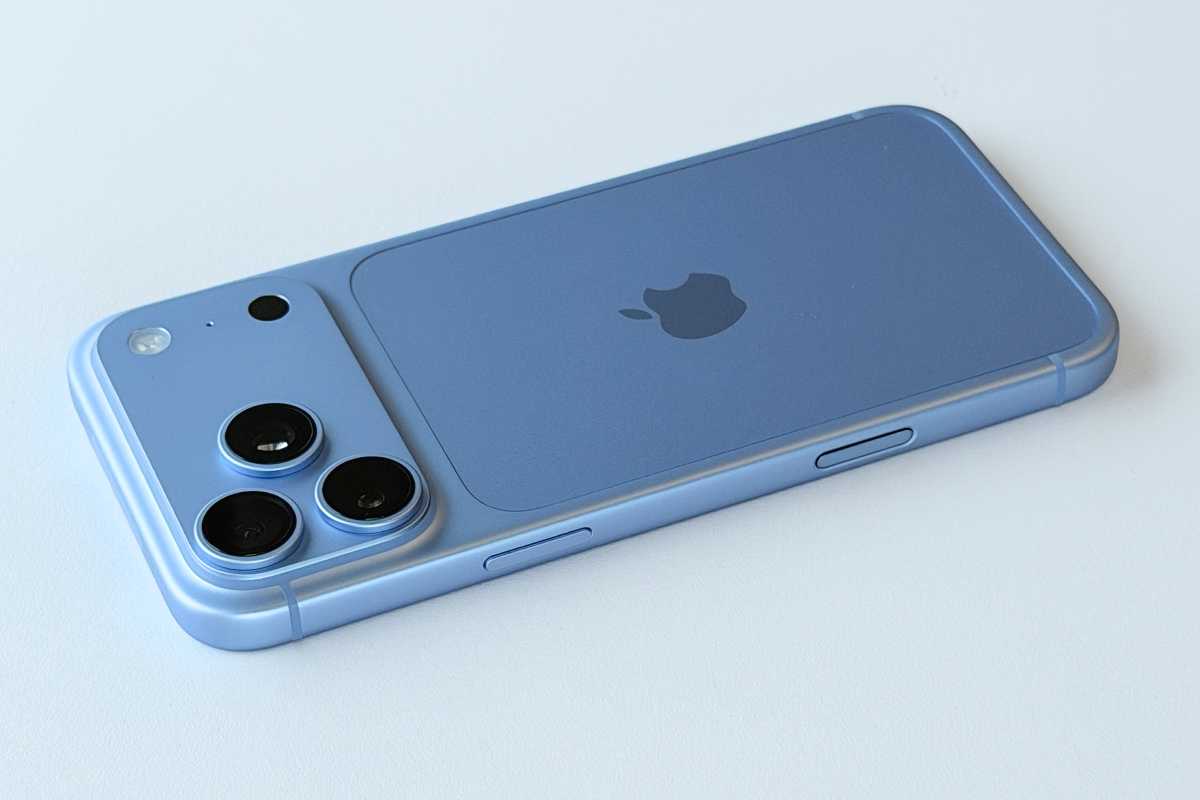
This is the Burgundy variant (we think Deep Cherry was a much nicer name).
Foundry
The iPhone 18 Pro retains the aluminum unibody introduced with the iPhone 17 Pro, as well as the Ceramic Shield on the rear and Ceramic Shield 2 over the display. The camera system remains arranged on the large raised plateau across the upper part of the rear casing.
Screen sizes are unchanged at 6.3 inches for the iPhone 18 Pro and 6.9 inches for the iPhone 18 Pro Max, both using Super Retina XDR OLED displays with ProMotion up to 120Hz.
Apple offers four finishes this year:
Burgundy
Glacier
Silver
Black
That means Cosmic Orange and Deep Blue disappear, while black returns to the Pro line despite pre-launch reports suggesting it would not. Read more about the color choices here: Apple’s new iPhone 18 Pro colors.
The pre-event leaks suggested the basic chassis dimensions would remain very close to the iPhone 17 Pro and Pro Max, with the camera plateau rather than the body itself becoming thicker. We can confirm from our own research that the newer camera bump is approximately 0.5mm taller. This means that cases designed for the iPhone 17 Pro may not fit the iPhone 18 Pro. Before buying a case, check compatibility and read our Best iPhone 18 Pro cases buying guide.
The new iPhones share the same screen sizes and overall form as their predecessors, but both models are slightly heavier this time.
iPhone 18 Pro dimensions: 150 x 71.9 x 8.75mm / 5.91 x 2.83 x 0.34 in
iPhone 18 Pro weight: 7.44 ounces / 211 grams (17 Pro was 7.27 ounces / 206 grams with eSIM)
iPhone 18 Pro Max dimensions: 163.4 x 78 x 8.75mm / 6.43 x 3.07 x 0.34 in
iPhone 18 Pro Max weight: 8.78 ounces / 249 grams (17 Pro Max was 8.22 ounces / 233 grams with eSIM)
Changes to the Dynamic Island
Apple has redesigned the Dynamic Island. Apple says new display technology creates additional usable space and allows the Dynamic Island to display up to three Live Activities at once, for example navigation, music and a sports score.
Apple has not announced fully under-display Face ID. Pre-launch reports suggested that one or more infrared Face ID components could move beneath the OLED panel, allowing the notch to shrink, but Apple hasn’t confirmed the underlying sensor arrangement.
iPhone 18 Pro and Pro Max cameras: Are the cameras the same?
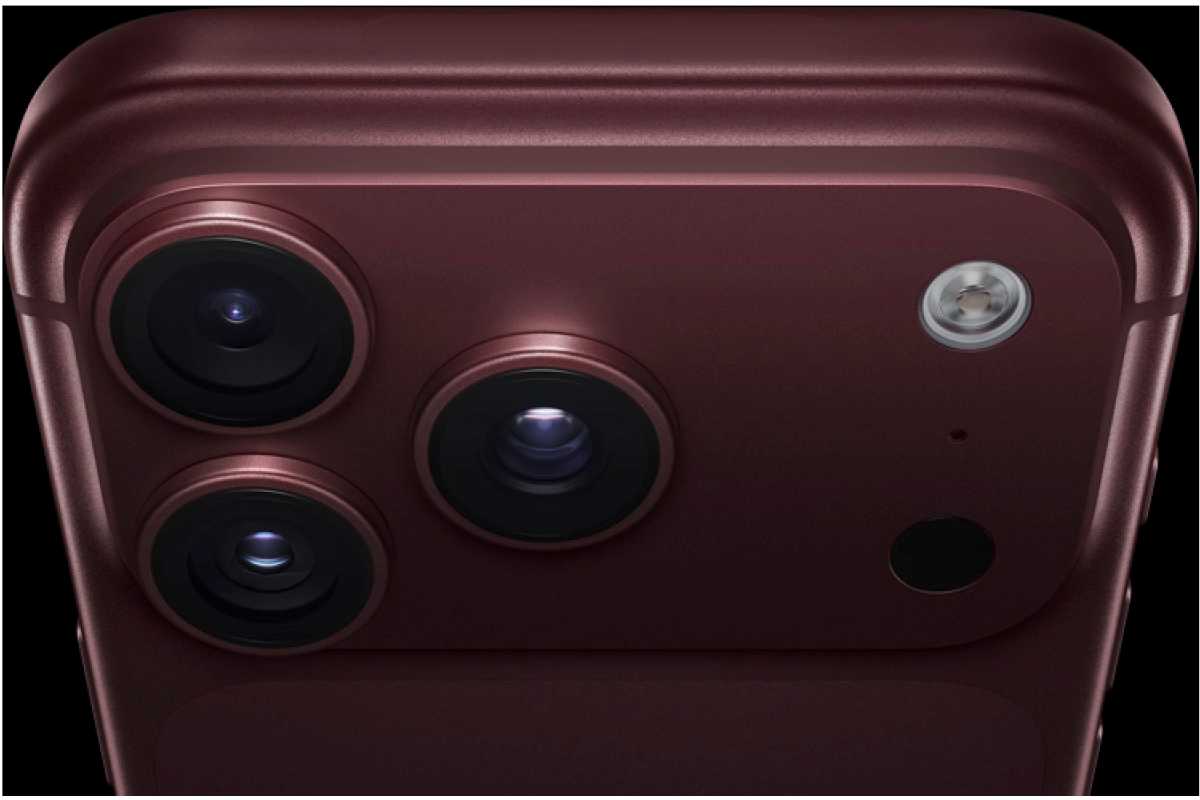
The iPhone 18 Pro cameras.
Apple
Both the iPhone 18 Pro and Pro Max have the same three-camera rear system. The main change is not resolution—all three remain 48MP—but the new variable-aperture Main camera and new computational imaging pipeline.
The three most notable camera upgrades are:
Variable aperture on the 48MP Main camera.
A new Main camera sensor and imaging pipeline, improving low-light performance and detail.
More extensive manual Pro controls, including aperture, shutter speed, white balance and histogram.
Rear cameras
CameraResolutionFocal lengthAperturePixel informationFusion Main48MP sensor; 12MP at 2x optical-quality zoom24mm / 48mm, 1x / 2xƒ/1.48, ƒ/1.8, ƒ/2.8, ƒ/4 variable2.44μm quad-pixel / 1.22μm individualFusion Ultra Wide48MP13mm, 0.5x / macroƒ/2.21.4μm quad-pixel / 0.7μm individualFusion Telephoto48MP sensor; 12MP at 8x optical-quality zoom100mm / 200mm, 4x / 8xƒ/2.81.4μm quad-pixel / 0.7μm individual
The 2x and 8x optical-quality options use crops from the Main and Telephoto sensors respectively, producing 12MP images rather than 48MP captures.
The Main camera’s six-blade mechanical aperture can automatically open to ƒ/1.48 in low light or close as far as ƒ/4 for increased depth of field. Photographers can also select aperture manually.
Both Pro models also offer up to 8x optical-quality zoom from the Telephoto camera. Contrary to some earlier rumors, the variable-aperture camera is not exclusive to the Pro Max.
Photography and editing improvements
Computational photography: Apple has introduced a new imaging pipeline, smart focus tracking, improved Clean Up, Spatial Reframing, an Extend tool and Photographic Styles 3, which adds texture and grain adjustments. these controls require photos captured on iPhone 18 Pro/Max or the Duo’s Main, Ultra Wide or Center Stage cameras. Older supported iPhones can edit those eligible images—it isn’t simply a restriction on the editing device. See: Apple’s next-gen photo controls only work on images ‘captured’ on a new iPhone.
Apple Reference Image (U.S. and U.K.): Will use signed data from the iPhone 18 Pro’s Main camera sensor to create an unalterable reference image through Private Cloud Compute. Viewed alongside the edited photo in Photos, it helps users assess what has changed, providing a useful authenticity check for photographers, journalists and anyone sharing images. It’s off by default, to enable it go to: Settings > Camera > Reference Image > Add Reference Mode.
Front camera
Apple has retained the 18MP Center Stage front camera, rather than moving to the rumored 24MP sensor. It supports automatic reframing, Center Stage, ultra-stabilized video and Dual Capture.
The front camera remains visibly associated with the Dynamic Island. Apple has not announced an under-display selfie camera on the iPhone 18 Pro.
iPhone 18 Pro video changes
Frame rates: Cinematic effects can now be applied after shooting to ordinary videos captured at up to 60fps. The phones continue to offer 4K 120fps Dolby Vision for high-frame-rate shooting.
Time-lapse: Time-lapse receives a significant upgrade to 4K with Dolby Vision HDR.
A20 Pro processor: How fast is it?
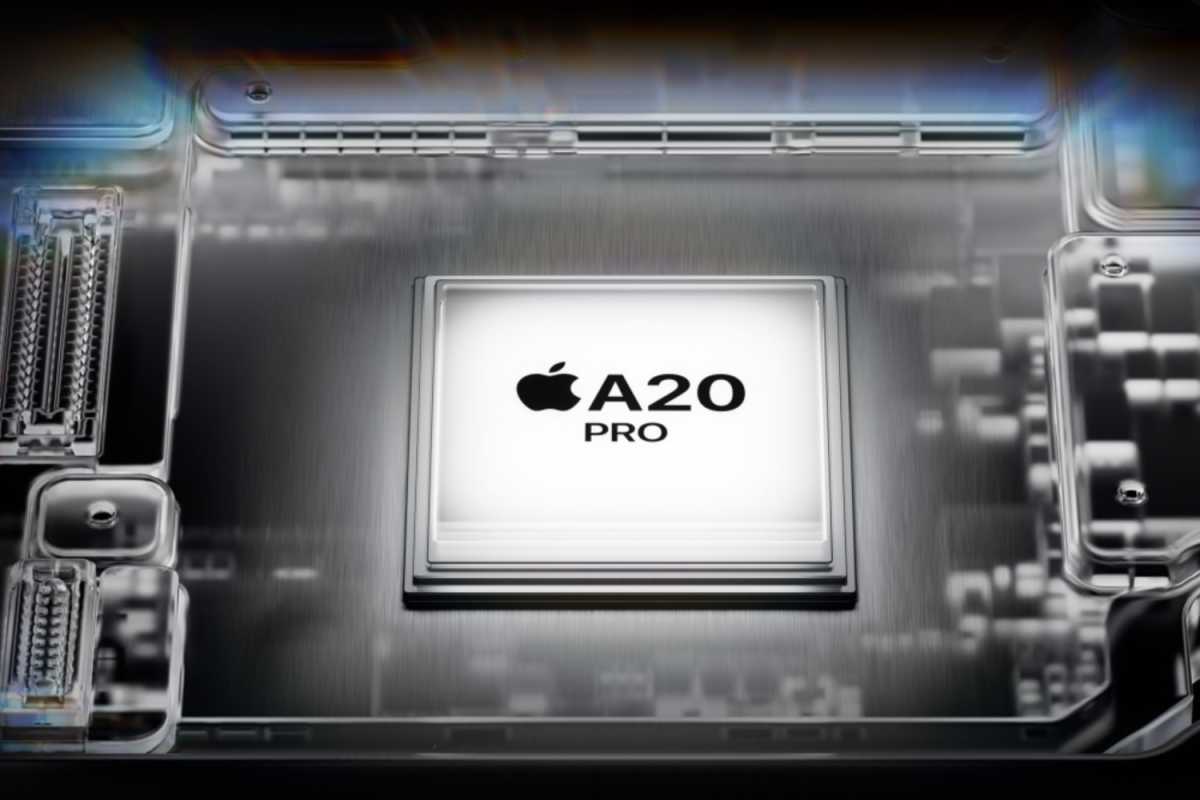
Apple has redesigned the iPhone chip.
Apple
Both the iPhone 18 Pro and Pro Max use Apple’s new A20 Pro processor.
It is manufactured using a 2-nanometer process, down from the 3nm-class process used for A19 Pro, giving Apple more scope to improve efficiency and transistor density.
The chip includes:
6-core CPU
7-core GPU
Neural Accelerators integrated into the CPU/GPU architecture
Dual 16-core Neural Engine, 32 cores in total
50% more memory bandwidth than A19 Pro
Apple says the GPU is up to 40% faster than A19 Pro, while the Neural Engine offers roughly double the AI processing capability.
One particularly important change is the packaging. Inspired by Apple’s M-series Mac chips, A20 Pro places the processor die side-by-side with memory rather than stacking memory directly in the chip’s thermal path. This improves heat transfer and allows the processor to couple more directly to the vapor chamber.
That vapor chamber itself has three times the surface area of the iPhone 17 Pro’s system. Apple claims the combination delivers up to 40% better sustained performance, which should be most noticeable during gaming, video work and intensive on-device AI rather than ordinary web browsing and messaging.
RAM: How much memory does the iPhone 18 Pro/Max have?
Apple does not officially publish RAM capacities for iPhones. However, iFixit lists 12GB of LPDDR5X memory for both the iPhone 18 Pro and iPhone 18 Pro Max, matching the reported 12GB in the previous Pro generation.
The main memory upgrade is bandwidth: Apple says the A20 Pro offers 50% more memory bandwidth than A19 Pro. This increases the amount of data its CPU, GPU and Neural Engine can transfer to and from memory each second.
Higher memory bandwidth can help accelerate demanding tasks, including on-device AI. Combined with the redesigned chip packaging and improved cooling, it should help sustain performance during intensive workloads. However, this does not necessarily mean that more Apple Intelligence or Siri AI tasks run locally rather than in the cloud..
iPhone 18 Pro/Max connectivity options
C2 modem
The iPhone 18 Pro introduces Apple’s C2 cellular modem, replacing the Qualcomm modem used in the previous Pro generation.
Apple says C2 delivers faster uploads while consuming 15% less energy than C1X, alongside AI-powered improvements to connection quality and reliability and support for mmWave in the U.S.
Apple’s technical specifications list C2 for the iPhone 18 Pro but do not identify the modem in the Pro Max.
Wi-Fi and Bluetooth
Like the predecessors, the 2026 iPhones use Apple’s N1 wireless networking chip, supporting:
Wi-Fi 7
Bluetooth 6
Thread
Satellite
Emergency SOS via satellite, Messages via satellite, Roadside Assistance via satellite and Find My satellite functionality continue. Apple made no announcements about full satellite internet or ordinary 5G data delivered by satellite, despite pre-launch rumors suggesting such a capability could appear.
iPhone 18 Pro/Max Battery, MagSafe and charging: What’s changed?
Battery life is one of the most significant improvements.
Apple says eSIM-only models gain additional battery capacity because the space previously occupied by the physical SIM tray can be used for battery cells. Physical-SIM variants provide around two hours less video playback than equivalent eSIM-only models.
Battery-life improvements come from larger batteries and greater power efficiency, including the new 2nm A20 Pro processor.
iPhone 18 Pro and Pro Max battery capacity and life
The table below compares battery capacity and Apple’s video-playback ratings for the physical-SIM and eSIM-only versions of the iPhone 18 Pro and Pro Max.
ModelSIM versionBattery capacityEnergyVideo playbackEquivalent iPhone 17 model: video playbackImprovementiPhone 18 ProPhysical SIM4,056mAh15.86WhUp to 34 hours17 Pro: up to 31 hours+3 hoursiPhone 18 ProeSIM-only4,288mAh16.76WhUp to 36 hours17 Pro: up to 33 hours+3 hoursiPhone 18 Pro MaxPhysical SIM5,391mAh21.06WhUp to 43 hours17 Pro Max: up to 37 hours+6 hoursiPhone 18 Pro MaxeSIM-only5,567mAh21.75WhUp to 45 hours17 Pro Max: up to 39 hours+6 hours
We discuss the battery life for different iPhones in more depth separately.
Wired charging
Wired charging is faster. Apple says the iPhone 18 Pro and Pro Max can reach 50% charge in around 15 minutes when using a USB-C cable and a 60W-capable or higher power adapter that supports Adjustable Voltage Supply (AVS). The adapter is sold separately. This compares with around 20 minutes for the iPhone 17 Pro generation. Apple also says five minutes of wired charging can provide around seven hours of video playback on the iPhone 18 Pro Max.
MagSafe and wireless charging
Apple says both models can reach 50% charge in around 30 minutes using a MagSafe Charger paired with a 35W or higher power adapter, both sold separately. MagSafe and Qi2 wireless charging support up to 25W. Wireless charging speeds are broadly unchanged from the iPhone 17 Pro generation.
iPhone 18 Pro software: iOS 27 and Siri AI
The iPhone 18 Pro and Pro Max support Siri AI in iOS 27, but the upgraded assistant isn’t enabled automatically.
To request access, open Settings > Siri, enable Siri if necessary, then tap Try Siri AI (Beta).
Then follow the setup instructions to join Apple’s waiting list.
Access may arrive within minutes, hours or days, with a notification when it’s ready.
Your device and Siri languages must both be English, and availability depends on your Apple Account region. You may also need up to 14GB of free storage. See how to get Siri AI for setup instructions and details of regional restrictions.
iPhone 18 Pro problems: What owners are reporting
Some iPhone 18 Pro owners have reported screens that intermittently stop responding to touch. Others report freezes and restarts after failed Face ID authentication, affecting both the Pro and Pro Max.
Macworld has not independently confirmed these problems, although multiple customers have described similar experiences. It remains unclear whether the issues stem from hardware or software. One owner said Apple support ran diagnostics and concluded their handset was faulty.
At the time of our report, Apple had not publicly acknowledged either issue or announced a fix. Read our report on iPhone 18 Pro freezes and restarts for the full details.
iPhone 18 Pro price: How much does it cost?
Apple has increased prices by $100 in the U.S. and £100 in the U.K.
The iPhone 18 Pro starts at $1,199/£1,199, while the iPhone 18 Pro Max starts at $1,299/£1,299. Both begin with 256GB of storage.
ModeliPhone 18 starting priceiPhone 17 starting priceChangeiPhone Pro$1,199/£1,199$1,099/£1,099+$100/£100iPhone Pro Max$1,299/£1,299$1,199/£1,199+$100/£100
Apple offers both models with 256GB, 512GB, 1TB and 2TB. That means the entry-level storage remains 256GB rather than increasing again. The notable change is that 2TB is now available on both models; previously the iPhone 17 Pro topped out at 1TB while the Pro Max could be configured with 2TB.
The $100 increase is considerably smaller than some analyst predictions before launch. Those forecasts had pointed to sharply higher DRAM and NAND costs caused by the global memory shortage, with estimates that the cost of 12GB of DRAM alone could rise dramatically this year. That makes component and memory pricing a credible contributor to Apple’s increase, although Apple itself hasn’t attributed the higher price to any one component.
Should you buy the iPhone 18 Pro or Pro Max? Which model should you choose?
Which one do you want?
Apple
The iPhone 18 Pro is the better-value Pro model for most buyers, offering the same cameras and A20 Pro processor as the Pro Max in a more manageable 6.3-inch design. Choose the Pro Max if its 6.9-inch display and longer battery life justify the extra $100/£100 and additional weight. Apple rates it for up to 45 hours of video playback on eSIM-only models, or 43 hours on physical-SIM versions.
However, you may not need a Pro iPhone at all. Our best iPhone guide recommends the standard iPhone 17 for most people: its ProMotion display, dual 48MP cameras and 256GB of storage cover everyday needs for considerably less. Paying extra for the 18 Pro makes most sense if you want its dedicated Telephoto camera, variable aperture or additional performance for demanding games and creative work.
iPhone 17 Pro owners don’t need to rush to upgrade. Consider whether the variable-aperture Main camera, A20 Pro, improved cooling, faster charging and longer battery life will make enough difference to justify the expense. If your current phone comfortably handles everything you do, keeping it is a sensible choice.
For iPhone 14 Pro owners and earlier, the accumulated improvements make a stronger case. You gain USB-C, Apple Intelligence compatibility, higher-resolution Ultra Wide and Telephoto cameras, an improved front camera, larger displays and slimmer bezels. These changes span several generations: USB-C and the Action button arrived before Camera Control and the larger Pro displays, while the 18MP Center Stage front camera was already available on the iPhone 17 Pro. Apple Intelligence also supports the iPhone 15 Pro and later compatible models. This year’s variable aperture, A20 Pro and further battery improvements build on those earlier upgrades. Read why the iPhone 18 Pro rewards those who waited.
The iPhone Duo is worth considering if screen space and multitasking matter more than camera versatility. Its folding display and Split View offer something the Pro models cannot, but its $1,999/£1,999 starting price is $800/£800 above the smaller Pro. Despite that premium, it lacks a dedicated Telephoto camera and variable aperture. Choose the Duo for its folding design; choose a Pro for photography and better value. Our iPhone buying guide compares the specifications.
Both Pro models are now on sale, making this a good point in their release cycle to buy. If saving money matters more than upgrading immediately, Black Friday may bring better trade-in or carrier offers, although large outright discounts are unlikely so soon after launch. A substantially discounted iPhone 17 Pro is another option. See the best time to buy an iPhone.
Did Apple launch the iPhone 18?
There was no new iPhone 18 at the event. We expect the iPhone 18 to launch alongside the iPhone 18e and iPhone Air 2 in spring 2027. Read more about the iPhone 18 here: iPhone 18 and iPhone 18e: Release date, rumored specs and more.
The iPhone 18 Pro and iPhone 18 Pro Max are now on sale. They retain the 6.3-inch and 6.9-inch screen sizes and aluminum unibody design introduced with the previous generation, but Apple has made substantial changes to the cameras, processor, cooling, battery life and connectivity.
The biggest camera upgrade is a new 48MP Fusion Main camera with variable aperture, which can automatically move between ƒ/1.48, ƒ/1.8, ƒ/2.8 and ƒ/4 depending on lighting and depth of field. The widest aperture lets in more light for low-light photography, while new Pro controls let users manually adjust aperture, shutter speed and white balance, and view a histogram to assess exposure.
Inside is the A20 Pro, Apple’s first iPhone chip made using a 2nm process. It has a new six-core CPU, seven-core GPU, Dual 16-core Neural Engine and 50% more memory bandwidth than the A19 Pro. A larger vapor chamber and new M-series-inspired chip packaging also improve heat dissipation, with Apple claiming up to 40% better sustained performance than the iPhone 17 Pro.
Other major changes include up to 36 hours of Apple-rated video playback on the Pro and 45 hours on the Pro Max on eSIM-only models, faster wired charging, and a redesigned Dynamic Island capable of showing three Live Activities simultaneously. The smaller iPhone 18 Pro also introduces Apple’s C2 cellular modem (Apple’s documentation doesn’t make it clear if this features in the Pro Max).
iPhone 18 Pro/Max vs iPhone 17 Pro/Max: Top 10 changes at a glance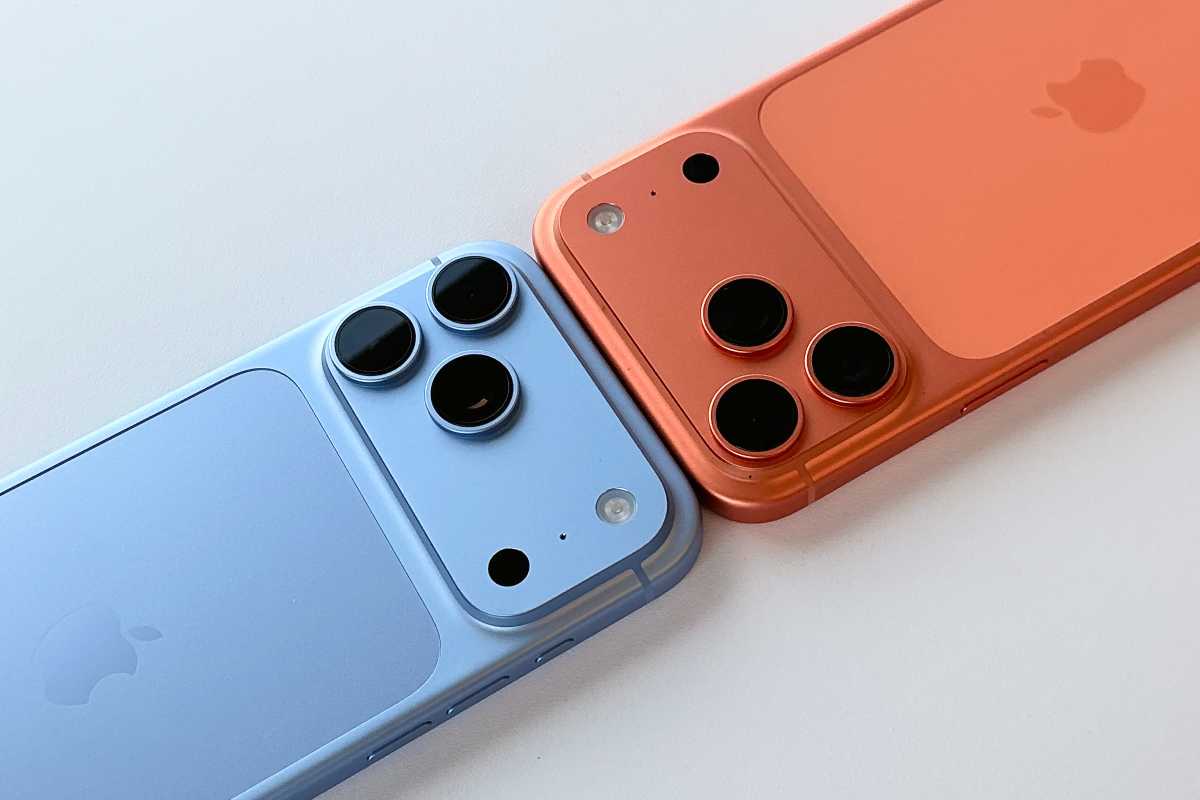 iPhone 18 Pro vs iPhone 17 Pro
Foundry
The five biggest changes are the variable-aperture camera, A20 Pro, improved cooling, longer battery life and redesigned Dynamic Island/connectivity system. Here is an overview of what’s new compared to the previous generation.
| Feature | iPhone 18 Pro / Pro Max | iPhone 17 Pro / Pro Max | What’s changed |
|---|---|---|---|
| Main camera | 48MP, variable ƒ/1.48–ƒ/4 aperture | 48MP, fixed aperture | Major new photographic control |
| Processor | A20 Pro, 2nm | A19 Pro | New manufacturing process |
| GPU | 7-core, up to 40% faster | 6-core | Significant graphics boost |
| Neural Engine | Dual 16-core / 32 cores total | 16-core | Around 2x AI compute |
| Cooling | Vapor chamber with 3x surface area | First-gen vapor chamber | Up to 40% better sustained performance |
| Pro Max battery | 45 hours video | 39 hours | +6 hours |
| Pro battery | Up to 36 hours video on eSIM model | 33 hours | Up to +3 hours |
| Wired charging | 50% in around 15 minutes | 50% in around 20 minutes | Faster charging |
| Modem | Apple C2 (in Pro, unconfirmed in Pro Max) | Qualcomm modem | Pro switches to an Apple-designed modem |
| Dynamic Island | Redesigned, 3 Live Activities | Previous design, up to 2 | More information displayed simultaneously |
Apple has added a 2TB option to the smaller Pro for the first time, while retaining 256GB as the entry-level capacity.
The iPhone 18 Pro and iPhone 18 Pro Max were announced on Wednesday, September 9, 2026. They started shipping from Friday, September 18, 2026 in more than 65 countries and regions and in another 20 countries from September 25.
You can buy the phones directly from Apple online or at Apple Stores, as well as through mobile networks and authorized Apple retailers. Apple sells unlocked iPhones directly through its website and stores.
This is the Burgundy variant (we think Deep Cherry was a much nicer name).
Foundry
The iPhone 18 Pro retains the aluminum unibody introduced with the iPhone 17 Pro, as well as the Ceramic Shield on the rear and Ceramic Shield 2 over the display. The camera system remains arranged on the large raised plateau across the upper part of the rear casing.
Screen sizes are unchanged at 6.3 inches for the iPhone 18 Pro and 6.9 inches for the iPhone 18 Pro Max, both using Super Retina XDR OLED displays with ProMotion up to 120Hz.
Apple offers four finishes this year:
That means Cosmic Orange and Deep Blue disappear, while black returns to the Pro line despite pre-launch reports suggesting it would not. Read more about the color choices here: Apple’s new iPhone 18 Pro colors.
The pre-event leaks suggested the basic chassis dimensions would remain very close to the iPhone 17 Pro and Pro Max, with the camera plateau rather than the body itself becoming thicker. We can confirm from our own research that the newer camera bump is approximately 0.5mm taller. This means that cases designed for the iPhone 17 Pro may not fit the iPhone 18 Pro. Before buying a case, check compatibility and read our Best iPhone 18 Pro cases buying guide.
The new iPhones share the same screen sizes and overall form as their predecessors, but both models are slightly heavier this time.
Apple has redesigned the Dynamic Island. Apple says new display technology creates additional usable space and allows the Dynamic Island to display up to three Live Activities at once, for example navigation, music and a sports score.
Apple has not announced fully under-display Face ID. Pre-launch reports suggested that one or more infrared Face ID components could move beneath the OLED panel, allowing the notch to shrink, but Apple hasn’t confirmed the underlying sensor arrangement.
The iPhone 18 Pro cameras.
Apple
Both the iPhone 18 Pro and Pro Max have the same three-camera rear system. The main change is not resolution—all three remain 48MP—but the new variable-aperture Main camera and new computational imaging pipeline.
The three most notable camera upgrades are:
| Camera | Resolution | Focal length | Aperture | Pixel information |
|---|---|---|---|---|
| Fusion Main | 48MP sensor; 12MP at 2x optical-quality zoom | 24mm / 48mm, 1x / 2x | ƒ/1.48, ƒ/1.8, ƒ/2.8, ƒ/4 variable | 2.44μm quad-pixel / 1.22μm individual |
| Fusion Ultra Wide | 48MP | 13mm, 0.5x / macro | ƒ/2.2 | 1.4μm quad-pixel / 0.7μm individual |
| Fusion Telephoto | 48MP sensor; 12MP at 8x optical-quality zoom | 100mm / 200mm, 4x / 8x | ƒ/2.8 | 1.4μm quad-pixel / 0.7μm individual |
The 2x and 8x optical-quality options use crops from the Main and Telephoto sensors respectively, producing 12MP images rather than 48MP captures.
The Main camera’s six-blade mechanical aperture can automatically open to ƒ/1.48 in low light or close as far as ƒ/4 for increased depth of field. Photographers can also select aperture manually.
Both Pro models also offer up to 8x optical-quality zoom from the Telephoto camera. Contrary to some earlier rumors, the variable-aperture camera is not exclusive to the Pro Max.
Computational photography: Apple has introduced a new imaging pipeline, smart focus tracking, improved Clean Up, Spatial Reframing, an Extend tool and Photographic Styles 3, which adds texture and grain adjustments. these controls require photos captured on iPhone 18 Pro/Max or the Duo’s Main, Ultra Wide or Center Stage cameras. Older supported iPhones can edit those eligible images—it isn’t simply a restriction on the editing device. See: Apple’s next-gen photo controls only work on images ‘captured’ on a new iPhone.
Apple Reference Image (U.S. and U.K.): Will use signed data from the iPhone 18 Pro’s Main camera sensor to create an unalterable reference image through Private Cloud Compute. Viewed alongside the edited photo in Photos, it helps users assess what has changed, providing a useful authenticity check for photographers, journalists and anyone sharing images. It’s off by default, to enable it go to: Settings > Camera > Reference Image > Add Reference Mode.
Front cameraApple has retained the 18MP Center Stage front camera, rather than moving to the rumored 24MP sensor. It supports automatic reframing, Center Stage, ultra-stabilized video and Dual Capture.
The front camera remains visibly associated with the Dynamic Island. Apple has not announced an under-display selfie camera on the iPhone 18 Pro.
iPhone 18 Pro video changesFrame rates: Cinematic effects can now be applied after shooting to ordinary videos captured at up to 60fps. The phones continue to offer 4K 120fps Dolby Vision for high-frame-rate shooting.
Time-lapse: Time-lapse receives a significant upgrade to 4K with Dolby Vision HDR.
Apple has redesigned the iPhone chip.
Apple
Both the iPhone 18 Pro and Pro Max use Apple’s new A20 Pro processor.
It is manufactured using a 2-nanometer process, down from the 3nm-class process used for A19 Pro, giving Apple more scope to improve efficiency and transistor density.
The chip includes:
Apple says the GPU is up to 40% faster than A19 Pro, while the Neural Engine offers roughly double the AI processing capability.
One particularly important change is the packaging. Inspired by Apple’s M-series Mac chips, A20 Pro places the processor die side-by-side with memory rather than stacking memory directly in the chip’s thermal path. This improves heat transfer and allows the processor to couple more directly to the vapor chamber.
That vapor chamber itself has three times the surface area of the iPhone 17 Pro’s system. Apple claims the combination delivers up to 40% better sustained performance, which should be most noticeable during gaming, video work and intensive on-device AI rather than ordinary web browsing and messaging.
Apple does not officially publish RAM capacities for iPhones. However, iFixit lists 12GB of LPDDR5X memory for both the iPhone 18 Pro and iPhone 18 Pro Max, matching the reported 12GB in the previous Pro generation.
The main memory upgrade is bandwidth: Apple says the A20 Pro offers 50% more memory bandwidth than A19 Pro. This increases the amount of data its CPU, GPU and Neural Engine can transfer to and from memory each second.
Higher memory bandwidth can help accelerate demanding tasks, including on-device AI. Combined with the redesigned chip packaging and improved cooling, it should help sustain performance during intensive workloads. However, this does not necessarily mean that more Apple Intelligence or Siri AI tasks run locally rather than in the cloud..
The iPhone 18 Pro introduces Apple’s C2 cellular modem, replacing the Qualcomm modem used in the previous Pro generation.
Apple says C2 delivers faster uploads while consuming 15% less energy than C1X, alongside AI-powered improvements to connection quality and reliability and support for mmWave in the U.S.
Apple’s technical specifications list C2 for the iPhone 18 Pro but do not identify the modem in the Pro Max.
Wi-Fi and BluetoothLike the predecessors, the 2026 iPhones use Apple’s N1 wireless networking chip, supporting:
Emergency SOS via satellite, Messages via satellite, Roadside Assistance via satellite and Find My satellite functionality continue. Apple made no announcements about full satellite internet or ordinary 5G data delivered by satellite, despite pre-launch rumors suggesting such a capability could appear.
Battery life is one of the most significant improvements.
Apple says eSIM-only models gain additional battery capacity because the space previously occupied by the physical SIM tray can be used for battery cells. Physical-SIM variants provide around two hours less video playback than equivalent eSIM-only models.
Battery-life improvements come from larger batteries and greater power efficiency, including the new 2nm A20 Pro processor.
The table below compares battery capacity and Apple’s video-playback ratings for the physical-SIM and eSIM-only versions of the iPhone 18 Pro and Pro Max.
| Model | SIM version | Battery capacity | Energy | Video playback | Equivalent iPhone 17 model: video playback | Improvement |
|---|---|---|---|---|---|---|
| iPhone 18 Pro | Physical SIM | 4,056mAh | 15.86Wh | Up to 34 hours | 17 Pro: up to 31 hours | +3 hours |
| iPhone 18 Pro | eSIM-only | 4,288mAh | 16.76Wh | Up to 36 hours | 17 Pro: up to 33 hours | +3 hours |
| iPhone 18 Pro Max | Physical SIM | 5,391mAh | 21.06Wh | Up to 43 hours | 17 Pro Max: up to 37 hours | +6 hours |
| iPhone 18 Pro Max | eSIM-only | 5,567mAh | 21.75Wh | Up to 45 hours | 17 Pro Max: up to 39 hours | +6 hours |
We discuss the battery life for different iPhones in more depth separately.
Wired charging is faster. Apple says the iPhone 18 Pro and Pro Max can reach 50% charge in around 15 minutes when using a USB-C cable and a 60W-capable or higher power adapter that supports Adjustable Voltage Supply (AVS). The adapter is sold separately. This compares with around 20 minutes for the iPhone 17 Pro generation. Apple also says five minutes of wired charging can provide around seven hours of video playback on the iPhone 18 Pro Max.
MagSafe and wireless chargingApple says both models can reach 50% charge in around 30 minutes using a MagSafe Charger paired with a 35W or higher power adapter, both sold separately. MagSafe and Qi2 wireless charging support up to 25W. Wireless charging speeds are broadly unchanged from the iPhone 17 Pro generation.
The iPhone 18 Pro and Pro Max support Siri AI in iOS 27, but the upgraded assistant isn’t enabled automatically.
To request access, open Settings > Siri, enable Siri if necessary, then tap Try Siri AI (Beta).
Then follow the setup instructions to join Apple’s waiting list.
Access may arrive within minutes, hours or days, with a notification when it’s ready.
Your device and Siri languages must both be English, and availability depends on your Apple Account region. You may also need up to 14GB of free storage. See how to get Siri AI for setup instructions and details of regional restrictions.
Some iPhone 18 Pro owners have reported screens that intermittently stop responding to touch. Others report freezes and restarts after failed Face ID authentication, affecting both the Pro and Pro Max.
Macworld has not independently confirmed these problems, although multiple customers have described similar experiences. It remains unclear whether the issues stem from hardware or software. One owner said Apple support ran diagnostics and concluded their handset was faulty.
At the time of our report, Apple had not publicly acknowledged either issue or announced a fix. Read our report on iPhone 18 Pro freezes and restarts for the full details.
Apple has increased prices by $100 in the U.S. and £100 in the U.K.
The iPhone 18 Pro starts at $1,199/£1,199, while the iPhone 18 Pro Max starts at $1,299/£1,299. Both begin with 256GB of storage.
| Model | iPhone 18 starting price | iPhone 17 starting price | Change |
|---|---|---|---|
| iPhone Pro | $1,199/£1,199 | $1,099/£1,099 | +$100/£100 |
| iPhone Pro Max | $1,299/£1,299 | $1,199/£1,199 | +$100/£100 |
Apple offers both models with 256GB, 512GB, 1TB and 2TB. That means the entry-level storage remains 256GB rather than increasing again. The notable change is that 2TB is now available on both models; previously the iPhone 17 Pro topped out at 1TB while the Pro Max could be configured with 2TB.
The $100 increase is considerably smaller than some analyst predictions before launch. Those forecasts had pointed to sharply higher DRAM and NAND costs caused by the global memory shortage, with estimates that the cost of 12GB of DRAM alone could rise dramatically this year. That makes component and memory pricing a credible contributor to Apple’s increase, although Apple itself hasn’t attributed the higher price to any one component.

Which one do you want?
Apple
The iPhone 18 Pro is the better-value Pro model for most buyers, offering the same cameras and A20 Pro processor as the Pro Max in a more manageable 6.3-inch design. Choose the Pro Max if its 6.9-inch display and longer battery life justify the extra $100/£100 and additional weight. Apple rates it for up to 45 hours of video playback on eSIM-only models, or 43 hours on physical-SIM versions.
However, you may not need a Pro iPhone at all. Our best iPhone guide recommends the standard iPhone 17 for most people: its ProMotion display, dual 48MP cameras and 256GB of storage cover everyday needs for considerably less. Paying extra for the 18 Pro makes most sense if you want its dedicated Telephoto camera, variable aperture or additional performance for demanding games and creative work.
iPhone 17 Pro owners don’t need to rush to upgrade. Consider whether the variable-aperture Main camera, A20 Pro, improved cooling, faster charging and longer battery life will make enough difference to justify the expense. If your current phone comfortably handles everything you do, keeping it is a sensible choice.
For iPhone 14 Pro owners and earlier, the accumulated improvements make a stronger case. You gain USB-C, Apple Intelligence compatibility, higher-resolution Ultra Wide and Telephoto cameras, an improved front camera, larger displays and slimmer bezels. These changes span several generations: USB-C and the Action button arrived before Camera Control and the larger Pro displays, while the 18MP Center Stage front camera was already available on the iPhone 17 Pro. Apple Intelligence also supports the iPhone 15 Pro and later compatible models. This year’s variable aperture, A20 Pro and further battery improvements build on those earlier upgrades. Read why the iPhone 18 Pro rewards those who waited.
The iPhone Duo is worth considering if screen space and multitasking matter more than camera versatility. Its folding display and Split View offer something the Pro models cannot, but its $1,999/£1,999 starting price is $800/£800 above the smaller Pro. Despite that premium, it lacks a dedicated Telephoto camera and variable aperture. Choose the Duo for its folding design; choose a Pro for photography and better value. Our iPhone buying guide compares the specifications.
Both Pro models are now on sale, making this a good point in their release cycle to buy. If saving money matters more than upgrading immediately, Black Friday may bring better trade-in or carrier offers, although large outright discounts are unlikely so soon after launch. A substantially discounted iPhone 17 Pro is another option. See the best time to buy an iPhone.
| # | Наименование новости | Тональность | Информативность | Дата публикации |
|---|---|---|---|---|
| 1 | The iPhone 18 Pro probably won’t be as thick as the latest rumors say | 0 | 5 | 09-07-2026 |
| 2 | Apple’s next-gen photo controls only work on images ‘captured’ on a new iPhone | 0 | 12.32 | 22-09-2026 |
| 3 | iPhone 18 Pro & Pro Max leaks: All the biggest rumors so far | 0 | 5 | 09-07-2026 |
| 4 | iPhone Duo vs. iPhone 18 Pro: What you’ll miss with Apple’s first foldable | 0 | 21.68 | 10-09-2026 |
| 5 | iPhone 18 Pro’s clever new camera comes with a big repair downside | 0 | 26.67 | 21-09-2026 |
| 6 | I leaked the iPhone 18 Pro colors. Here’s the one you should buy | 0 | 13.1 | 18-08-2026 |
| 7 | iPhone 18 Pro and Pro Max rumors: What we know about Apple’s next flagship iPhones | 0 | 21.11 | 17-08-2026 |
| 8 | iPhone 18 Pro owners report two serious bugs causing freezes and restarts | 0 | 13.12 | 21-09-2026 |
| 9 | iPhone 18 Pro officially announced: Here’s what’s new | 0 | 23.61 | 09-09-2026 |
| 10 | The Glacier iPhone 18 Pro Max is the anti-Cosmic Orange | 0 | 11.19 | 21-09-2026 |