Просмотр новости
Найдите то, что Вас интересует
 Спутники
 РН
РН SpaceX
 Роскосмос
 NASA
NASA
СпутникиРНSpaceXРоскосмосNASA
For countless generations, humanity has gazed at the stars, planets, and great canopy of the Milky Way in the night sky, wondering who else or what else may be out there. Here in 2026, we’ve searched tens of thousands of star systems for signs of life, for signals of potentially intelligent extraterrestrial origin, including through radio waves, other forms of light, and even cosmic particle signatures. While we’ve discovered thousands of planets around those stars, including some that may be candidates for housing life on their surface or in their atmospheres, we have yet to find a single planet beyond Earth with any forms of life on it at all.
But the Universe is vast, and the number of chances for some type of success in the great cosmic lottery is a profoundly large number. That leads to Brian George Melville’s question, as he asks:
“I fully believe there is intelligent life in the Universe in addition to life on Earth. Do you think we will ever contact other intelligent life, given the vast distances involved, given that Proxima Centauri is 75000 years away at a speed of 38,000 miles-per-hour?”
If the only way we could possibly make contact was by traversing the great interstellar distances that separate us from the other star and planetary systems that are out there in the cosmos, we would be aimless in our quest to find alien life. We’d only be able to choose star systems at random, and at that, we’d likely restrict ourselves to the closest ones. However, given all we know about searching for life in the Universe, even without a positive detection so far, we have every reason to be optimistic about the possibility of contact in the future. Here’s why.
Before its collapse in 2020, the Arecibo telescope was the first to see multiple fast radio bursts from the same source. Although they are not a signal of intelligent alien origin, the telescope has been used to set many of the strictest limits on the existence of transmitting alien civilizations, as well as having been used to transmit messages from humanity out into the Universe. Leveraging radio telescopes remains perhaps the most powerful tool for searching for extraterrestrial intelligence.
Credit: Danielle Futselaar
When it comes to the abundance of alien life of all different types and complexities that could be out there, we have a big, unknown problem before us: the only known successes that we have, at present, make up a sample size of one. That’s us: the Earth. Only on Earth do we have an example where we know that life successfully arose. Of course, it did much more than arise:
it sustained itself throughout billions of years,
it evolved many vital features, including multicellularity, sexual reproduction, complexity, and differentiation,
it evolved intelligence,
and, with humanity, a species at long last that became sufficiently technologically advanced that it could begin to travel off-world and search the Universe for signs of other life forms.
If each world that arises in this Universe is a “lottery ticket” with a chance at for life, sustained life, complex life, intelligent life, and technologically advanced life, then planet Earth is a proven winner in terms of the conditions that brought all of these about.
However, Earth is the only example of success — on any of these fronts — that we have to point to at the present time. For the rest of the Universe, we only have constraints on what types of life isn’t there.
When we send a light signal from Earth, it only travels at the speed of light. A star that’s located 100 light-years away will need to wait 100 years before receiving that signal. Similarly, when we look at a star 100 light-years away, we are seeing it as it was 100 years ago: when the light we’re receiving now was first emitted.
Credit: U.S. Air Force photo / Dr. Robert Q. Fugate
On the other known worlds in our Solar System, including planets, dwarf planets, moons, there’s no evidence (yet) for life of any type: intelligent, complex, simple, extant, or ancient-and-extinct. There may yet be life in a great many places, as possibilities include:
past or subterranean life on Mars,
past or atmosphere-based life on Venus,
life in the liquid oceans of Titan, Europa, Enceladus, Triton, or any of the Kuiper belt worlds,
life in the wet interiors of Ganymede or Callisto,
as well as many others. However, as far as the Solar System is concerned, the only life we’re certain about is the life that originated here on Earth.
For the worlds beyond the Solar System, including in broad searches across the sky, we have no evidence for extraterrestrial life of any kind. We know of no spacecraft that have journeyed here from across the galaxy or beyond. We know of no signals of intelligent, extraterrestrial origin that have arrived in our detectors. We know of no planets, exoplanets, or beacons that display a signature indicating that life exists elsewhere in the galaxy. And we see no planets that show us that they have oceans-and-continents, oxygen-rich atmospheres, evidence for photosynthetic processes, or any other signs that would indicate a similarity to Earth beyond shape, size, raw composition, and temperature.
This depiction of an Earth-like exoplanet showcases a rocky world with a thin atmosphere in its parent star’s habitable zone. It has oceans and continents and clouds, and could possess macroscopic life forms on its surface. At a distance of multiple light-years away, it would take a gargantuan telescope to image them, and it would only be able to see the world as it was in the distant past, not as it is right now.
Credit: NASA Ames/JPL-Caltech/T. Pyle
However, as Carl Sagan reminded us back in the 20th century, when it comes to the search for extraterrestrial life and extraterrestrial intelligence, “absence of evidence is not evidence of absence.” Given the severe limitations of our present technology, along with the short amount of time that we’ve been actively searching (or even capable of actively searching) for life — including intelligent life — beyond Earth, it isn’t exactly reasonable to expect we would have met with success already. After all, here in 2026:
the first long-distance radio broadcast occurred 131 years ago,
the first intentional voice broadcast took place 120 years ago,
the first high-powered broadcasts to leave Earth’s atmosphere occurred only 90 years ago,
and the first broadcast intended for an alien civilization was made just 52 years ago.
Although there are tens of thousands of stars within 131 light-years of Earth, there are only a few hundred stars within 52 light-years of Earth. In addition, most (about 75-80%) of stars are low-mass red dwarf stars, whose planets are thought to be inhospitable to life at present, owing to the flaring nature of these stars that persists for billions of years.
Instead, if we want to think about what might be out there, the lowest-hanging fruit on the cosmic tree of life would be to identify the planets that have the most Earth-like conditions, and to compare that with the conditions that were present on Earth throughout its history and when they became stable enough for life to arise in the first place.
This four-panel graph shows a modeled surface temperature across a large area of Earth’s surface at different epochs in planetary history between 4.5 and 4.3 billion years ago. While there were too many hot spots at too great a temperature for life to have arisen and remained stable extremely early on, at some point between 4.4 and 4.3 billion years ago, stable conditions began to dominate, leading to the possibility of the life we know today originating back then.
Credit: O. Abramov et al., Nature Communications, 2026
For the part of the question about life on Earth — when it arose and when conditions became stable enough for it to arise — there are still some enormous unknowns, but there’s a lot that we have been able to conclude. From the fossil record embedded in Earth’s crustal rocks, we know that Earth was an inhabited planet at least 3.8 billion years ago, and possibly even earlier than that. Relatively recent studies have indicated that Earth was stable for about half-a-million years before that, and an all-new study just demonstrated two important aspects of the early conditions that were present on Hadean Earth:
That the Earth’s crust, very early on, was heated by impacts and bombardment, producing sterilization events frequently during the the first 100-150 million years of our planet’s history,
But then conditions rapidly became favorable for persistent biochemistry mechanisms to occur, supporting large-area interconnected zones of stability along with energy-rich hydrothermal field conditions.
During the period from 4.4 billion years ago to 4.3 billion years ago, in particular, large, stable regions emerged on Earth: the perfect conditions for life to arise, thrive, and begin sustaining itself, with the authors concluding that the right conditions for life were certainly in place no later than 4.33 billion years ago.
This figure from a 2026 study shows the fraction of Earth’s surface that is and remains below a specific temperature threshold (bottom graph) and that exhibits long-term biocompatibility (top graph) as far as stable organic molecules essential to known life, like DNA and RNA, are concerned. The stable conditions for this were present across most of Earth from 4.33 billion years ago and onward: extremely early in our planet’s history.
Credit: O. Abramov et al., Nature Communications, 2026
This is remarkable in a Solar System whose parent star, the Sun, formed just 4.56 billion years ago, and on a planet that suffered a major, catastrophic impact (the one that created our Moon) roughly another 50 million years later. It means that, once a mere 5% of the Solar System’s current history had elapsed, the conditions were ripe for life to emerge on our world.
This is not to imply that life requires precisely Earth-like conditions in order to emerge. It is not meant to imply that only an Earth-like environment is necessary or conducive to life, much less complex, intelligent, or technologically advanced life. It does not even imply that we, here on Earth, represent “the #1 Prize” for what one can win in the grand scope of the cosmic lottery.
Rather, it is only meant to imply that, if another planet arises with similar conditions to Earth — similar raw ingredients, a similar fraction of heavy elements, a similar parent star, a similar distance from the parent star, similar surface temperatures, as well as a similarly thick atmosphere and a similar water-richness to it — then we can expect that there is a finite, non-zero, and possibly even “quite likely” chance that life will arise on that world.
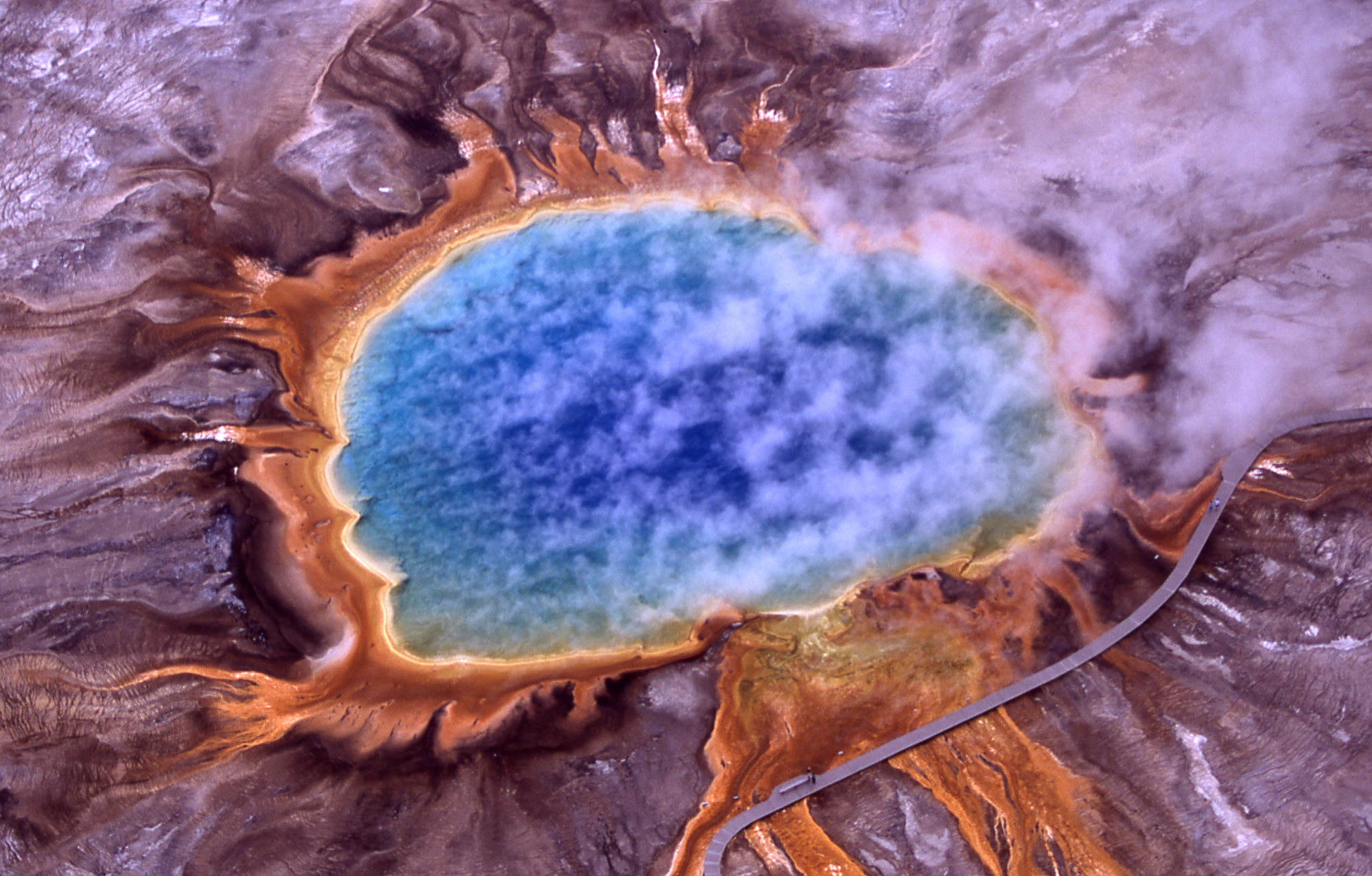
This aerial view of Grand Prismatic Spring in Yellowstone National Park is one of the most iconic hydrothermal features on land in the world. The colors are due to the various organisms living under these extreme conditions, and depend on the amount of sunlight that reaches the various parts of the springs. Hydrothermal fields like this are some of the best candidate locations for life to have first arisen on a young Earth, and may be home to abundant life on a variety of exoplanets.
Credit: Jim Peaco/National Parks Service
It’s important to note that, based on what we know about our Universe, that this means there are likely a great many worlds and exoplanets out there that are excellent candidates for having had life arise on them, at least once, at some point in the past. It also means that if we can identify worlds that are:
the same size as Earth,
orbiting a star similar to the Sun,
at the same orbital distance as Earth,
with roughly the same chemical composition as Earth,
then even with no further information about them, we can view them as similar “lottery tickets” to Earth in the cosmic lottery for life.
Simply by asking the question of “what fraction of stars have these conditions?” and knowing the number of stars in the galaxy and Universe, we can estimate all sorts of things, including the total number of potentially Earth-like planets in the galaxy and Universe, how many potentially Earth-like planets we can expect within a certain distance of Earth, and then we can use that information to estimate — with appropriate uncertainties — how far away it is to the nearest planet(s) with life, with complex life, with intelligent life, and with technologically advanced life. Finally, we can, by assuming a variety of future technologies, calculate how long we expect it would take to reach one of those worlds if it is, indeed, inhabited.
This color-coded map shows the heavy element abundances, or metallicities, of more than 6 million stars within the Milky Way. Stars in red, orange, and yellow are all rich enough in heavy elements that they should have planets; green and cyan-coded stars should only rarely have planets, and stars coded blue or violet should have absolutely no planets at all around them. Note that the central plane of the galactic disk, extending all the way into the galactic core, has the potential for habitable, rocky planets, but stars facing away from the galactic center (far left and right) are much lower in heavy element abundance.
Credit: ESA/Gaia/DPAC; CC BY-SA 3.0 IGO
There are between 200 and 400 billion stars in our Milky Way galaxy, and approximately another 10 billion times that number contained within our observable Universe. Of those stars, around 5-10% possess similar properties to the Sun: approximately the same mass, radius, lifetime, and abundance of heavy elements. With the vast number of exoplanets that we know of today (well over 6000), we can now estimate the number of Earth-analogue planets that ought to be out there: between 6 and 20 billion of them in our own Milky Way, and perhaps several billion times that number across the visible Universe. A recent study estimates that around 1% of all exoplanets, period, may potentially be inhabited.
Despite the tremendous uncertainties surrounding:
the emergence of life from non-life,
the frequency of life’s persistence once it arises,
the fraction of planets with persistent life where complex life arises,
the fraction of planets with complex life where life becomes intelligent,
and the fraction of planets with intelligent life where life becomes technologically advanced,
the lack of detection of any of these, so far, is not evidence against their existence. It merely points away from the absolutely most optimistic scenarios: where life, and persistent, complex, intelligent, and technologically advanced life, are all ubiquitous throughout the galaxy.
In the early 21st-century, we’ve successfully mapped out practically all the stars in our neighborhood in three-dimensional space. The closest stars to us don’t always align with the stars we can see, as what’s visible is determined by a combination of distance and intrinsic brightness, but all stars beyond the Sun are at a much, much greater distance than anything within our Solar System. The Alpha/Proxima Centauri system is a trinary, and has the three closest stars to our Sun at present; Barnard’s star is the fourth closest, and is the nearest singlet star system to our own.
Credit: Andrew Z. Colvin
In reality, there are very few stars and stellar/planetary systems that are close by. There are only three alien star systems, including Proxima Centauri, within 5 light-years of Earth. If we go out to 20 light-years in distance, there are 133 known star systems. A couple of thousand star systems exist within 66 light-years: the maximum distance at which someone who received our first radio transmission signals would have been able to send a signal back that we could have seen by today.
The fact that we haven’t heard anything back yet, or detected life on any alien worlds — given the present limitations on how long we’ve been observing and our current detection sensitivity — only tells us that extant, intelligent, planet-modifying life isn’t extraordinarily common in our Universe. It could still be possible, and compatible with everything we’ve observed, that:
nearly every Earth-analogue planet (Earth-sized and at Earth-like orbital distances around Sun-like stars) has life arise on it at some point,
that most of those planets may have life persist and evolve into something complex and differentiated on them,
and that even though the closest of those planets may not have technologically advanced life actively listening for and/or broadcasting to us, they may have intelligent life on them,
and that there may be technologically advanced civilizations out there just waiting to receive our earliest messages.
The constraints on the data that we have cannot rule any of these scenarios out.
The planned Habitable Worlds Observatory, shown with one possible final architecture, will be NASA’s largest, most powerful space telescope ever built: assuming that it gets built. It was the top recommendation for a flagship space telescope by the Astro2020 decadal. Designed to fly in the 2030s, it will have capabilities of directly imaging Earth-sized planets at Earth-like distances around Sun-like stars for the first time ever.
Credit: NASA
For simple, non-intelligent life, it could exist elsewhere within our own Solar System or around an extremely nearby star. For intelligent life that doesn’t communicate the way we do, technologically, it could be there as close as 12 light-years away: in the Tau Ceti system, for example, or just slightly farther, around Gliese 380, 16 light-years away, Omicron Eridani or 70 Ophiuchi, 16-17 light-years away, or Gliese 570 or Alsafi, 19 light-years away, as well as many other candidates that are similarly close. It’s even possible that there are indeed technologically advanced, but either haven’t recognized our signals, aren’t actively broadcasting right now, or aren’t broadcasting in a fashion that we’ve yet recognized.
Sure, it’s probably unlikely that we’ll find intelligent, technologically advanced life so close by, but if we did find an intelligent, technologically advanced, communicable species out there within, say, 100 light-years of us, there are three important things to remember.
Communication through the vacuum of space occurs at the speed of light, which means that we could begin communicating with them long before we journeyed to meet them.
Stars themselves frequently and rapidly move through space: at relative speeds of around 20 km/s, meaning that a star that’s 5 light-years away from us today but moving directly towards us would be right on top of us in another 75,000 years: roughly the time since our Solar System’s last encounter with an interloping star.
And that it is technologically possible, and even practically feasible, to accelerate spacecraft to substantial fractions of the speed of light (between 1-20%) using fission, fusion, or high-powered laser technologies.
To communicate, if we’re lucky and if they’re either broadcasting currently or they’ve already received our signal and are sending one back, might take as little as decades (or a century or two) if we get lucky. For nearby stars or stars that will come close to us, tens of thousands of years might be all it takes. And if we develop interstellar flight technology, inhabited systems — like the kind Habitable Worlds Observatory could find in just a couple of decades — might be merely centuries or a millennium away.
The only thing we can be certain of is that if we give up and don’t look, don’t attempt to find them, and don’t make the effort to reach them, we’ll never get there. In this Universe, so much is possible, if only we dare to look, dream, and work to reach the loftiest of our goals.
Send in your Ask Ethan questions to startswithabang at gmail dot com!
This article Ask Ethan: If intelligent alien life exists, will we make contact? is featured on Big Think.
For countless generations, humanity has gazed at the stars, planets, and great canopy of the Milky Way in the night sky, wondering who else or what else may be out there. Here in 2026, we’ve searched tens of thousands of star systems for signs of life, for signals of potentially intelligent extraterrestrial origin, including through radio waves, other forms of light, and even cosmic particle signatures. While we’ve discovered thousands of planets around those stars, including some that may be candidates for housing life on their surface or in their atmospheres, we have yet to find a single planet beyond Earth with any forms of life on it at all.
But the Universe is vast, and the number of chances for some type of success in the great cosmic lottery is a profoundly large number. That leads to Brian George Melville’s question, as he asks:
“I fully believe there is intelligent life in the Universe in addition to life on Earth. Do you think we will ever contact other intelligent life, given the vast distances involved, given that Proxima Centauri is 75,000 years away at a speed of 38,000 miles-per-hour?”
If the only way we could possibly make contact was by traversing the great interstellar distances that separate us from the other star and planetary systems that are out there in the cosmos, we would be aimless in our quest to find alien life. We’d only be able to choose star systems at random, and at that, we’d likely restrict ourselves to the closest ones. However, given all we know about searching for life in the Universe, even without a positive detection so far, we have every reason to be optimistic about the possibility of contact in the future. Here’s why.
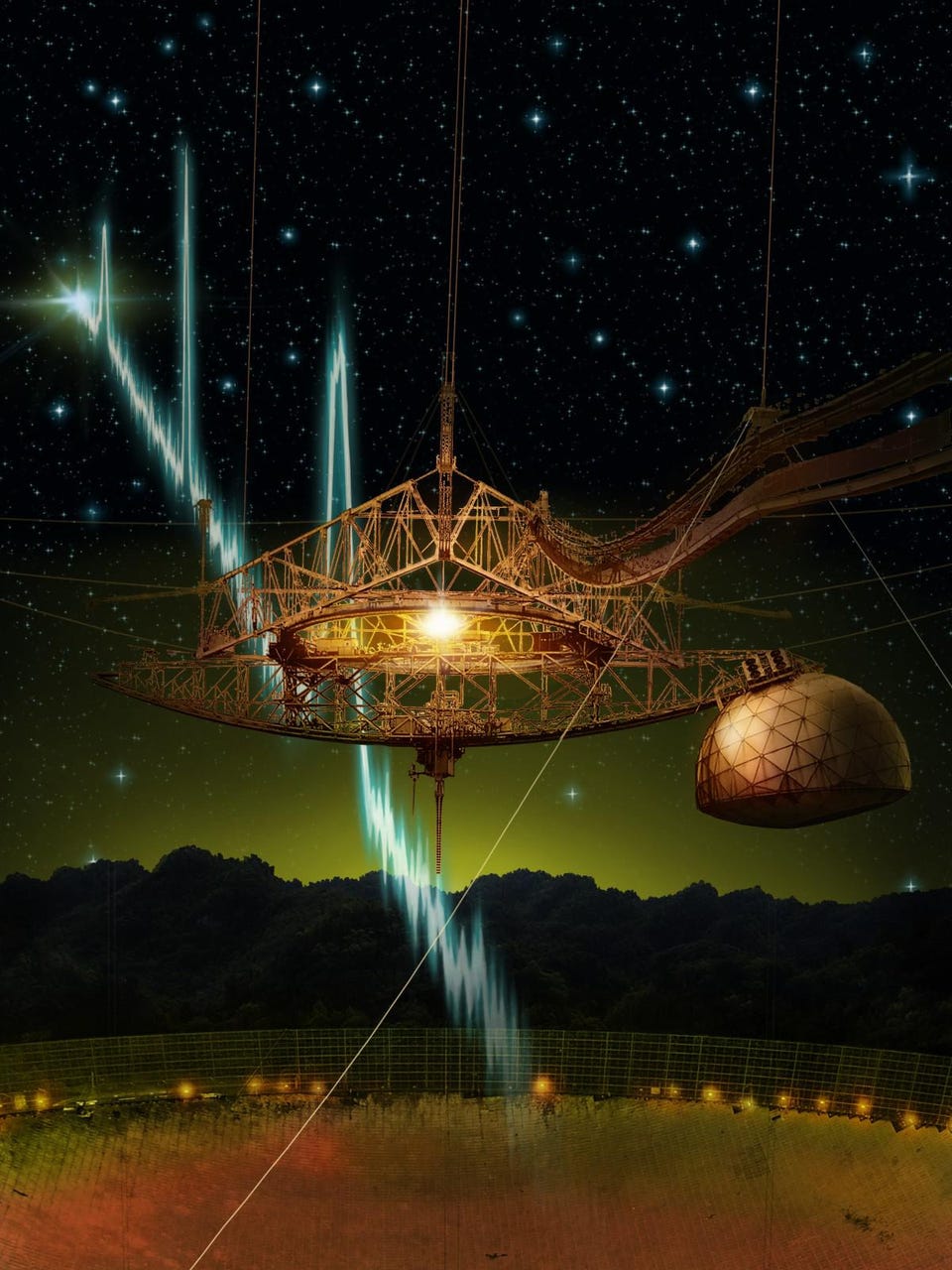
Before its collapse in 2020, the Arecibo telescope was the first to see multiple fast radio bursts from the same source. Although they are not a signal of intelligent alien origin, the telescope has been used to set many of the strictest limits on the existence of transmitting alien civilizations, as well as having been used to transmit messages from humanity out into the Universe. Leveraging radio telescopes remains perhaps the most powerful tool for searching for extraterrestrial intelligence.
When it comes to the abundance of alien life of all different types and complexities that could be out there, we have a big, unknown problem before us: the only known successes that we have, at present, make up a sample size of one. That’s us: the Earth. Only on Earth do we have an example where we know that life successfully arose. Of course, it did much more than arise:
If each world that arises in this Universe is a “lottery ticket” with a chance for life, sustained life, complex life, intelligent life, and technologically advanced life, then planet Earth is a proven winner in terms of the conditions that brought all of these about.


Get the AI issue, shipping in October to Big Think members.
However, Earth is the only example of success — on any of these fronts — that we have to point to at the present time. For the rest of the Universe, we only have constraints on what types of life aren’t there.
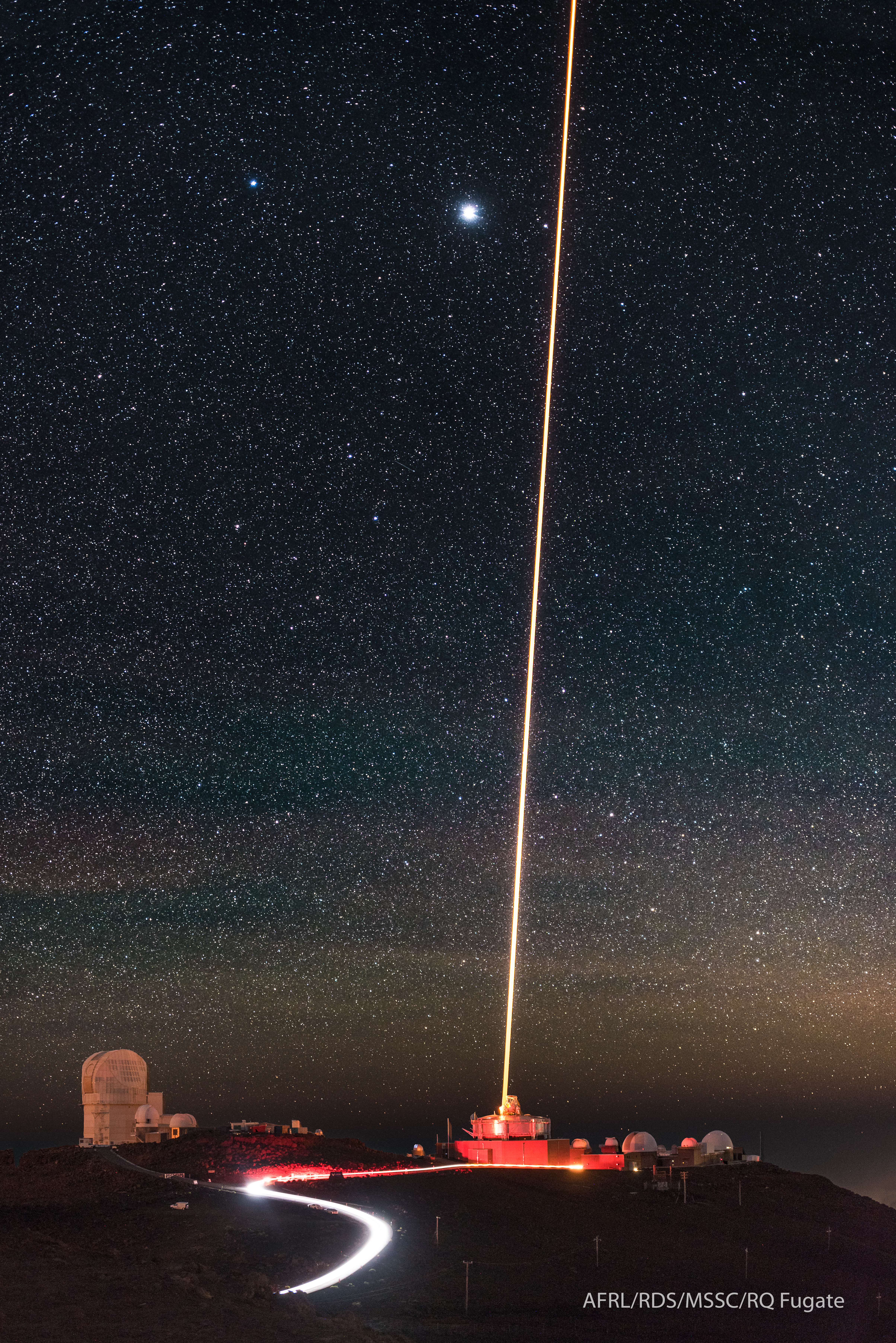
When we send a light signal from Earth, it only travels at the speed of light. A star that’s located 100 light-years away will need to wait 100 years before receiving that signal. Similarly, when we look at a star 100 light-years away, we are seeing it as it was 100 years ago: when the light we’re receiving now was first emitted.
On the other known worlds in our Solar System, including planets, dwarf planets, moons, there’s no evidence (yet) for life of any type: intelligent, complex, simple, extant, or ancient-and-extinct. There may yet be life in a great many places, as possibilities include:
as well as many others. However, as far as the Solar System is concerned, the only life we’re certain about is the life that originated here on Earth.
For the worlds beyond the Solar System, including in broad searches across the sky, we have no evidence for extraterrestrial life of any kind. We know of no spacecraft that have journeyed here from across the galaxy or beyond. We know of no signals of intelligent, extraterrestrial origin that have arrived in our detectors. We know of no planets, exoplanets, or beacons that display a signature indicating that life exists elsewhere in the galaxy. And we see no planets that show us that they have oceans-and-continents, oxygen-rich atmospheres, evidence for photosynthetic processes, or any other signs that would indicate a similarity to Earth beyond shape, size, raw composition, and temperature.
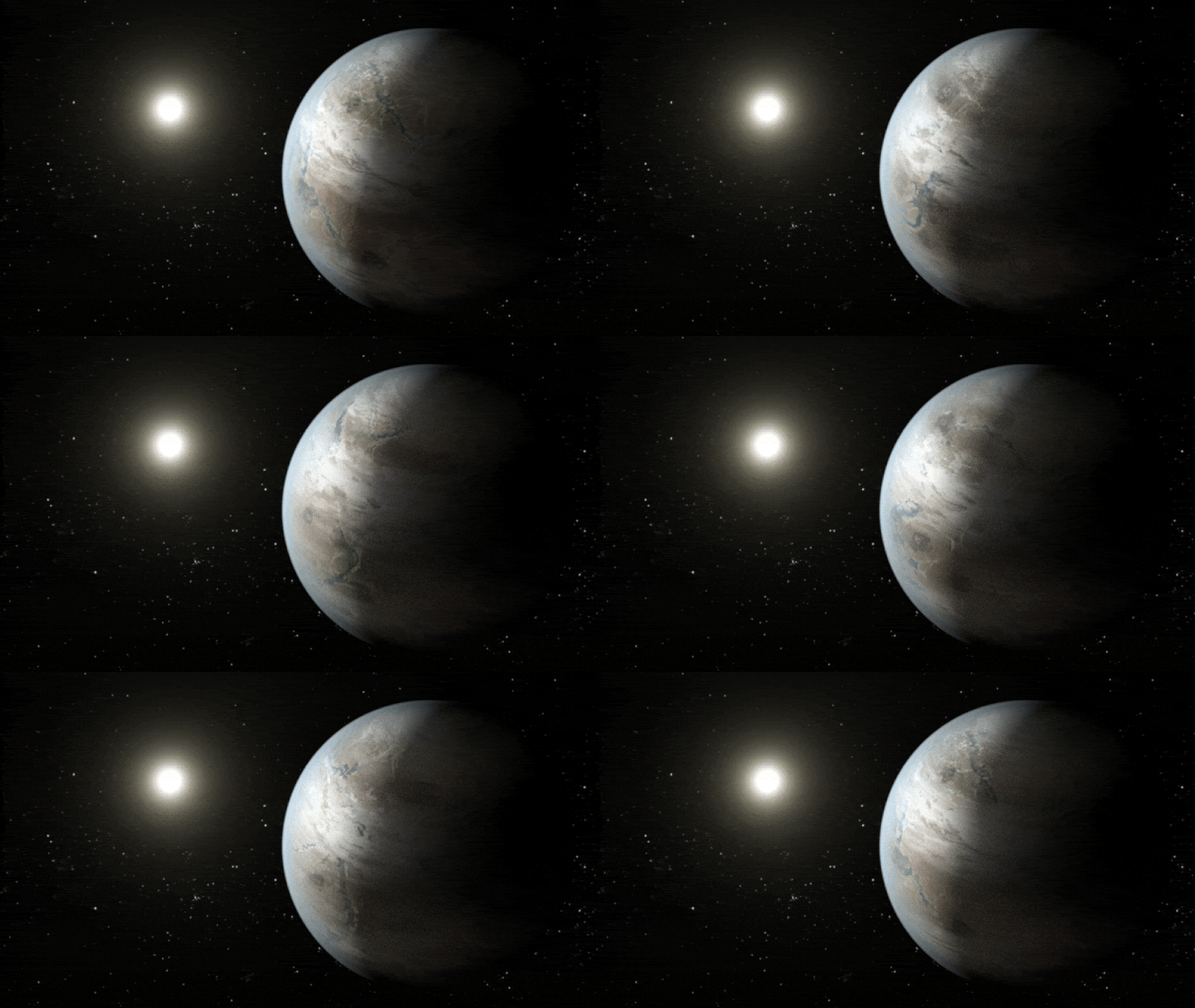
This depiction of an Earth-like exoplanet showcases a rocky world with a thin atmosphere in its parent star’s habitable zone. It has oceans and continents and clouds, and could possess macroscopic life forms on its surface. At a distance of multiple light-years away, it would take a gargantuan telescope to image them, and it would only be able to see the world as it was in the distant past, not as it is right now.
However, as Carl Sagan reminded us back in the 20th century, when it comes to the search for extraterrestrial life and extraterrestrial intelligence, “absence of evidence is not evidence of absence.” Given the severe limitations of our present technology, along with the short amount of time that we’ve been actively searching (or even capable of actively searching) for life — including intelligent life — beyond Earth, it isn’t exactly reasonable to expect we would have met with success already. After all, here in 2026:
Although there are tens of thousands of stars within 131 light-years of Earth, there are only a few hundred stars within 52 light-years of Earth. In addition, most (about 75-80%) stars are low-mass red dwarf stars, whose planets are thought to be inhospitable to life at present, owing to the flaring nature of these stars that persists for billions of years.
Instead, if we want to think about what might be out there, the lowest-hanging fruit on the cosmic tree of life would be to identify the planets that have the most Earth-like conditions, and to compare that with the conditions that were present on Earth throughout its history and when they became stable enough for life to arise in the first place.

This four-panel graph shows a modeled surface temperature across a large area of Earth’s surface at different epochs in planetary history between 4.5 and 4.3 billion years ago. While there were too many hot spots at too great a temperature for life to have arisen and remained stable extremely early on, at some point between 4.4 and 4.3 billion years ago, stable conditions began to dominate, leading to the possibility of the life we know today originating back then.
For the part of the question about life on Earth — when it arose and when conditions became stable enough for it to arise — there are still some enormous unknowns, but there’s a lot that we have been able to conclude. From the fossil record embedded in Earth’s crustal rocks, we know that Earth was an inhabited planet at least 3.8 billion years ago, and possibly even earlier than that. Relatively recent studies have indicated that Earth was stable for about half-a-million years before that, and an all-new study just demonstrated two important aspects of the early conditions that were present on Hadean Earth:
During the period from 4.4 billion years ago to 4.3 billion years ago, in particular, large, stable regions emerged on Earth: the perfect conditions for life to arise, thrive, and begin sustaining itself, with the authors concluding that the right conditions for life were certainly in place no later than 4.33 billion years ago.

This figure from a 2026 study shows the fraction of Earth’s surface that is and remains below a specific temperature threshold (bottom graph) and that exhibits long-term biocompatibility (top graph) as far as stable organic molecules essential to known life, like DNA and RNA, are concerned. The stable conditions for this were present across most of Earth from 4.33 billion years ago and onward: extremely early in our planet’s history.
This is remarkable in a Solar System whose parent star, the Sun, formed just 4.56 billion years ago, and on a planet that suffered a major, catastrophic impact (the one that created our Moon) roughly another 50 million years later. It means that, once a mere 5% of the Solar System’s current history had elapsed, the conditions were ripe for life to emerge on our world.
This is not to imply that life requires precisely Earth-like conditions in order to emerge. It is not meant to imply that only an Earth-like environment is necessary or conducive to life, much less complex, intelligent, or technologically advanced life. It does not even imply that we, here on Earth, represent “the #1 Prize” for what one can win in the grand scope of the cosmic lottery.
Rather, it is only meant to imply that, if another planet arises with similar conditions to Earth — similar raw ingredients, a similar fraction of heavy elements, a similar parent star, a similar distance from the parent star, similar surface temperatures, as well as a similarly thick atmosphere and a similar water-richness to it — then we can expect that there is a finite, non-zero, and possibly even “quite likely” chance that life will arise on that world.

This aerial view of Grand Prismatic Spring in Yellowstone National Park is one of the most iconic hydrothermal features on land in the world. The colors are due to the various organisms living under these extreme conditions, and depend on the amount of sunlight that reaches the various parts of the springs. Hydrothermal fields like this are some of the best candidate locations for life to have first arisen on a young Earth, and may be home to abundant life on a variety of exoplanets.
It’s important to note that, based on what we know about our Universe, this means there are likely a great many worlds and exoplanets out there that are excellent candidates for having had life arise on them, at least once, at some point in the past. It also means that if we can identify worlds that are:
then even with no further information about them, we can view them as similar “lottery tickets” to Earth in the cosmic lottery for life.
Simply by asking the question of “what fraction of stars have these conditions?” and knowing the number of stars in the galaxy and Universe, we can estimate all sorts of things, including the total number of potentially Earth-like planets in the galaxy and Universe, how many potentially Earth-like planets we can expect within a certain distance of Earth, and then we can use that information to estimate — with appropriate uncertainties — how far away it is to the nearest planet(s) with life, with complex life, with intelligent life, and with technologically advanced life. Finally, we can, by assuming a variety of future technologies, calculate how long we expect it would take to reach one of those worlds if it is, indeed, inhabited.
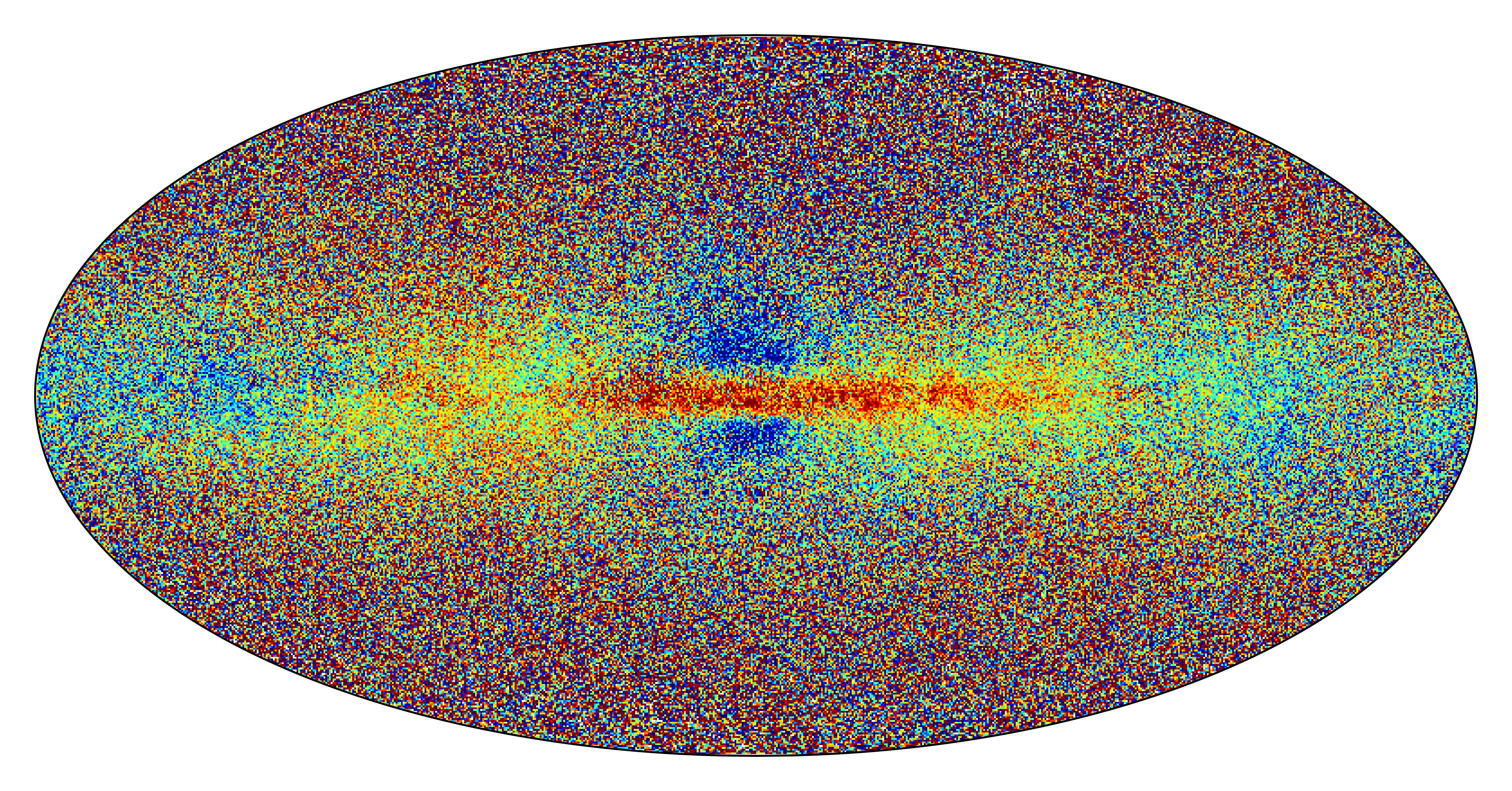
This color-coded map shows the heavy element abundances, or metallicities, of more than 6 million stars within the Milky Way. Stars in red, orange, and yellow are all rich enough in heavy elements that they should have planets; green and cyan-coded stars should only rarely have planets, and stars coded blue or violet should have absolutely no planets at all around them. Note that the central plane of the galactic disk, extending all the way into the galactic core, has the potential for habitable, rocky planets, but stars facing away from the galactic center (far left and right) are much lower in heavy element abundance.
There are between 200 and 400 billion stars in our Milky Way galaxy, and approximately another 10 billion times that number contained within our observable Universe. Of those stars, around 5-10% possess similar properties to the Sun: approximately the same mass, radius, lifetime, and abundance of heavy elements. With the vast number of exoplanets that we know of today (well over 6000), we can now estimate the number of Earth-analogue planets that ought to be out there: between 6 and 20 billion of them in our own Milky Way, and perhaps several billion times that number across the visible Universe. A recent study estimates that around 1% of all exoplanets, period, may potentially be inhabited.
Despite the tremendous uncertainties surrounding:
the lack of detection of any of these, so far, is not evidence against their existence. It merely points away from the absolutely most optimistic scenarios: where life, and persistent, complex, intelligent, and technologically advanced life, are all ubiquitous throughout the galaxy.
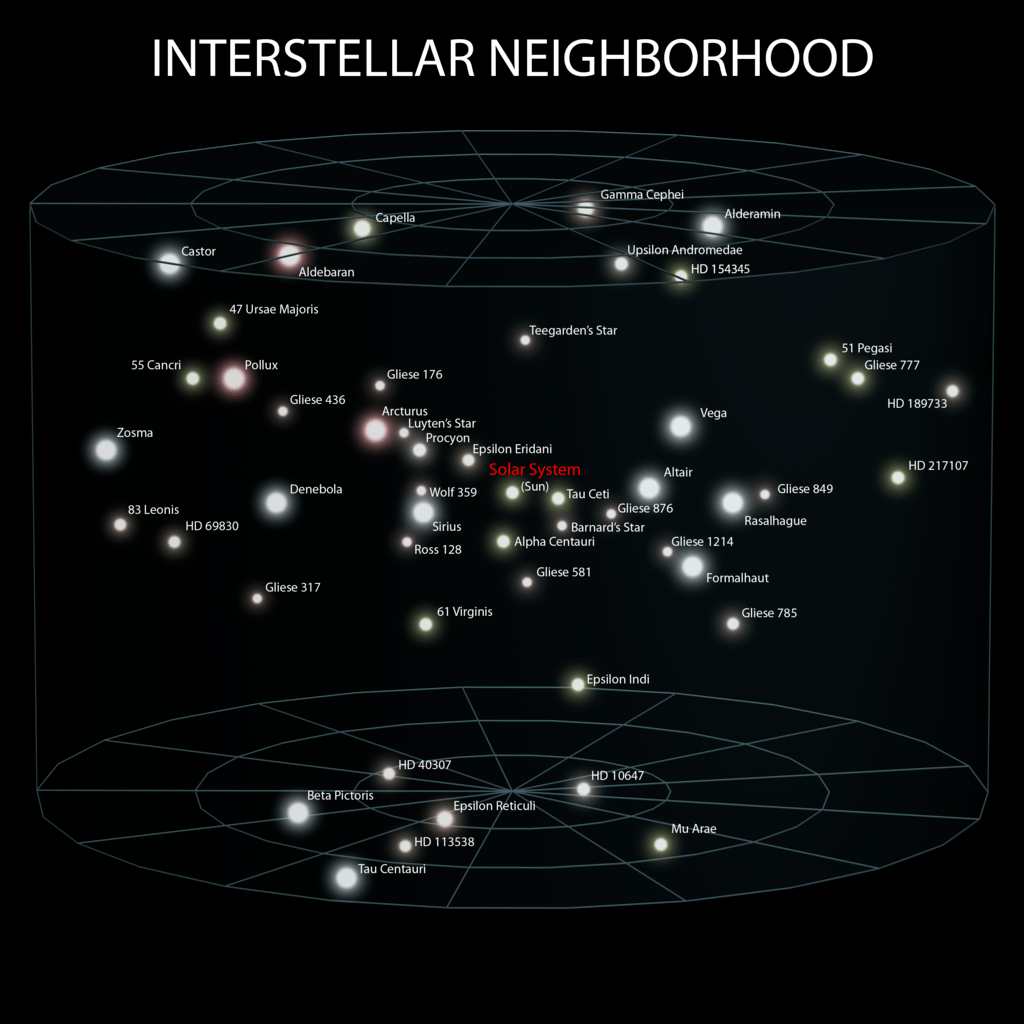
In the early 21st-century, we’ve successfully mapped out practically all the stars in our neighborhood in three-dimensional space. The closest stars to us don’t always align with the stars we can see, as what’s visible is determined by a combination of distance and intrinsic brightness, but all stars beyond the Sun are at a much, much greater distance than anything within our Solar System. The Alpha/Proxima Centauri system is a trinary, and has the three closest stars to our Sun at present; Barnard’s star is the fourth closest, and is the nearest singlet star system to our own.
In reality, there are very few stars and stellar/planetary systems that are close by. There are only three alien star systems, including Proxima Centauri, within 5 light-years of Earth. If we go out to 20 light-years in distance, there are 133 known star systems. A couple of thousand star systems exist within 66 light-years: the maximum distance at which someone who received our first radio transmission signals would have been able to send a signal back that we could have seen by today.
The fact that we haven’t heard anything back yet, or detected life on any alien worlds — given the present limitations on how long we’ve been observing and our current detection sensitivity — only tells us that extant, intelligent, planet-modifying life isn’t extraordinarily common in our Universe. It could still be possible, and compatible with everything we’ve observed, that:
The constraints on the data that we have cannot rule any of these scenarios out.

The planned Habitable Worlds Observatory, shown with one possible final architecture, will be NASA’s largest, most powerful space telescope ever built: assuming that it gets built. It was the top recommendation for a flagship space telescope by the Astro2020 decadal. Designed to fly in the 2030s, it will have capabilities of directly imaging Earth-sized planets at Earth-like distances around Sun-like stars for the first time ever.
For simple, non-intelligent life, it could exist elsewhere within our own Solar System or around an extremely nearby star. For intelligent life that doesn’t communicate the way we do, technologically, it could be there as close as 12 light-years away: in the Tau Ceti system, for example, or just slightly farther, around Gliese 380, 16 light-years away, Omicron Eridani or 70 Ophiuchi, 16-17 light-years away, or Gliese 570 or Alsafi, 19 light-years away, as well as many other candidates that are similarly close. It’s even possible that they are indeed technologically advanced, but either haven’t recognized our signals, aren’t actively broadcasting right now, or aren’t broadcasting in a fashion that we’ve yet recognized.
Sure, it’s probably unlikely that we’ll find intelligent, technologically advanced life so close by, but if we did find an intelligent, technologically advanced, communicable species out there within, say, 100 light-years of us, there are three important things to remember.
To communicate, if we’re lucky and if they’re either broadcasting currently or they’ve already received our signal and are sending one back, might take as little as decades (or a century or two) if we get lucky. For nearby stars or stars that will come close to us, tens of thousands of years might be all it takes. And if we develop interstellar flight technology, inhabited systems — like the kind Habitable Worlds Observatory could find in just a couple of decades — might be merely centuries or a millennium away.
The only thing we can be certain of is that if we give up and don’t look, don’t attempt to find them, and don’t make the effort to reach them, we’ll never get there. In this Universe, so much is possible, if only we dare to look, dream, and work to reach the loftiest of our goals.
Send in your Ask Ethan questions to startswithabang at gmail dot com!
| # | Наименование новости | Тональность | Информативность | Дата публикации |
|---|---|---|---|---|
| 1 | Мы привыкли считать Землю особенным местом. Но что, если это ... | 0 | 5.74 | 10-09-2026 |
| 2 | Will We Ever Find Alien Civilizations? | Quanta Magazine | 0 | 11.96 | 23-07-2026 |
| 3 | 👽 Пришельцы: между наукой и фантазией — где искать правду? ... | 0 | 7.19 | 08-09-2026 |
| 4 | ЕСЛИ ВСЕЛЕННАЯ ТАКАЯ ОГРОМНАЯ, ПОЧЕМУ МЫ ДО СИХ ПОР ОДНИ? ... | 0 | 5.21 | 01-09-2026 |
| 5 | 👽 Ученый из Гарварда предполагает, что некоторые НЛО могут быть ... | 0 | 5.94 | 18-08-2026 |
| 6 | «Если они прилетят: что наука говорит о первом контакте с ... | 0 | 7 | 18-07-2026 |
| 7 | 👽 ЧТО МОЖЕТ ВЫДАТЬ ИНОПЛАНЕТНУЮ ЖИЗНЬ? Иногда для этого достаточно ... | 0 | 7.27 | 17-09-2026 |
| 8 | Почему мы не найдём инопланетян Каждый раз, когда вы смотрите ... | 0 | 5 | 11-07-2026 |
| 9 | ИНОПЛАНЕТЯНЕ, ВОЗМОЖНО, СУЩЕСТВУЮТ, НО НЕ ПОСЕЩАЮТ НАС — И ВОТ ... | 0 | 5.78 | 25-07-2026 |
.png)