Просмотр новости
Найдите то, что Вас интересует
 Спутники
 РН
РН SpaceX
 Роскосмос
 NASA
NASA
СпутникиРНSpaceXРоскосмосNASAManufacturing has always operated with a careful balance between innovation and risk. Automation, supply chain dependency, safety considerations and uptime pressure all shape how new technologies are adopted.
AI is the latest example. It offers significant gains in efficiency and insight, but it also introduces new challenges for cyber resilience.
The post The Changing Balance of Risk and Innovation appeared first on .
By Robbie Ross, Cyber Security Lead, Converged Communication Solutions. Article first published by CeeD, as part of its Cyber Resilience Focus, March 2026.
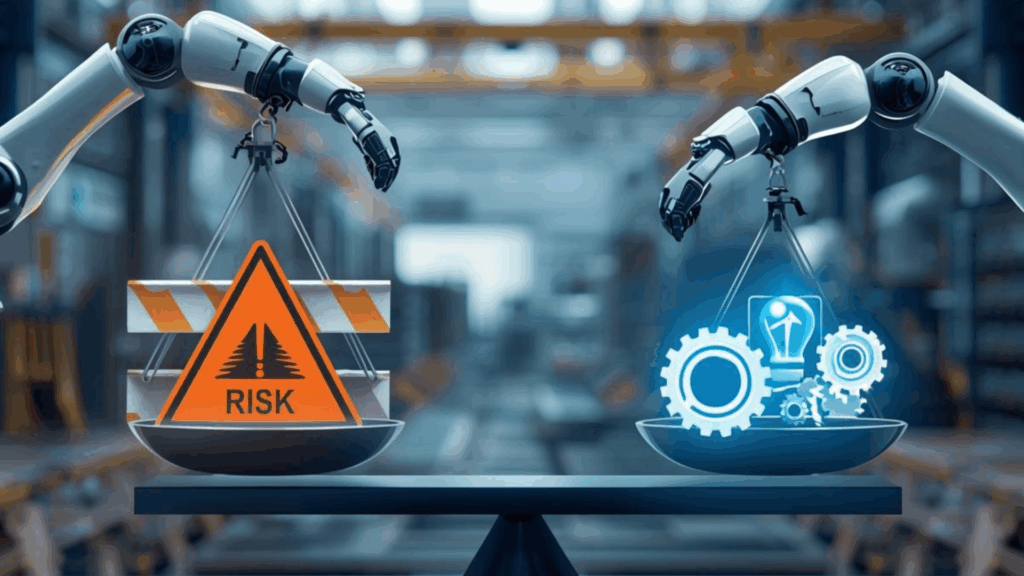
Manufacturing has always operated with a careful balance between innovation and risk. Automation, supply chain dependency, safety considerations and uptime pressure all shape how new technologies are adopted.
AI is the latest example. It offers significant gains in efficiency and insight, but it also introduces new challenges for cyber resilience.
Like previous waves of industrial technology, AI brings both opportunity and risk. It is helping manufacturers optimise production, predict equipment failures and improve quality control. At the same time, it is changing how cyber attackers operate.
Scottish manufacturing firms are already familiar with the operational impact cyber incidents can have. Several well-known industrial organisations have experienced attacks that caused disruption, downtime, and significant recovery effort.
Attackers are using AI to make their work faster, more convincing, and harder to detect.
This isn’t about scaremongering. It’s about recognising that the threat is evolving. Cyber risk in manufacturing is no longer theoretical – it is operational.
Anyone working in manufacturing knows that these environments are complex – a reality we encounter often when supporting clients across the sector. You’ll typically find PLCs, SCADA systems, CNC machines, conveyors, smart sensors, MES platforms, and ERP systems operating together across production and business systems.
There are also realities that can often be underestimated:
This complexity is exactly why AI, on both the offensive and defensive side, matters.
AI is allowing attackers to automate and scale familiar techniques. For manufacturers, that can mean:
The impact is the same as ever: downtime, lost IP, significant financial losses, supply chain disruption and safety concerns. What has changed is the speed and sophistication with which these attacks can unfold.
The good news is AI is not just a threat; it is also a powerful defensive tool. It can analyse vast amounts of data in real-time, identify unusual network behaviour, detect subtle changes in traffic, predict attack paths and accelerate response.
Increasingly, these capabilities are embedded in modern monitoring and security operations platforms. For example, Security Operations Centres (SOCs) and Security Information and Event Management (SIEM) platforms now use machine learning to analyse network activity, identify anomalies and highlight potential threats far earlier than traditional tools could.
Manufacturing has unique pressures that make cyber incidents particularly painful:
In this context, cyber resilience and operational resilience are increasingly the same thing, and when AI is used correctly it can support both.
However, AI isn’t a silver bullet. It still needs good data, good configuration, and human oversight. It can create false positives. Poor configuration can introduce new risks. And AI systems themselves need to be secured. The goal is to enhance human expertise, not replace it.
Manufacturers can strengthen resilience by focusing on several practical areas:
AI in manufacturing isn’t inherently good or bad – it’s a capability. The organisations that treat it purely as a productivity tool risk overlooking its security implications. Those that integrate it into their resilience strategy will be better placed to protect their people, their production, and the continuity of their operations.
If this has prompted you to think about how AI is impacting your own cyber resilience, feel free to get in touch. Robbie Ross would be happy to talk through your current approach and where AI can support it – robbie.ross@converged.co.uk | 01224 656380.
About the Author
Robbie Ross is Cyber Security Lead at Converged Communication Solutions, part of the Converged Solutions Group. Combining a background in policing and Counter Terrorism with a strong focus on supporting businesses, he brings a practical, risk-based approach to cyber security, helping organisations strengthen resilience and manage risk effectively.
About Converged Communication Solutions
Converged Communication Solutions, part of the Converged Solutions Group, provides connectivity, IT, cyber security and communications services to organisations across the UK. Working as part of a wider group of specialist businesses, it supports clients in designing, delivering and managing secure, reliable technology environments that underpin day-to-day operations.
| # | Наименование новости | Тональность | Информативность | Дата публикации |
|---|---|---|---|---|
| 1 | The Hidden Cost of IT Support: Why Scottish SMEs Are Ditching Break-Fix IT for Managed Services | 0 | 7.41 | 23-07-2026 |
| 2 | Surviving Ransomware: Best practices to safeguard your business | 0 | 6.83 | 09-03-2026 |
| 3 | Cyber Essentials Certified? Here’s Why Penetration Testing Should Be Your Next Move | 0 | 7.89 | 03-08-2026 |
| 4 | How to Choose the Right Business Phone System | 0 | 7.7 | 01-09-2026 |
| 5 | Which Connectivity Solution Is Right for Your Business? | 0 | 6.35 | 01-09-2026 |
| 6 | The SOC Doesn't Need to Start Over with Every Alert | 0 | 8.65 | 25-09-2026 |
| 7 | The paradox of de-Sinification in global production | 0 | 19.41 | 28-09-2026 |
| 8 | Los riesgos de la inteligencia artificial | 0 | 10 | 15-09-2026 |
| 9 | Study examines risks companies face when relying too heavily on AI systems | 0 | 8.82 | 28-09-2026 |
| 10 | IDD GmbH erklärt ganzheitliche Compliance: Warum Datenschutz, IT-Sicherheit und KI zusammen gedacht werden müssen | 0 | 8.36 | 21-05-2026 |