Просмотр новости
Найдите то, что Вас интересует
 Спутники
 РН
РН SpaceX
 Роскосмос
 NASA
NASA
СпутникиРНSpaceXРоскосмосNASA
PG’s John Bohlinger met up with Cody Nilsen and Matt Stubbs of GA-20 at the Vinyl Tap in Nashville. The band takes its name from the Gibson GA-20, which they’ve now retired from the road—what’s left is two guitarists, no bassist, and a stack of amps that never get switched off. Have a look at some quick highlights below, and tune into the new Rig Rundown for all the details.Brought to you by D’Addario.Shark AttackNilsen’s Teisco ET-460 “Shark Fin” was rebuilt by Nate Lord of Lord Guitars — Rickenbacker-style pickguard, a gold foil in the neck, Lord’s own wiring, TK Smith Bakelite knobs, plus the two original Teisco pickups, wired to run as one enormous humbucker with a push-pull that drops it to a single coil. It’s in open C, and it’s big enough and low enough, Nilsen says, to shake the speakers.Rat RodThe Shark Fin’s predecessor is the pawn-shop special that got Nilsen into these guitars in the first place—held together with tape and, in his words, a wild ride. The rotary switch came out early on, since Lord warned him he wouldn’t like it, and now all four pickups work in any combination. He’s usually on the bridge, but he likes the back two together, which is probably what led to the humbucker idea on the newer one.The LawsuitA 1977 Ibanez Les Paul copy off Craigslist, bought because Nilsen loves black beauties with P-90s and couldn’t afford a real one. It’s a bolt-on, which worried him at first. He says the neck pickup’s thump is what he judges every other guitar against, and he’s had it open exactly once, to check a cap, which was enough.Cody Nilsen’s PedalboardFrom left to right: A Catalinbread Topanga for reverb; an Xotic RC Booster that’s been on every board Nilsen’s ever had, mostly for salvaging backline amps; a J. Rockett Archer that comes out once or twice a night when Nilsen wants to upset the sound guy; and a Jackson Audio 1484 Twin Twelve, that mostly lives as a borderline fuzz for his slide tone.Signature SlideStubbs’ number one is his Waterslide signature T-style, built by Patrick Matera in Los Angeles. He’d asked for a Telecaster with DeArmond-style gold foils, the biggest neck available, and a Bigsby he could actually lean on; after he called back to order a second, Matera suggested making it a signature model instead.Green MachineThe Sherwood Green one is the same guitar in every respect, just slightly lighter. It’s tuned down to C with .012s, and it comes out when Nilsen picks up the slide and goes to open C—Stubbs isn’t soloing much on it, just covering low end.Shell Pink PrototypeStubbs’ newest Waterslide is an offset prototype in shell pink with the same neck and the same Mojo pickups under different covers. It’s just under eight pounds, and it’s on a Descendant bridge, which is new to him.Tweed TwinThis West Side combo is modeled on Stubbs’ 1960 Tweed Deluxe, an amp he says he couldn’t afford at today’s prices. Diego at West Side took the values off the original and built the band a pair. They’re what all the torn-up high end comes out of.Dad’s AmpThe Fender Bassman is the ‘68 Stubbs borrowed from his father when an amp blew up on tour and never gave back; of the five or six he owns, this one has something the others don’t. Below it is a West Side Bluesman that Diego built from its values—both sides the same circuit, one tweaked for extra low end, in phase so they can be jumped. Nilsen and Stubbs each run one.Matt Stubbs’ PedalboardA Boss TU-2, then a first-generation Seymour Duncan SFX-01 Pickup Booster he’s had since he was 18. A Ryra Klone stays on the board for fly dates, when he’s stuck with a limp backline amp. His Catalinbread Topanga handles reverb; he went through about 40 reverb pedals before it and stopped looking. Not on the board yet but used on the new record: a prototype from a company called Super, with a Fuzz-Rite-ish fuzz on one side and a clean boost on the other, built in because the maker knew what Stubbs liked.
PG’s John Bohlinger met up with Cody Nilsen and Matt Stubbs of GA-20 at the Vinyl Tap in Nashville. The band takes its name from the Gibson GA-20, which they’ve now retired from the road—what’s left is two guitarists, no bassist, and a stack of amps that never get switched off. Have a look at some quick highlights below, and tune into the new Rig Rundown for all the details.
Brought to you by D’Addario.
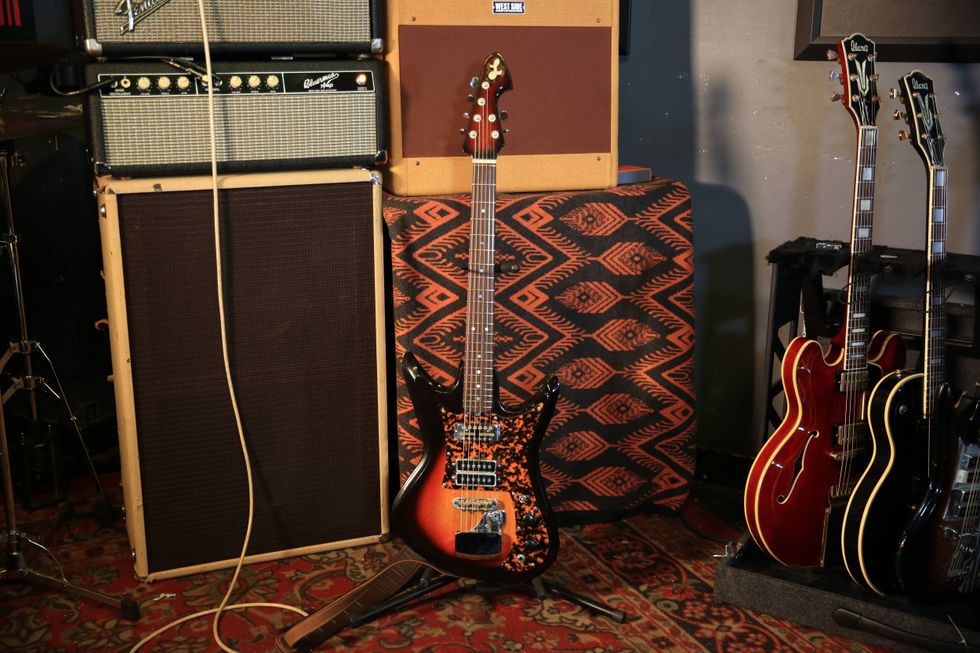
Nilsen’s Teisco ET-460 “Shark Fin” was rebuilt by Nate Lord of Lord Guitars — Rickenbacker-style pickguard, a gold foil in the neck, Lord’s own wiring, TK Smith Bakelite knobs, plus the two original Teisco pickups, wired to run as one enormous humbucker with a push-pull that drops it to a single coil. It’s in open C, and it’s big enough and low enough, Nilsen says, to shake the speakers.
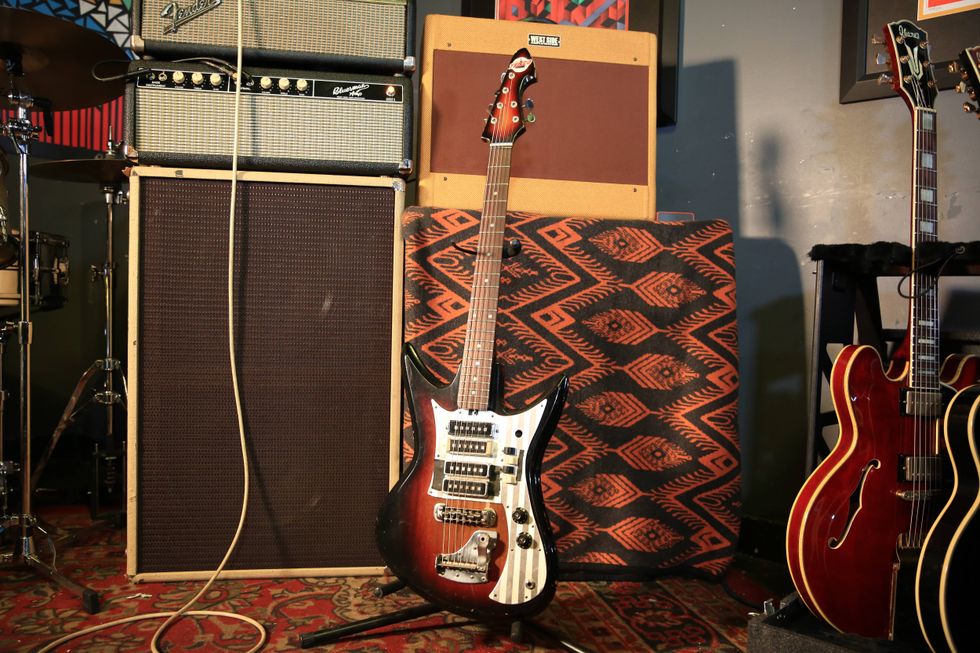
The Shark Fin’s predecessor is the pawn-shop special that got Nilsen into these guitars in the first place—held together with tape and, in his words, a wild ride. The rotary switch came out early on, since Lord warned him he wouldn’t like it, and now all four pickups work in any combination. He’s usually on the bridge, but he likes the back two together, which is probably what led to the humbucker idea on the newer one.
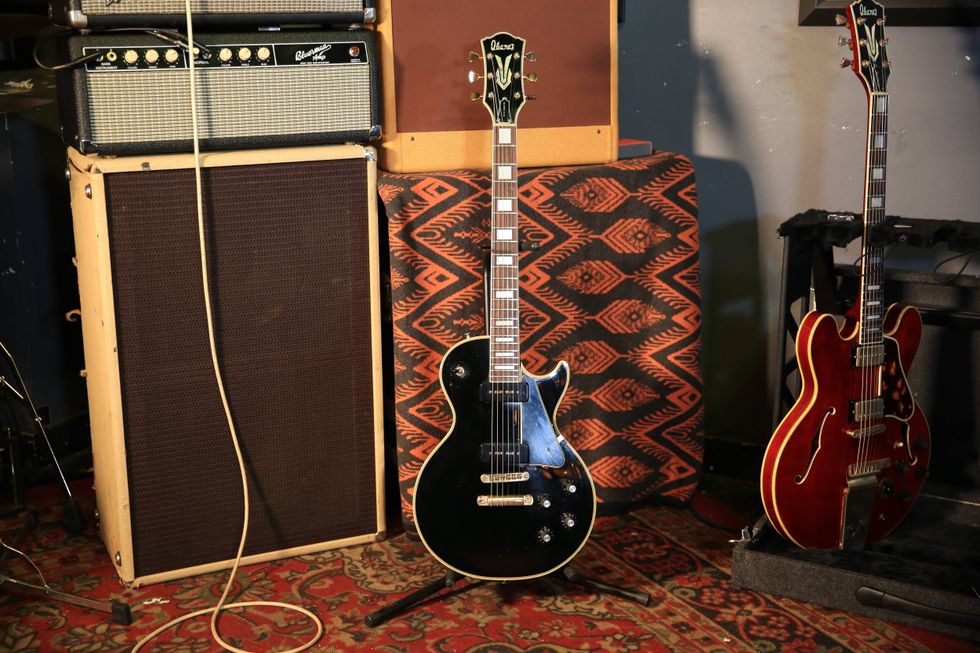
A 1977 Ibanez Les Paul copy off Craigslist, bought because Nilsen loves black beauties with P-90s and couldn’t afford a real one. It’s a bolt-on, which worried him at first. He says the neck pickup’s thump is what he judges every other guitar against, and he’s had it open exactly once, to check a cap, which was enough.
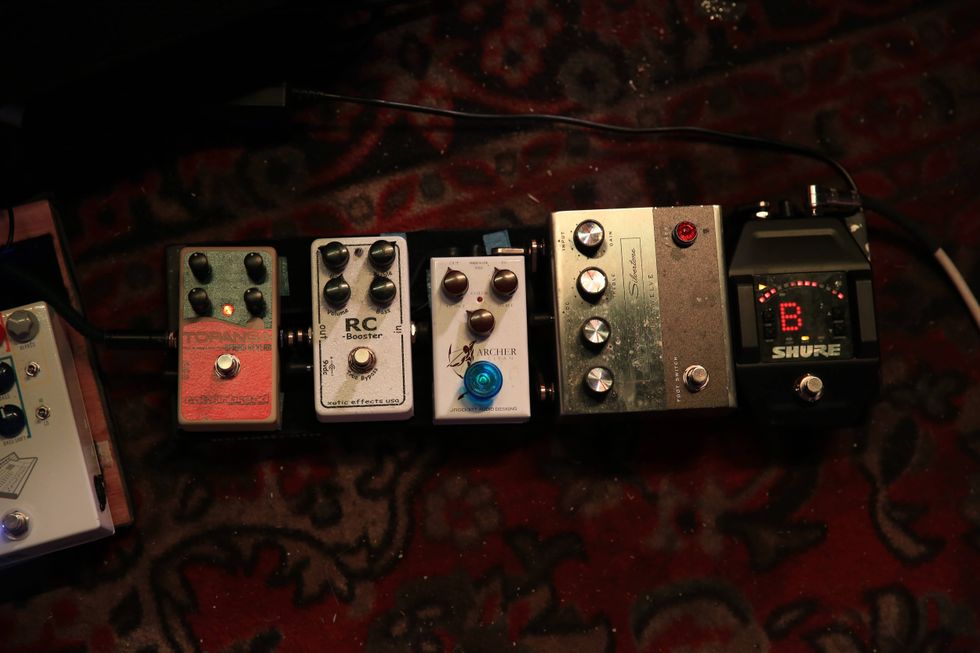
From left to right: A Catalinbread Topanga for reverb; an Xotic RC Booster that’s been on every board Nilsen’s ever had, mostly for salvaging backline amps; a J. Rockett Archer that comes out once or twice a night when Nilsen wants to upset the sound guy; and a Jackson Audio 1484 Twin Twelve, that mostly lives as a borderline fuzz for his slide tone.
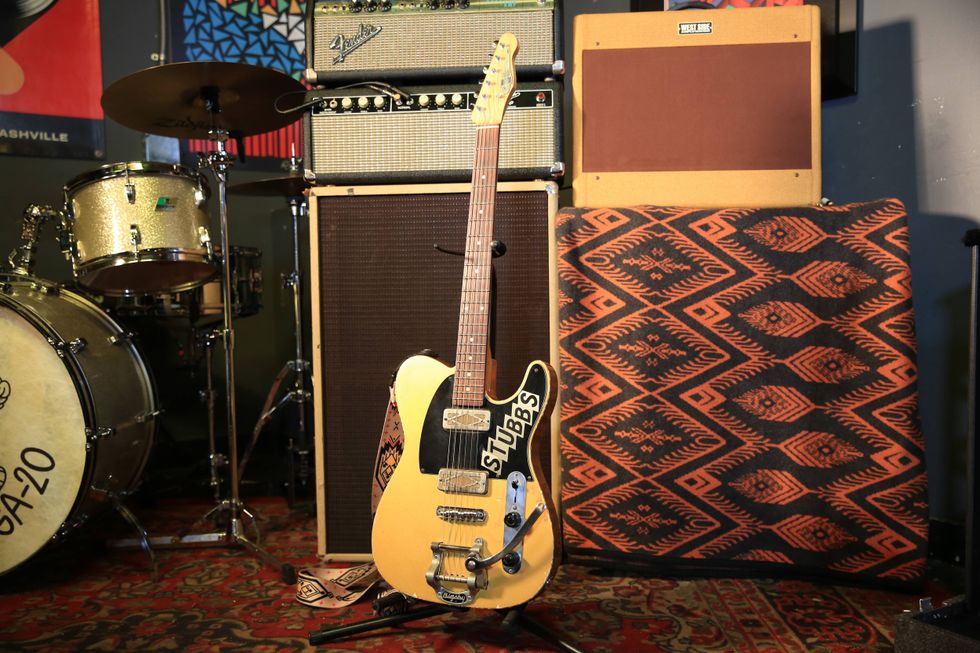
Stubbs’ number one is his Waterslide signature T-style, built by Patrick Matera in Los Angeles. He’d asked for a Telecaster with DeArmond-style gold foils, the biggest neck available, and a Bigsby he could actually lean on; after he called back to order a second, Matera suggested making it a signature model instead.
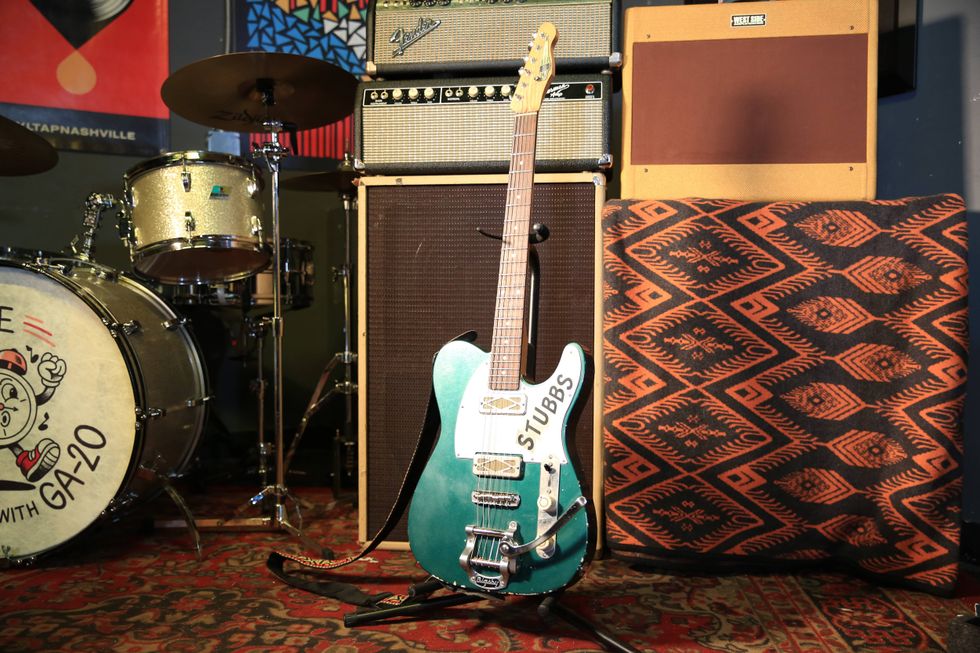
The Sherwood Green one is the same guitar in every respect, just slightly lighter. It’s tuned down to C with .012s, and it comes out when Nilsen picks up the slide and goes to open C—Stubbs isn’t soloing much on it, just covering low end.
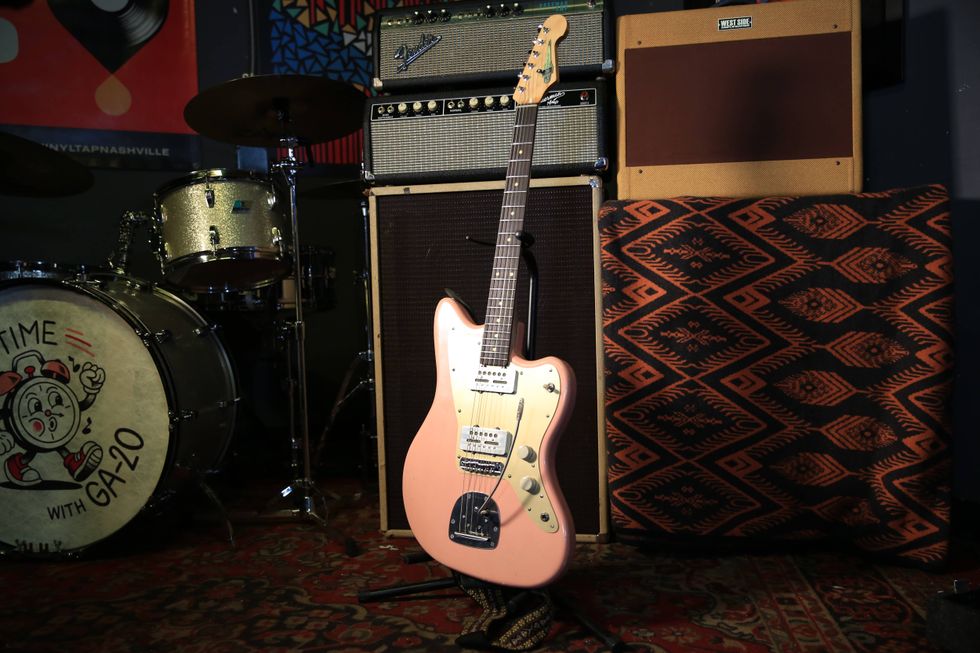
Stubbs’ newest Waterslide is an offset prototype in shell pink with the same neck and the same Mojo pickups under different covers. It’s just under eight pounds, and it’s on a Descendant bridge, which is new to him.
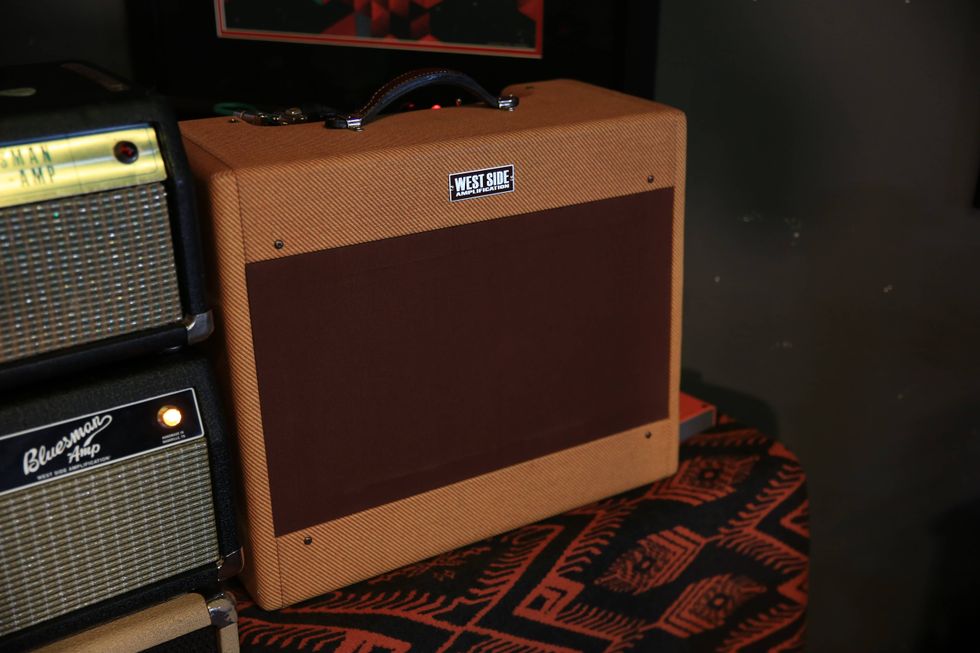
This West Side combo is modeled on Stubbs’ 1960 Tweed Deluxe, an amp he says he couldn’t afford at today’s prices. Diego at West Side took the values off the original and built the band a pair. They’re what all the torn-up high end comes out of.
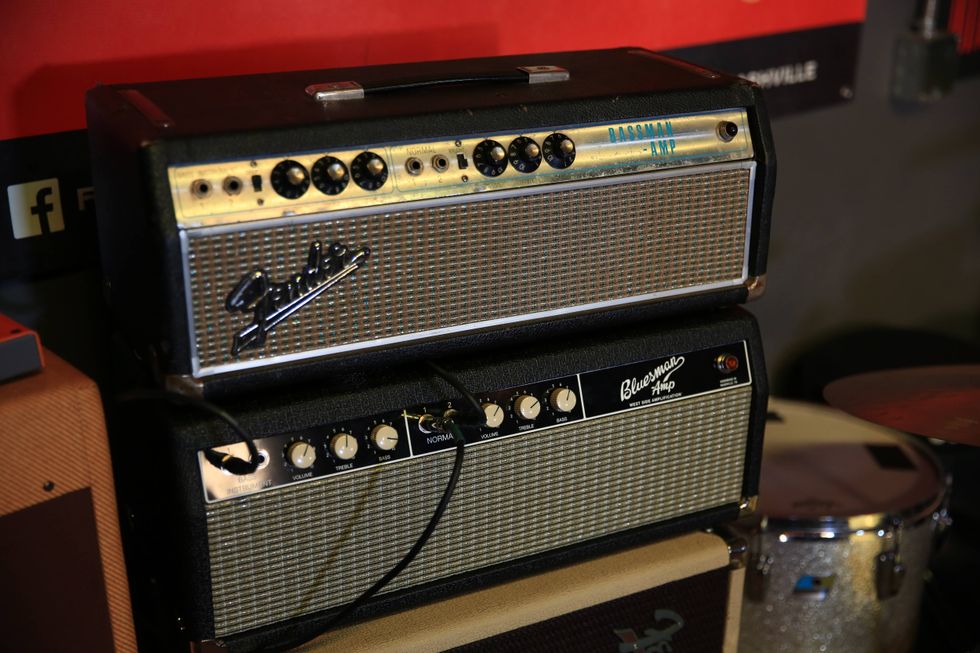
The Fender Bassman is the ‘68 Stubbs borrowed from his father when an amp blew up on tour and never gave back; of the five or six he owns, this one has something the others don’t. Below it is a West Side Bluesman that Diego built from its values—both sides the same circuit, one tweaked for extra low end, in phase so they can be jumped. Nilsen and Stubbs each run one.
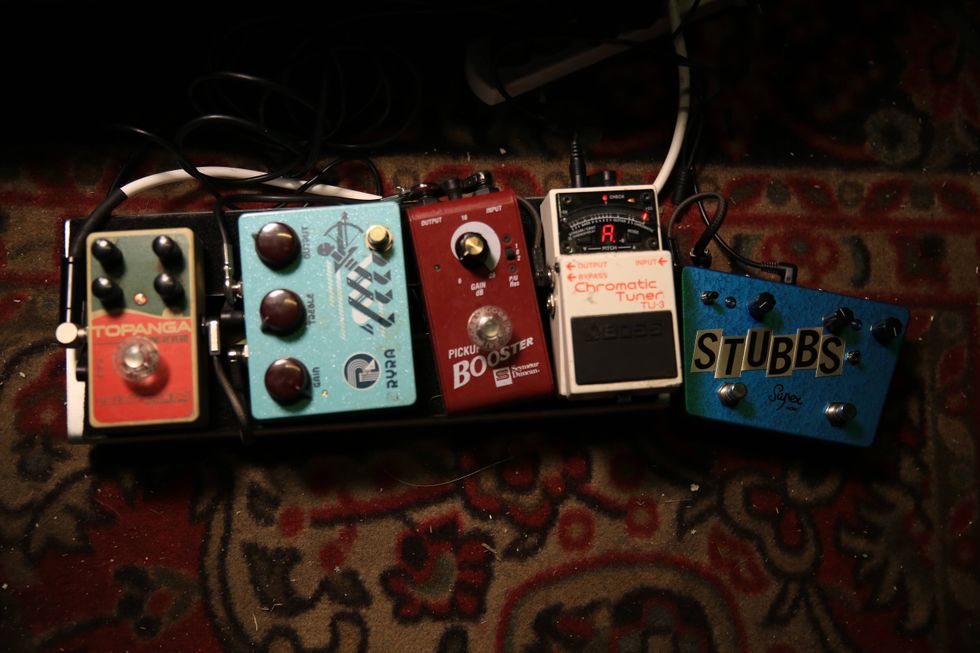
A Boss TU-2, then a first-generation Seymour Duncan SFX-01 Pickup Booster he’s had since he was 18. A Ryra Klone stays on the board for fly dates, when he’s stuck with a limp backline amp. His Catalinbread Topanga handles reverb; he went through about 40 reverb pedals before it and stopped looking. Not on the board yet but used on the new record: a prototype from a company called Super, with a Fuzz-Rite-ish fuzz on one side and a clean boost on the other, built in because the maker knew what Stubbs liked.
| # | Наименование новости | Тональность | Информативность | Дата публикации |
|---|---|---|---|---|
| 1 | Rig Rundown: Mr. Phylzzz | 0 | 12.56 | 30-09-2026 |
| 2 | Sole Power Pedal Reviews | 0 | 12.8 | 24-09-2026 |
| 3 | The Edge's Sound Without the Edge's Rig: Amps, Delay, Drive & Pick Tricks | 0 | 7.85 | 28-09-2026 |
| 4 | Reverend Guitars Unveils New Standard Series | 0 | 10.06 | 01-10-2026 |
| 5 | LsL Instruments Baribone review: custom baritone T-type finds the balance between vintage and modern | 0 | 19.85 | 11-09-2026 |
| 6 | Johnny Marr’s 7-figure payday, reflection from Fender’s CEO and 18-carat-gold Pink Floyd picks: here are this week’s guitar stories you need to know about | 0 | 15.4 | 18-09-2026 |
| 7 | Fender Vintera III Late ’50s Telecaster review: “this guitar has really surprised me” | 0 | 18.62 | 14-09-2026 |
| 8 | Fender Introduces Three New John 5 Signature Telecaster Models | 0 | 7.42 | 06-10-2026 |
| 9 | D'Addario Introduces XS Nickel Bronze Acoustic Strings | 0 | 9.38 | 07-10-2026 |
| 10 | Question of the Month: What's the first—or hardest—guitar solo you ever learned? | 0 | 10.98 | 04-10-2026 |