Просмотр новости
Найдите то, что Вас интересует
 Спутники
 РН
РН SpaceX
 Роскосмос
 NASA
NASA
СпутникиРНSpaceXРоскосмосNASAPeter Medak’s The Changeling (1980) stands as one of cinema’s most enduring haunted-house masterworks, released during an
The post Sorrow, Sound, and Shadow: Why THE CHANGELING Remains Cinema’s Greatest Haunted House Mystery appeared first on David's Basement of the Bizarre.

Peter Medak’s The Changeling (1980) stands as one of cinema’s most enduring haunted-house masterworks, released during an era dominated by high-body-count slashers like Friday the 13th. Rather than relying on gore or shock tactics, the film relies on atmosphere, psychological weight, meticulous sound design, and an unshakeable sense of historical dread.
 The Anatomy of Grief and the Premise
The narrative centers on John Russell (George C. Scott), an acclaimed composer and concert pianist. While stranded on a snowy roadside, he witnesses a catastrophic collision that instantly kills his wife and young daughter. Paralyzed by grief, Russell relocates from New York to Seattle to teach music and start anew.
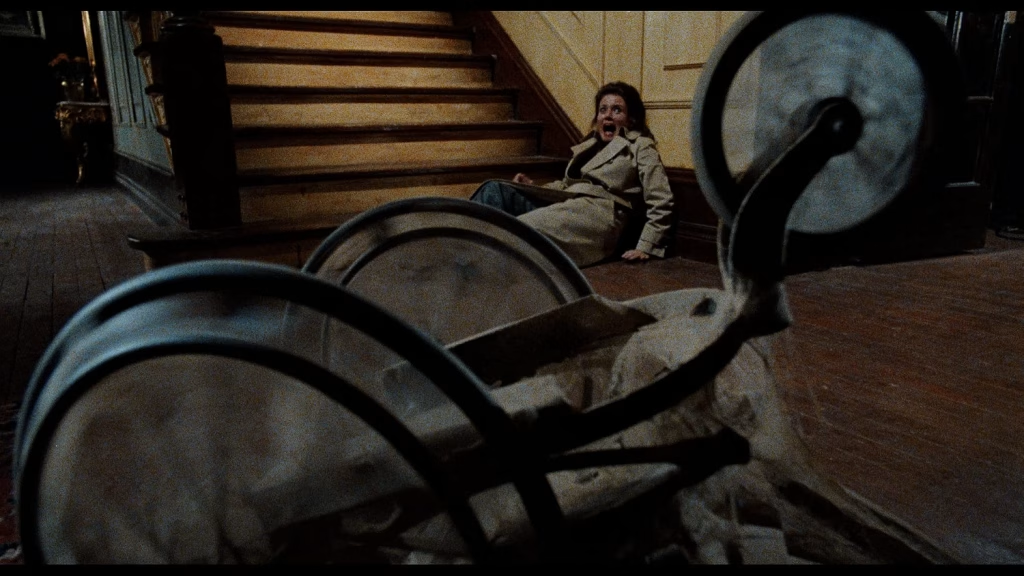
Through the local historical society, agent Claire Norman (played by Scott’s real-life wife, Trish Van Devere) leases him the sprawling, secluded Chessman mansion. Russell seeks isolation to compose, but the house refuses to remain quiet. Rhythmic thuds echo through the pipes every morning, faucets turn on unattended, and hidden passages reveal a bricked-up attic bedroom containing a child-sized wheelchair and a music box that plays the exact melody Russell just composed at the piano.
 The Real-Life Inspiration
Screenwriter Russell Hunter claimed the story was inspired by his own experiences living in the historic Henry Treat Rogers mansion in Denver, Colorado, during the late 1960s. Hunter reported unexplainable banging from the plumbing, shifting objects, and eventually finding a hidden stairway behind a closet that led to a sealed attic room. In Hunter’s account, a seance revealed the spirit of a frail boy who had been murdered by his family and replaced by an adopted double to safeguard a massive inheritance—a twist that became the spine of the film.
 Crafting Terror Without Blood
Medak’s direction sets The Changeling apart from standard supernatural fare through several defining techniques:
 The Detective Twist and Themes
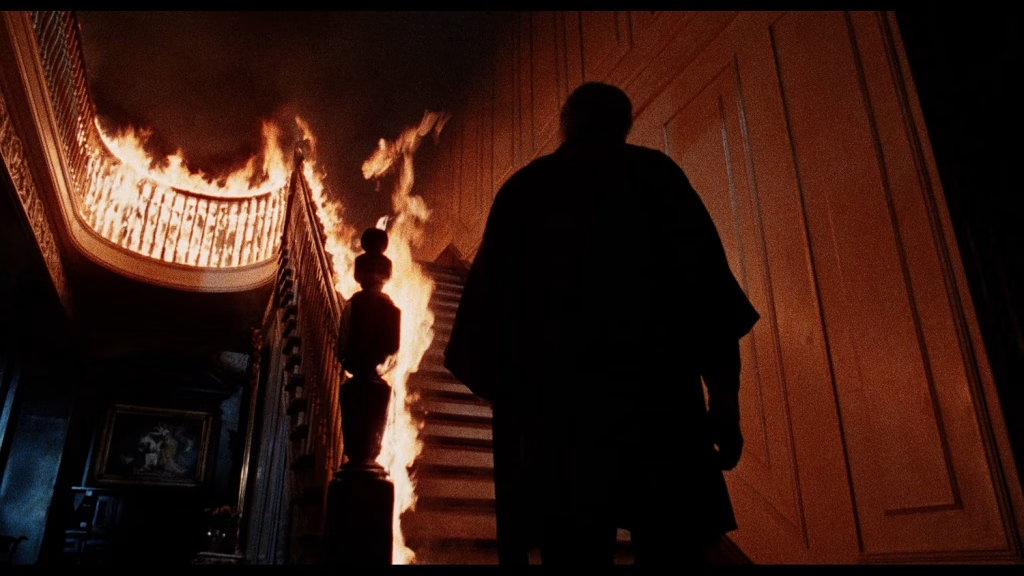
Unlike traditional ghost stories where the goal is mere survival or exorcism, The Changeling transforms into a supernatural murder mystery. Russell realizes the spirit—a sickly child named Joseph Carmichael—is not malevolent out of malice, but desperate for justice.
Joseph was drowned in a bathtub by his wealthy father in 1906 because the boy’s severe disability risked losing a family fortune tied to a generational trust. The father secretly substituted an orphaned child (the titular “changeling”) who grew up to become a prominent, powerful U.S. Senator (Melvyn Douglas). Russell’s journey shifts from grief-fueled paralysis to active pursuit of the truth, giving the phantom’s rage a moral dimension.
 Legacy and Enduring Impact
The Changeling swept the inaugural Genie Awards (the Canadian equivalent of the Oscars), taking home eight trophies, including Best Motion Picture, Best Foreign Actor (Scott), and Best Foreign Actress (Van Devere).
Its visual language and storytelling architecture heavily influenced modern paranormal cinema. Elements of The Changeling can be traced directly to films like The Sixth Sense (the red ball and wronged child ghost), Hideo Nakata’s Ringu / The Ring (a murdered child trapped beneath a floorboard/well seeking vengeance), and Alejandro Amenábar’s The Others.
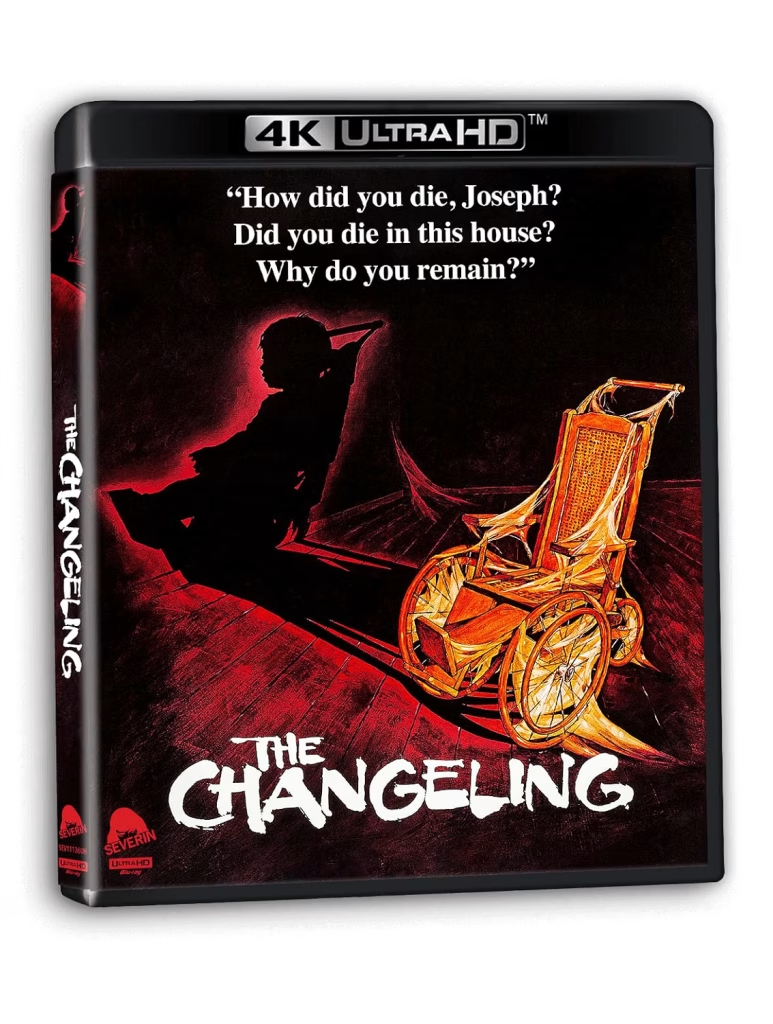
To read the rest of my Monstrous Movie Reviews, click HERE! To add this movie to your film collection, click on the Blu-ray cover below.
 Continue Reading
| # | Наименование новости | Тональность | Информативность | Дата публикации |
|---|---|---|---|---|
| 1 | Werewolf Films to Howl Over! | 0 | 6.57 | 30-09-2026 |
| 2 | The Architecture of Dread: How 1944’s THE UNINVITED Invented the Modern Ghost Story | 0 | 5.21 | 08-10-2026 |
| 3 | Seeing Is Believing: How William Castle’s 13 GHOSTS Weaponized Gimmick Cinema | 0 | 11.44 | 03-10-2026 |
| 4 | The Architecture of Inevitability: How HEREDITARY Turned Grief into Cosmic Horror | 0 | 6.62 | 05-10-2026 |
| 5 | Minimum Wage, Maximum Dread: A Retrospective on Ti West’s THE INNKEEPERS | 0 | 4.54 | 01-10-2026 |
| 6 | Electrifying the Gothic: How THE LEGEND OF HELL HOUSE (1973) Modernized Haunted Cinema | 0 | 8.5 | 04-10-2026 |
| 7 | Tonight on Svengoolie and the House of Svengoolie (October 3, 2026): THE WIZARD OF OZ and THE INVISIBLE MAN RETURNS | 0 | 5.85 | 03-10-2026 |
| 8 | “Atta Boy, Luther!” How THE GHOST AND MR. CHICKEN Haunted Hollywood and Made Don Knotts a Movie Star | 0 | 4.59 | 06-10-2026 |
| 9 | Locked In: How HOUSEBOUND Rebuilt the Haunted House with Deadpan Kiwi Horror | 0 | 7.85 | 02-10-2026 |
| 10 | A Definitive Ranking of David Lynch’s Movies | 0 | 11.63 | 18-09-2026 |