Просмотр новости
Найдите то, что Вас интересует
 Спутники
 РН
РН SpaceX
 Роскосмос
 NASA
NASA
СпутникиРНSpaceXРоскосмосNASAGeorges Cziffra’s name evokes extraordinary virtuosity and freedom, although many of us today know his playing only through recordings. What does it mean to represent Cziffra’s artistic ethos in 2026? Cziffra had the unique ability to speak to the musical profession and to audiences at the same time. His distinctive approach to the piano grew […]

János Balázs
© Szilvia Csibi
Georges Cziffra’s name evokes extraordinary virtuosity and freedom, although many of us today know his playing only through recordings. What does it mean to represent Cziffra’s artistic ethos in 2026?
Cziffra had the unique ability to speak to the musical profession and to audiences at the same time. His distinctive approach to the piano grew out of a deeply rooted tradition: the school of Franz Liszt, of which Cziffra was an inimitable representative.To carry on his legacy and to belong to this tradition is not only a responsibility, but also a duty. While for audiences he offered a kind of performance that was, above all, an immediate experience, for fellow musicians, Cziffra embodied some of the most important values of the Lisztian school of piano playing,This is why, more than ten years ago, alongside my career as a concert pianist, I decided to establish the Cziffra Festival in Hungary.
It gives me great joy to see that the initiative has since grown into an international series of events that represent the highest artistic standards.We support young talent by providing concert opportunities, well-deserved awards, and masterclasses. We want the greatest artists with us, but even more important is our responsibility to nurture and pass on this artistic spirit so future generations of musicians can continue along this path and carry Georges Cziffra’s legacy forward.
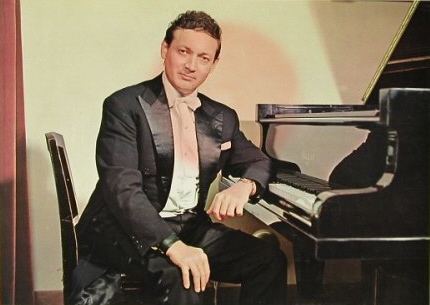 György Cziffra
Improvisation was an essential part of Cziffra’s art, and it also plays an important role in your own musical mindset. Have the values we lost in improvisation gradually disappeared from classical performance practice over the centuries?
Cziffra was indeed one of the most outstanding representatives of the tradition embodied by Franz Liszt, who was himself a magnificent improviser.
It is worth remembering that for centuries improvisation was by no means alien to classical musicians. We need only think of Johann Sebastian Bach, one of the greatest improvisers in music history. In recent decades, however, classical musicians have increasingly moved away from this practice, and improvisation has come to be associated much more closely with jazz and other non-classical musical traditions.
A performance becomes personal through how we discover ourselves and our emotions within a composition, and how we communicate them to our audience.
However, improvisation is often misunderstood as simply playing different notes or disregarding the composer’s instructions. That is not what I mean. Improvisation is more about creating different worlds of sound within the same musical material. It is creativity, but it is also rediscovery – the freedom of music.
I believe it is difficult to understand a piece of music with the same depth if you approach it solely as a pianist, rather than also having the creative instinct to look behind the notes.
That is why improvisation matters.
You discovered Cziffra’s piano playing at a very young age. How did that encounter influence your later career?
My encounter with Georges Cziffra’s art through recordings had a magnetic force. Sadly, I never met the Maestro in person, nor did I ever have the opportunity to hear him in concert, but when I was five or six years old, I listened again and again to his famous recording of Liszt’s Hungarian Rhapsodies. That, essentially, enchanted me and drew me toward the piano.
Later I discovered more and more of Cziffra’s recordings, which had an extraordinary impact on me. Then I read his autobiography, Cannons and Flowers, and it became clear to me that I had encountered not merely a great artist, but also a remarkable human being.
The Cziffra Festival has now reached its twelfth season. Over the years, artists including Martha Argerich, Mischa Maisky, Vadim Repin and José Cura have performed in Budapest at your invitation. How has the Festival evolved in relation to your original vision?
The Festival’s principal mission has been to introduce Cziffra’s name and work to the widest possible audience.
We have had a very clearly defined identity from the outset. On the one hand, we have succeeded in bringing together classical musicians who share this musical outlook — an improvisatory, free way of thinking. On the other, we were among the first to venture boldly across genre boundaries. Roma music and the tradition of bar and salon music have also found a place at the Festival, both closely connected with Cziffra’s own artistic background.
We have also pioneered support for young talent by organizing numerous masterclasses and holding annual competitions. Over the years, we have presented awards, giving young musicians significant professional recognition and financial support. Outstanding young talents have appeared in more than a hundred concerts as part of the festival.
This is the path I would like us to continue following. Our audiences consistently reward us with sold-out concerts, while we have also developed truly exceptional international collaborations — with Carnegie Hall in New York, the Royal Philharmonic Orchestra in London, and Radio France in Paris, among others.
 János Balázs
This season begins with a particularly strong international presence: Luxembourg, Brussels and New York’s Carnegie Hall, followed by London in the spring. What can audiences expect this season?
Our 2026/27 international season begins on 14 October at the Philharmonie Luxembourg, where I will give a solo recital featuring works by Chopin, Liszt, Wagner and Ravel. The festival will then continue in Brussels, presenting an outstanding young talent and highlighting our commitment to supporting the next generation.
It will be an enormous honor to return to the stage of Carnegie Hall following my debut there last year. This time, I will bring a program featuring works by Schumann, Liszt, Chopin and Ravel.
Whenever artists of the Cziffra Festival perform abroad, it is a source of immense pride to experience the affection and respect shown for the music of Hungarian composers, such as Franz Liszt, Béla Bartók and Zoltán Kodály, as well as for Cziffra’s own legacy. It is equally inspiring to see this musical tradition represented in collaboration with some of the world’s leading orchestras, festivals and cultural institutions.
We do not simply want to accept these invitations; I also feel a profound sense of gratitude for them. They give us, as we are travelling around the world, an opportunity for us Hungarians to carry forward the musical tradition established by those who came before us.
Finally, we will return to London’s Cadogan Hall next spring with the Royal Philharmonic Orchestra, continuing our series of international collaborations.
Alongside this growing international presence, Budapest remains at the heart of the Cziffra Festival. What highlights can audiences look forward to in the Hungarian capital this season?
On 8 November, I will undertake what may be one of the greatest challenges of my life in the Grand Hall of the Liszt Academy in Budapest. I will devote the entire day to Franz Liszt. It will be a very special occasion. I will give three concerts — in the morning, afternoon and evening — and within a single day perform all nineteen of Liszt’s Hungarian Rhapsodies, the Sonata in B minor, the twelve Transcendental Études, the six Paganini Études, two concert études, as well as major works including his Dante Sonata, the Mephisto Waltz No. 1 and the Réminiscences de Don Juan.
For me, Liszt’s music is a source that can shape a musician for an entire lifetime. It embodies tradition, freedom, virtuosity, and creative thought at once. I want to share the very best of that inexhaustible source with the audience.
Beyond this unique Liszt project, we are bringing together outstanding Hungarian and international artists. The festival is also a celebration of the piano, and we are delighted to welcome Daniil Trifonov and Vadym Kholodenko to Budapest at our invitation.
Next year also marks an important anniversary for one of the great composers: the musical world will turn its attention to Beethoven, and we would like the Cziffra Festival to play its part. We are planning a concert featuring Beethoven’s Piano Concerto No. 5 and his celebrated Ninth Symphony with Concerto Budapest, conducted by András Keller.
We will also present a special program in Budapest before taking it on tour across Hungary. It is titled Ludwig in the Blue. Together with the outstanding violinist Barnabás Kelemen, joined by Marcell and Martin Gudics in a jazz trio, we will explore Beethoven’s music from a new perspective. Alongside classical sonatas, we will explore how some of Beethoven’s musical ideas can be translated into the language of jazz.
| # | Наименование новости | Тональность | Информативность | Дата публикации |
|---|---|---|---|---|
| 1 | Festival de Besançon 2026 : une édition bien remplie | 0 | 10.66 | 26-09-2026 |
| 2 | Arcadi Volodos: “La música es algo sagrado, como una religión” | 0 | 9.34 | 30-09-2026 |
| 3 | Josep Pons about his collaboration with the Deutsche Radio Philharmonie: « Looking ahead, I see only one path forward: growth » | 0 | 8.78 | 28-05-2026 |
| 4 | Nelson Goerner: “Después de ganar un concurso, queda toda una carrera por construir” | 0 | 8.12 | 22-09-2026 |
| 5 | Abel Prize awarded, 2026, to Gerd Faltings | 0 | 24.29 | 02-04-2026 |
| 6 | Robert Levin: « Today’s values prioritize the technical aspect of the craft, speed over substance » | 0 | 10.12 | 12-06-2026 |
| 7 | 2 октября 2026 г. Денис Мацуев превратил Кремлевский Дворец в ... | 0 | 8.64 | 05-10-2026 |
| 8 | if music could talk - If Music Could Talk - Sep 6 2026 | 0 | 13.25 | 28-09-2026 |
| 9 | "Музыка сфер", 2026 Холст, 90×90 Смешанная техника В работе "Музыка ... | 0 | 7.26 | 01-10-2026 |
| 10 | Alban Gerhardt: « Mich interessiert viel mehr, eine eigene Sicht auf ein Werk zu entwickeln » | 0 | 8.84 | 24-06-2026 |