Просмотр новости
Найдите то, что Вас интересует
 Спутники
 РН
РН SpaceX
 Роскосмос
 NASA
NASA
СпутникиРНSpaceXРоскосмосNASAHave been spending some time back on the airpower beat, thinking about the execution of Russian and Ukrainian airpower strategies. During that journey I’ve picked up some errata on the platforms… It’s the end of the line for the Harrier: The Harrier was more than just another attack jet. It was the embodiment of the […]
The post Airpower Errata appeared first on Lawyers, Guns & Money.
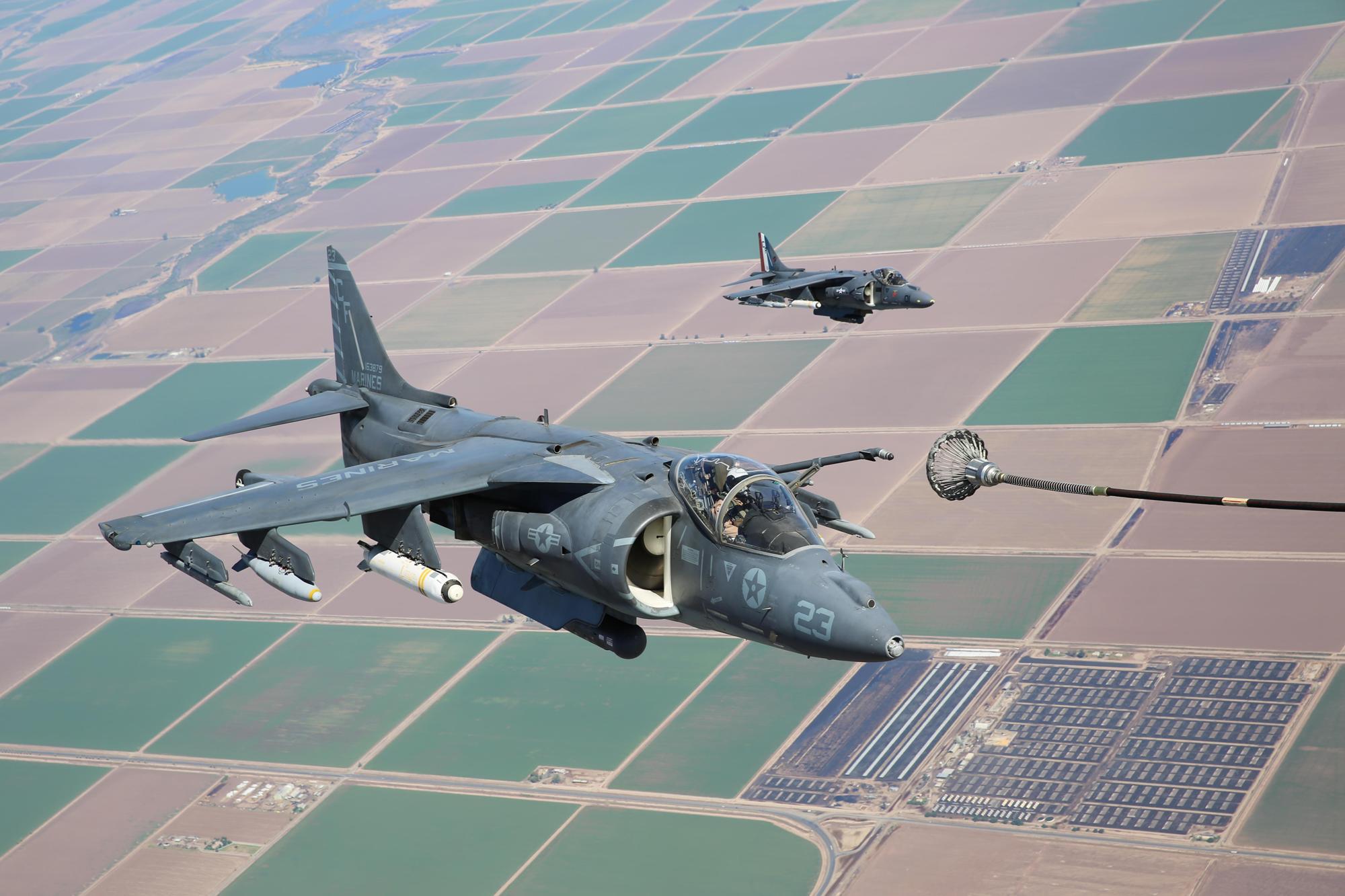
Have been spending some time back on the airpower beat, thinking about the execution of Russian and Ukrainian airpower strategies. During that journey I’ve picked up some errata on the platforms… It’s the end of the line for the Harrier:
The Harrier was more than just another attack jet. It was the embodiment of the Marine Corps’ longstanding determination to bring airpower wherever Marines fought, regardless of whether a conventional airfield existed.
The Harrier’s story began long before the AV-8 entered U.S. military service. Derived from the British Hawker Siddeley Harrier jump jet, the aircraft was built around a revolutionary concept: vertical and short takeoff and landing, or V/STOL. Using swiveling engine nozzles, the aircraft could launch from improvised sites, roads, damaged airfields, and the decks of even relatively small ships. During the Cold War, when planners feared that traditional runways would be among the first targets destroyed in a major conflict, the concept had obvious appeal, but it was only the Harrier that saw real success as a V/STOL combat jet.
Right from the start, the Harrier had been of immense interest to Britain’s ‘cousins’ across the pond. In the 1950s, the threat of nuclear war led to the creation of jump jets, and NASA, plus the U.S. Air Force, Navy, and Army soon found that developing rockets seemed easy in comparison to this new class of combat aircraft.
Despite valiant efforts, no American jump jet could be made to work.
All three services got involved in trials of the Hawker Siddeley P.1127 Kestrel, the first iteration of what would become the Harrier, initially in a joint British-American-West German trials squadron. Then, six of the Kestrels were taken to America to continue testing there, and they were renamed as XV-6As once on U.S. soil. Unlike other jump jet projects, the P.1127 utilized four adjustable exhaust nozzles beneath the wing, which rotated to provide thrust for vertical, backward, or hovering flight as well as conventional forward movement.
The thing that impressed the Americans was the sheer simplicity of the British jump jet. With just one engine, and ‘not an electron’ needed in its flight controls, the Kestrel soon transformed into the Harrier, and in 1968 the U.S. Marine Corps decided they would acquire them. Despite not having flown any of the Kestrel trials, they knew they wanted to bring the jump jet into the front line as soon as possible.
The British makers of the Harrier, Hawker Siddeley, first found out about the U.S. Marines’ interest when two men in uniform walked into the Hawker Siddeley hospitality chalet at the 1968 Farnborough Airshow and said they wished to fly the jet. Within two weeks, they had. It was the start of the Marines’ love affair with the Harrier, but it was not America’s first encounter with the British jet.
I’ll note once again that if the F-35B (the Harrier’s replacement) had been on schedule the Raid on Camp Boston might have risen from a severe annoyance to a general catastrophe… at least in terms of procurement funding. In contrast to the Harrier, the A-10 abides:
The Air Force will seek new ways to accomplish the missions of the A-10C attack jet, under an amendment added to the House Armed Services Committee’s version of the National Defense Authorization bill. While the Air Force has long campaigned for the Warthog’s retirement, the recent demand for the jet in conflicts in the Middle East has seen it earn a reprieve, with its standdown now scheduled for 2030.
Some of the numerous amendments to the bill come from Abe Hamadeh, the Republican representative for Arizona. He calls for the Secretary of the Air Force to keep supporting A-10 training, testing, experimentation, maintenance, and sustainment efforts through to the planned retirement date, as well as preserving lessons learned and operational expertise from A-10 missions to help shape future replacement systems. This would include keeping a formal training unit to teach pilots until the retirement. This is especially notable, since the unit in question, the 357th Fighter Squadron, graduated the last class of A-10 student pilots at Davis-Monthan Air Force Base, Arizona, back in April.
But the sun is setting…
This September, the A-10 “Warthog” Thunderbolt II was scheduled to make its final flight. Instead, the A-10 deployed again, this time supporting combat operations over the Strait of Hormuz, striking Iranian fast-attack craft and maritime threats near one of the world’s most important shipping chokepoints. The A-10 was also the “Sandy” escort that recovered two downed F-15E airmen from inside Iran. Then, later in April, the Air Force reversed course and announced it would keep the jet flying through 2030.
While the Air Force changed the headline, it has yet to follow through with the harder financial commitment needed to preserve actual A-10 combat power. Its fiscal 2027 budget, released shortly after the extension announcement, funds zero dollars of A-10 modernization, cuts depot maintenance below the service’s own stated requirement, and is crippled by “sunset” policy and institution resistance around the aircraft’s “upcoming divestment.”
In other words, by the end of this year, the A-10 will be without depot support, without a training pipeline, without weapons-school instruction, and without operational-test capacity. To a community that was scheduled for final retirement this October, every month waiting for the promised extension makes rebuilding slower, costlier, and closer to infeasible. Without action, the A-10 will transition from a combat asset to a line item waiting for liquidation.
For a plane that even I agree has outlasted its main mission, the A-10 sure does end up staying useful in new conflicts.
This div height required for enabling the sticky sidebar
| # | Наименование новости | Тональность | Информативность | Дата публикации |
|---|---|---|---|---|
| 1 | Supremes Open Thread | -6 | 4 | 30-06-2026 |
| 2 | Beshear | 2 | 4 | 28-06-2026 |
| 3 | ‘Murica Open Thread | 5 | 3 | 01-07-2026 |
| 4 | The July 4 Cinematic Journey | 2 | 3 | 04-07-2026 |
| 5 | Lysenkoism | -5 | 7 | 28-06-2026 |
| 6 | With Friends Like These… | -2 | 7 | 03-07-2026 |
| 7 | Oral History of the Blogosphere Part 14: In Media Res | 0 | 3 | 30-06-2026 |
| 8 | All of Its Defects, None of Its Virtues | -8 | 6 | 03-07-2026 |
| 9 | Общество: Россия лишает Украину остатков фронтовой авиации | -2 | 7 | 27-06-2026 |
| 10 | Источник: ударный стелс-беспилотник "Охотник" до конца года совершит еще несколько полетов | 0 | 0 | 07-08-2019 |