Просмотр новости
Найдите то, что Вас интересует
 Спутники
 РН
РН SpaceX
 Роскосмос
 NASA
NASA
СпутникиРНSpaceXРоскосмосNASAMaccy users are being warned about fake sites after researchers found malware using the app’s name to steal Mac login passwords.
 Nadeem Sarwar / Digital Trends
A fake version of Maccy, a popular clipboard manager for macOS, is being used to deliver a newly discovered Mac malware strain called PamStealer. Researchers at Jamf say the malware impersonates the real open-source app, but its actual purpose is to steal data and capture a victim’s login password.
PamStealer arrives as a disk image containing an AppleScript file that impersonates Maccy. Once the user opens that file, macOS launches it in Script Editor, where the on-screen instructions tell them to press Command-R. To someone expecting a normal app installer, that may look like an odd setup step. In reality, that action runs hidden malware code and starts the attack.
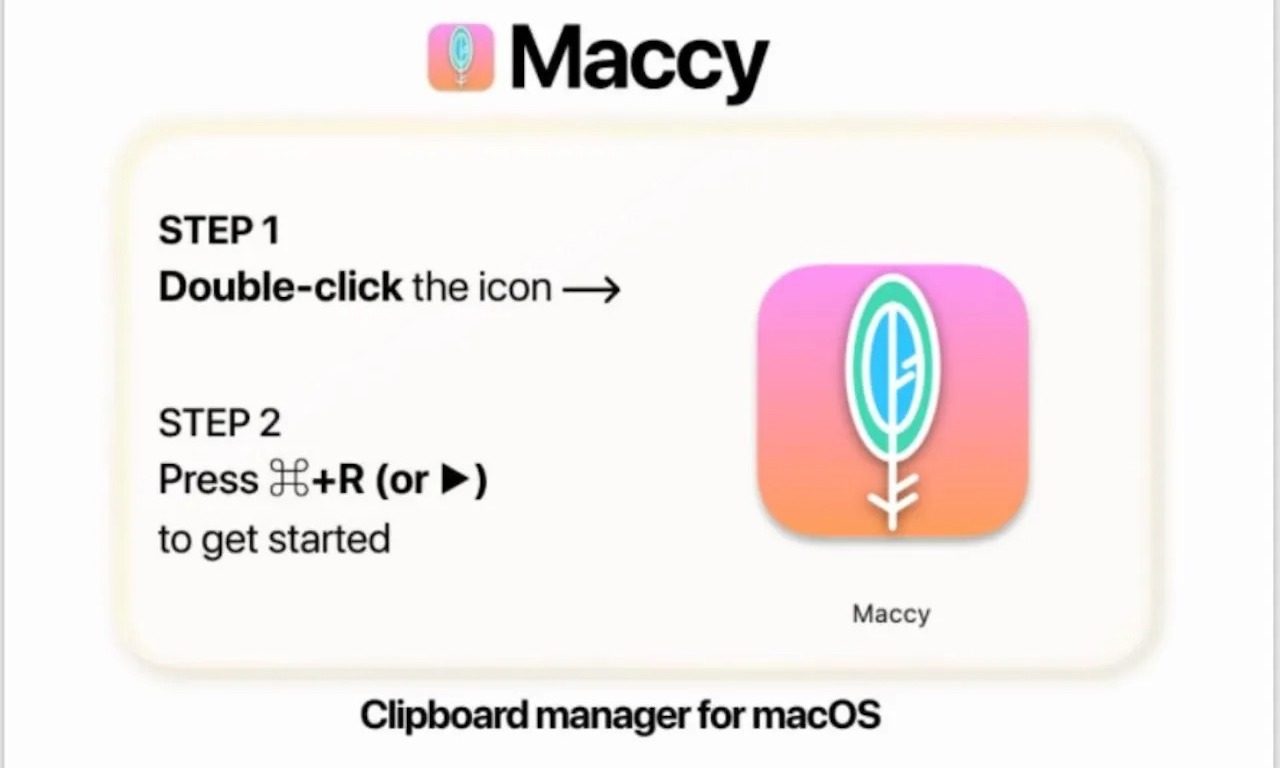 Fake Maccy installer tells users to press Command-R or click Run Jamf
A fake installer starts the attack
Fake Maccy installer tells users to press Command-R or click Run Jamf
A fake installer starts the attack
The first part of the attack is designed to stay quiet. Instead of using common Mac command-line tools that security teams often watch for, the researchers say the malware uses Apple’s own automation features to download and launch the next stage.
The payload then hides inside app bundles that pretend to be real macOS components. Jamf found samples posing as Finder or Software Update. These fake components run in the background and use Apple’s Finder icon, which makes the attack more convincing.
 MacBook Air M5 Moinak Pal/Digital Trends
The password prompt is the real danger
MacBook Air M5 Moinak Pal/Digital Trends
The password prompt is the real danger
PamStealer’s most worrying trick is its password prompt. The malware shows a native-looking Mac dialog saying Maccy wants to make changes and asks the user to enter a password. The password is checked through macOS’s own login verification system. If it is wrong, the prompt appears again. Once the correct password is entered, the malware captures it and shows a fake message saying Maccy is damaged and cannot be opened.
Researchers also found that PamStealer can watch the clipboard, register itself to run again after login, and later ask for Full Disk Access. In testing, that prompt sometimes appeared up to 40 minutes later, making it harder to connect the request to the fake installer.
Maccy’s official channels are now warning users about fake websites, while pointing them to maccy.app as the only legitimate place to get the app.

I’ve got about 4 years of experience, mostly covering gaming, PC hardware, and smartphones. In my free time, I like…
How Claude helped my 65-year-old dad finally ditch his handwritten ledgers
AI has a lot to answer for, but this one small win is hard to argue with, at least for me.

My dad has owned a small business for as long as I can remember, and for just as long, he's kept his books the old-fashioned way. Every sale gets written down by hand so he can file his taxes later. The problem is that his accountant needs this data in Excel, and my dad, who didn’t grow up around computers, has never learned how to use it.
For years, his workaround was paying someone to manually type his handwritten entries into a spreadsheet. It worked, but it was adding additional cost to his business, which he wanted to avoid, but couldn't.
AI’s energy tax was already concerning. Research says AI agents are over hundred times worse
AI agents could consume 136 times more energy than today's AI, study finds
The AI industry's soaring electricity demand has already become a growing concern for governments, utilities, and technology companies. But a new study suggests the next generation of artificial intelligence could make that problem significantly worse.
Researchers from the Korea Advanced Institute of Science and Technology (KAIST) have published what they describe as the first comprehensive analysis of the energy cost of AI agents - AI systems capable of reasoning, planning, and completing tasks autonomously. Their findings show that these systems can consume up to 136.5 times as much energy per query as conventional generative AI models, raising fresh questions about whether the infrastructure supporting tomorrow's AI is ready for what's coming.
I hope Apple keeps the MacBook Neo away from the AI hype and preserves its true identity
The cheapest MacBook beats the cheapest AI MacBook.

If there's one thing that has disrupted consumer tech economics over the last year while changing how we understand and recommend products, it's the ever-rising cost of memory and chips.
The desperate need to scale up AI infrastructure has pushed major manufacturers to prioritize enterprise demand, leaving everyday consumers with far fewer choices. Those available cost significantly more than they did a year ago.