Просмотр новости
Найдите то, что Вас интересует
 Спутники
 РН
РН SpaceX
 Роскосмос
 NASA
NASA
СпутникиРНSpaceXРоскосмосNASAA planet’s path around the Sun, a quasi-moon tagging along, and your name a million miles away.
On June 21, a new season began: summer in the northern hemisphere, and winter in the southern hemisphere. Earth’s changing seasons happen because of its tilted axis, which causes different parts of the planet to receive more sunlight at different times of year. Other planets experience seasons of their own. Here you can see three views from NASA’s Cassini spacecraft showing Saturn at different times of its year, when the Sun’s light strikes different parts of the planet. Learn more in our article on solstices, equinoxes, and seasons. Image credit: NASA/JPL-Caltech/SSI/Gordan Ugarkovic.
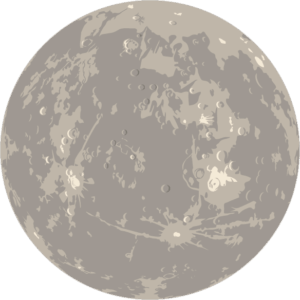
Axial tilt isn’t the only way for a planet to experience seasons. Mercury has a much more elliptical orbit than the other planets, meaning that it’s significantly closer to the Sun for some of its year and farther at others, creating seasonal changes in temperature.

The Nancy Grace Roman Space Telescope has arrived at Kennedy Space Center. NASA’s next-generation observatory will undergo final testing before its planned August 30 launch aboard a SpaceX Falcon Heavy. Once deployed to the Sun-Earth L2 point, Roman will investigate dark energy, survey billions of galaxies, and search for thousands of exoplanets. Image credit: L3Harris.

Some NASA centers’ infrastructure is in bad shape. NASA’s Office of the Inspector General has warned that billions of dollars in upgrades are needed for aging launch infrastructure at Kennedy Space Center and Wallops Flight Facility to support the rapidly increasing launch activity. This includes launch pads, roads, bridges, water and power supply lines, and more.

JWST is helping identify an interstellar comet’s origins. Observations from the James Webb Space Telescope imply that the interstellar comet 3I/ATLAS contains chemicals that suggest it formed in a very cold system, much earlier than our Solar System did, as much as 10–12 billion years ago.

China’s Tianwen-2 spacecraft has successfully arrived at Kamoʻoalewa. Tianwen-2 will attempt to hover and snatch samples from the tiny, enigmatic "quasi-satellite" that follows Earth on its journey around the Sun. Space journalist Andrew Jones joins this week’s Planetary Radio to take us inside the mission, what samples of Kamoʻoalewa could teach us about our Solar System's history, and where China’s planetary ambitions are targeting next. Pictured: An artist’s illustration of Kamoʻoalewa. Image credit: Addy Graham/University of Arizona.
Tune into some great upcoming space chats. On Tuesday, June 30, Planetary Radio host Sarah Al-Ahmed will join Twitch streamer Moohoodles for a celebration of Asteroid Day, chatting about the science of asteroids and what we need to do to defend Earth from impacts. Later that evening, The Planetary Society’s members-only virtual book club will meet for a live Q&A with author Scott Solomon about his book “Becoming Martian,” which explores the challenges facing human settlement of the red planet. And if you want to check out an in-person space event, registration is now open for the 2026 Humans to the Moon and Mars Summit, taking place on July 21, 2026, at Rice University in Houston, Texas. Planetary Society members can use the code TPS for a discount on registration.
You can speak up for science in the United States. The White House's Office of Management and Budget recently proposed a rule change that would fundamentally alter how the U.S. federal government manages grants, replacing merit-based peer review with partisan political review. If you live in the United States, we urge you to share your personal perspective on why this change will harm science. The public has until July 13, 2026, at 11:59 p.m. ET to submit their comments.
Asteroids have shaped the history of our planet — and one day, another dangerous one will cross Earth's path. The good news? This is a natural disaster we can prevent. Thanks to supporters like you, The Planetary Society advances the science, technology, and advocacy needed to find and track these objects before it's too late. Make a gift today and help defend humanity. Pictured: An artist’s impression of an asteroid with Earth in the background.

Super-bright Venus dominates the western evening sky with very bright Jupiter close by, lower down. Mercury shines much more dimly below them, near the western horizon. In the predawn, yellowish Saturn shines near the eastern horizon, with reddish Mars lower down.
You can join the Nancy Grace Roman Space Telescope on its million-mile journey to the Sun-Earth L2 point. NASA is inviting people around the world to send in their names to be uploaded to an SD card attached to a panel on the spacecraft (pictured). You can submit your name up until July 12. Image credit: NASA.
We love to feature space artwork in the Downlink. If you create any kind of space-related art, we invite you to send it to us by replying to any Downlink email or writing to [email protected]. Please let us know in your email if you’re a Planetary Society member!
Account Center • Contact Us • Privacy Policy

Give with confidence. The Planetary Society is a registered 501(c)(3) nonprofit organization.
© 2026 The Planetary Society. All rights reserved.
Cookie Declaration
| # | Наименование новости | Тональность | Информативность | Дата публикации |
|---|---|---|---|---|
| 1 | 1,000,000,000 light years from home | 0 | 0 | 11-07-2026 |
| 2 | With a little help from our planet friends | 5 | 7 | 22-05-2026 |
| 3 | Юпитер тянет океан, но взять не может. Волн прокатился караван ... | 0 | 5 | 06-07-2026 |
| 4 | Big impacts | 5 | 7 | 29-05-2026 |
| 5 | Наша планета — крошечный оазис в бескрайних просторах Вселенной! 🌌 ... | 7 | 7 | 06-07-2026 |
| 6 | !За гранью реальности! Покорили космос люди Улетели далеко Землю скоро ... | 0 | 5 | 27-06-2026 |
| 7 | На максимальной дистанции от Солнца 6 июля в 20:30 мск ... | 0 | 7 | 06-07-2026 |
| 8 | Дальше уже некуда , только космос | 0 | 0 | 28-06-2026 |
| 9 | Привет, ребята! 👋 Космос — это огромный и удивительный мир, ... | 6 | 5 | 06-07-2026 |
| 10 | Так выглядит наша планета с расстояния почти 380 тысяч километров ... | 5 | 7 | 28-06-2026 |

