Просмотр новости
Найдите то, что Вас интересует
 Спутники
 РН
РН SpaceX
 Роскосмос
 NASA
NASA
СпутникиРНSpaceXРоскосмосNASAA planetary nebula teaches us about how stars die, and a new Artemis architecture changes our plans for Mars.
The European Space Agency’s Euclid space telescope captured this wide-field view of a region of space in the constellation Draco. It captures stars, galaxies, and, at the center, the Cat’s Eye Nebula. Also known as NGC 6543, this is a dying star throwing off expanding layers of gas. Euclid’s wide view captured a halo of colorful fragments of gas surrounding the nebula, likely ejected from the star at an earlier stage before the main nebula at the center formed. Read on to see the Hubble Space Telescope’s close-up of this beautiful cosmic phenomenon. Image credit: ESA et al.
The Cat’s Eye Nebula is a planetary nebula, but it definitely isn’t a planet. These nebulae get their name from their round shape, making them look like planets when viewed through early telescopes.

NASA has overhauled the Artemis mission architecture. The agency recently announced that it has restructured the Artemis program, shifting Artemis III from a planned lunar landing to a low-Earth-orbit systems test. A lunar landing will now take place in the Artemis IV mission, slated for as early as 2028. Pictured: The rocket and capsule for Artemis II being rolled back into the Vehicle Assembly Building. Image credit: John Kraus/NASA.

MAVEN observations support the possibility of lightning on Mars. Scientists analyzing data from NASA’s MAVEN Mars orbiter have found possible evidence of a lightning strike on Mars. This builds on the Perseverance rover’s observations of possible Mars lightning via its microphone.
NASA has reported the likely cause of the Lunar Trailblazer failure. Launched in February 2025 to map lunar water, Lunar Trailblazer lost contact with mission managers just one day after launch and was never heard from again. A NASA review panel reported that faulty solar panel pointing software — inadequately tested before launch — oriented the panels 180 degrees away from the Sun, and that additional software failures made it impossible to correct the error.

Research suggests that microbes could travel between planets. A new study published in PNAS Nexus found that one hardy species of desert bacteria was able to survive simulated asteroid-impact pressures remarkably well. This could support an aspect of "lithopanspermia," the idea that microbes could survive inside rocks ejected by asteroid impacts to travel between planets.
Congress has started working on NASA’s budget for the fiscal year that begins on Oct. 1, 2026. Each year, lawmakers decide how much money federal agencies like NASA will receive.
The leaders of the bipartisan Planetary Science Caucus are circulating a letter urging swift and decisive action by Congress to build on the bipartisan support demonstrated in FY 2026 by allocating $9 billion to NASA's Science Mission Directorate, ensuring the stability needed to sustain the nation's highest-priority science missions. Encourage your representative to join that letter today.
Want to go a step further in your advocacy? Watch this recording of The Planetary Society's Space Policy and Advocacy team detailing the budget process and how you can get involved.

The road back to the Moon looks a little different now. On this week’s Planetary Radio, we catch up on the changes to the Artemis program, with recorded remarks from NASA leadership and a breakdown of what the changes mean with The Planetary Society’s space policy experts. Pictured: An artist’s impression of the Starship lander on the Moon. Image credit: SpaceX.
Members, meet your new CEO! On March 10, Planetary Society members are invited to a live virtual Q&A with new CEO Jennifer Vaughn. Bill Nye, outgoing CEO and newly minted Chief Ambassador, will join the conversation as well. They’ll talk about their new jobs, our evolving mission, their deep passion for space exploration, and answer members’ questions. Not yet a member? Join today.
AI was a key tool in The Planetary Society's efforts to Save NASA Science in 2025. In a recent webinar, The Planetary Society's Casey Dreier and Jack Kiraly shared how AI tools enabled their two-person Space Policy and Advocacy team to perform on par with teams twice their size with significantly more resources. Watch the recording here.
Get to know Chang'e-7. China’s upcoming lunar mission aims to map resources near the lunar south pole and seek out water ice and other volatiles in the Moon’s permanently shadowed regions — all part of China’s broader goal of establishing an International Lunar Research Station. Learn more about the mission, which aims to launch in 2027.
Enter our sweepstakes for a chance to experience Hawai‘i’s legendary night skies atop Mauna Kea while supporting The Planetary Society’s mission to advance space science and exploration! The prize includes rare behind-the-scenes access to the world-famous Keck Observatory, plus a five-night luxury stay for two at The Westin Hapuna Beach Resort. Use code ENTER25 for 25% extra entries and enter today!
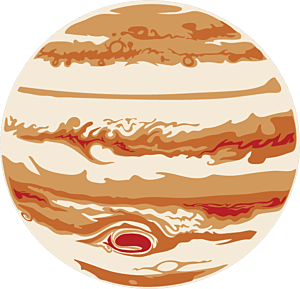
Very bright Jupiter is up high in the east when the Sun sets, more than twice as bright as Sirius, the brightest star in the sky, which is not too far in the sky from Jupiter. Yellowish Saturn and super-bright Venus are visible very low in the west in the early evening. Learn more in our guide to March’s night skies.
If you are not one already, become a member TODAY and help shape the future of space science and exploration by fueling mission-critical advocacy efforts. Here’s just one example: The Planetary Society led efforts in Washington to Save NASA Science in 2026. Thanks to the support of our members, we were able to prevent an extinction-level budget cut to planetary exploration this year. This means more missions, more science, and exploration in our Solar System.
Will you join us and protect the future of exploration?
Here you see Hubble’s close-up of the Cat’s Eye Nebula, also known as NGC 6543. By observing this object with both Hubble and Euclid, astronomers can observe the full complexity of its structure and gain insights into stellar death — a kind of cosmic “fossil record” of a star’s final evolutionary stages. Image credit: ESA/Hubble & NASA, Z. Tsvetanov.
We love to feature space artwork in the Downlink. If you create any kind of space-related art, we invite you to send it to us by replying to any Downlink email or writing to [email protected]. Please let us know in your email if you’re a Planetary Society member!
Account Center • Contact Us • Privacy Policy

Give with confidence. The Planetary Society is a registered 501(c)(3) nonprofit organization.
© 2026 The Planetary Society. All rights reserved.
Cookie Declaration
| # | Наименование новости | Тональность | Информативность | Дата публикации |
|---|---|---|---|---|
| 1 | ABC: Трамп рассматривает возможность отставки главы аппарата Белого дома | 0 | 0 | 13-11-2018 |
| 2 | По итогам года у нас будет 10 тысяч школ с инклюзивным образованием – Васильева | 0 | 0 | 10-12-2018 |
| 3 | Дмитрий Борисов Стихи Любовь Такая разная То сладость То война ... | 0 | 0 | 21-02-2025 |
| 4 | Спрос на перевозки из Китая и Казахстана в Беларусь вырос в 3 раза | 0 | 0 | 28-01-2025 |
| 5 | На Украине арестовали экс-главу Апелляционного суда Крыма Чернобука | 0 | 0 | 05-11-2018 |
| 6 | Россияне назвали доход, необходимый им для достойной жизни: 50-80 тысяч рублей | 0 | 0 | 26-04-2021 |
| 7 | L'OM en route vers la deuxième place : une victoire historique à Angers | 0 | 0 | 10-02-2025 |
| 8 | Глава 13 "Подозрения и Обман": Джокер и голубь с большой ... | 0 | 0 | 21-02-2025 |
| 9 | В Кузнецке прошел городской конкурс «А ну-ка, парни!» | 0 | 0 | 21-02-2025 |
| 10 | ☝Мамы, хотите действительно отдохнуть и не думать как накормить любимых, ... | 5 | 6 | 29-06-2026 |

