Просмотр новости
Найдите то, что Вас интересует
 Спутники
 РН
РН SpaceX
 Роскосмос
 NASA
NASA
СпутникиРНSpaceXРоскосмосNASAAstronomers have discovered the 2 puffiest exoplanets known so far. They are similar in size to Jupiter, but have the density of cotton candy.
The post Puffiest exoplanets yet found are as dense as cotton candy first appeared on EarthSky.
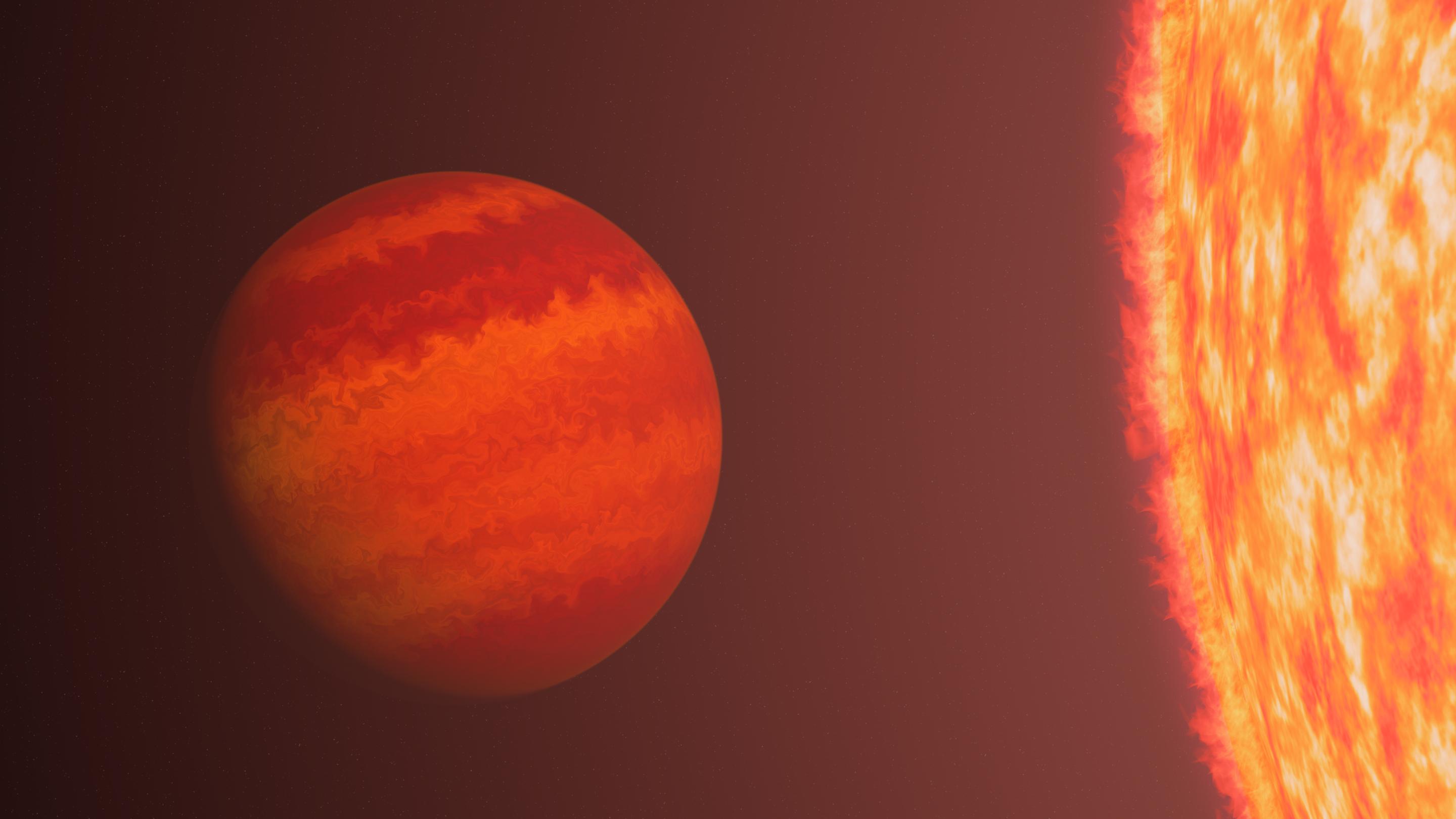
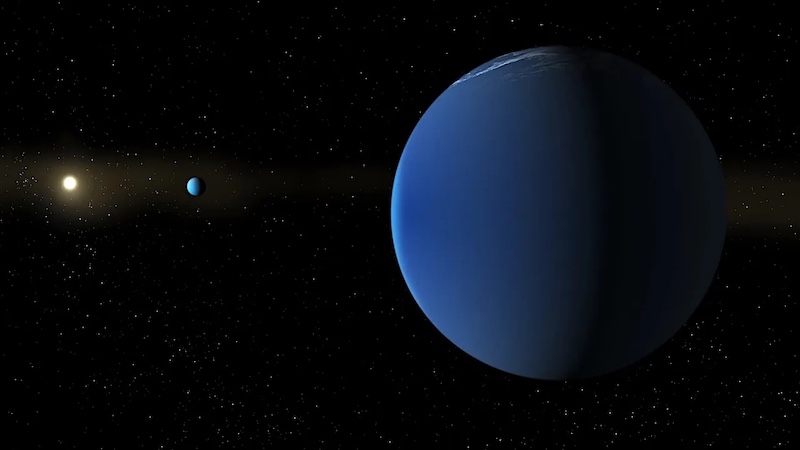 View larger. | Artist’s concept of the 2 “super-puff” planets, TOI-791 b and TOI-791 c. They are the puffiest exoplanets ever found so far, with densities like cotton candy. Image via NASA/ Daniel Rutter/ University of Oxford.
Just like those in our solar system, planets orbiting other stars come in a wide range of sizes and masses. You might expect the largest planets to also be the most massive … but that’s not always the case.
On June 26, 2026, an international team of researchers led by the University of Oxford in the U.K. said that they have discovered two new “super-puff” planets, TOI-791 b and TOI-791 c. These planets are giants, similar in size to Jupiter, but their masses are very low. In fact, their densities are similar to that of cotton candy!
The researchers used data from NASA’s Transiting Exoplanet Survey Satellite (TESS) mission to make the discovery. Astronomers first identified TOI-791 b and TOI-791 c as candidate planets in 2019 and 2023 respectively.
Astronomers have found similar puffy planets before, but these new ones are the lightest.
The researchers published their peer-reviewed findings in the Monthly Notices of the Royal Astronomical Society on June 25, 2026.
Cotton candy worldsThese planets are unlike any in our solar system. Even though they are about the same size as Jupiter, they are much less dense. More specifically, TOI-791 b is nearly the same size as Jupiter but has just 3.0% of Jupiter’s mass. TOI-791 c is a bit larger than Jupiter but contains just 5.9% of Jupiter’s mass. Their densities are similar to cotton candy, which typically has a density of about 3 pounds per cubic foot (0.05 grams per cubic centimeter).
The planets orbit the sun-like star TOI-791, which is 1,113 light-years from Earth.
How did the researchers find these intriguing worlds? TESS found them using the transit method. When the planets passed in front of their star, as seen from Earth, the light from the star dipped slightly in brightness. TESS recognized the dips as coming from transiting planets. And notably, the researchers weren’t even expecting to find them.
Jon Jenkins is the science lead for the Science Processing Operations Center at NASA’s Ames Research Center in California. He explained:
The main reason these planets are interesting to study is that we didn’t expect to see them at all. They represent a puzzle for us to solve about how giant planets like Jupiter and the super-puffs form.
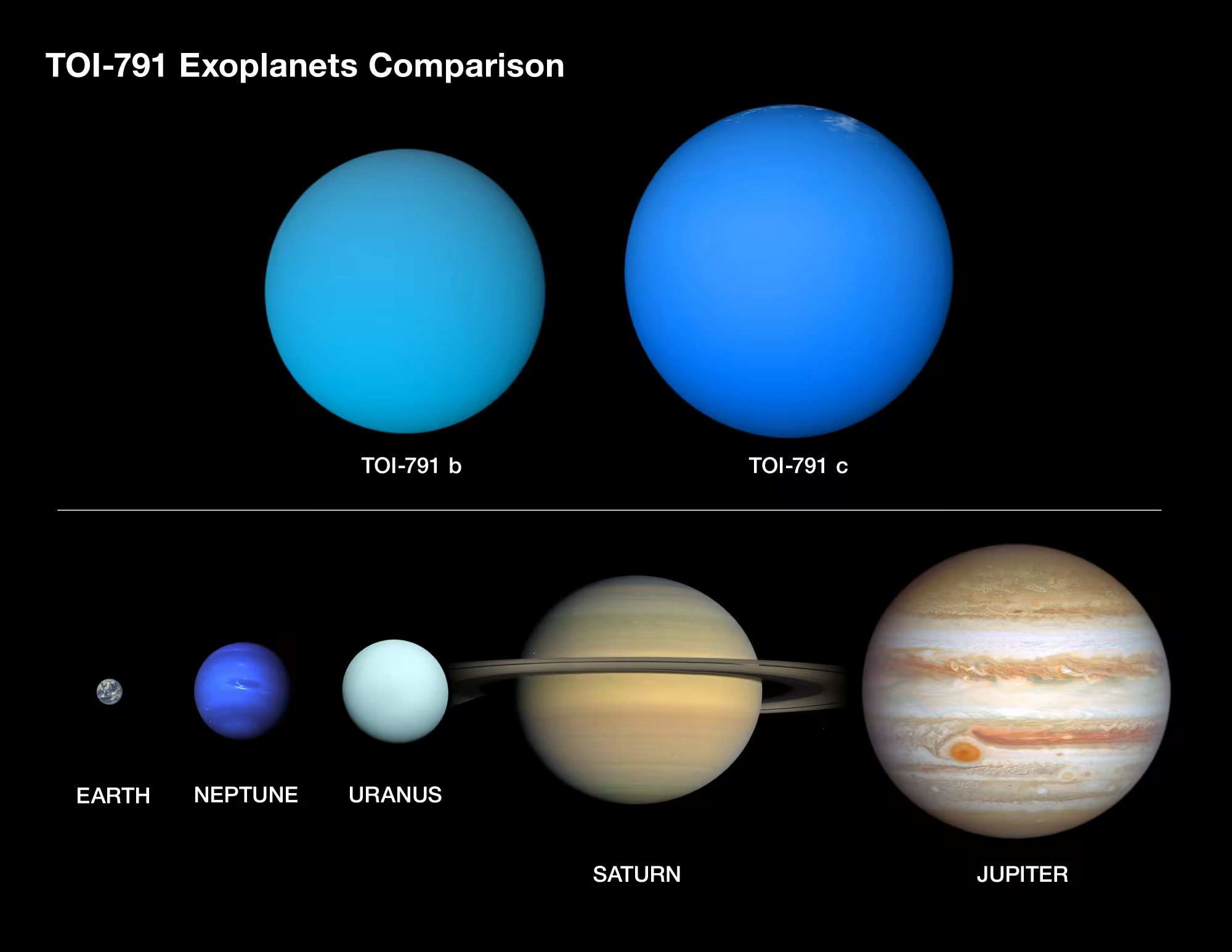
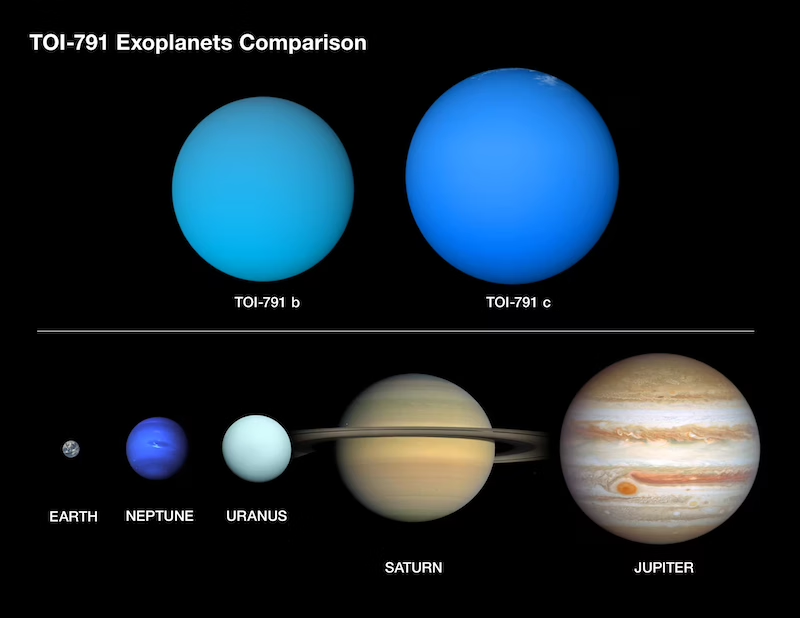 View larger. | Artist’s llustration comparing TOI-791 b and TOI-791 c with Earth and the gas and ice giants in our solar system. Image via NASA/ Daniel Rutter/ University of Oxford.
Unusual orbits
View larger. | Artist’s llustration comparing TOI-791 b and TOI-791 c with Earth and the gas and ice giants in our solar system. Image via NASA/ Daniel Rutter/ University of Oxford.
Unusual orbits
The two super-puffs also have odd orbits. TOI-791 b takes 139 days to complete an orbit and TOI-791 c takes 232 days. Planets on longer orbits require more telescopic observations to gather data. Overall, TESS gathered 1,122 days of observations over seven years.
Also, the two planets are locked together gravitationally. They alternate pulling on each other as they orbit their star. This affects when they transit the star. The researchers used those variations in timing to calculate the planets’ masses. And that’s how their super-low densities were determined.
Just a handful of super-puffsAstronomers still only know of a few of these super-puff planets. The two new ones are just the latest. Plus, astronomers currently know of only four other planetary systems that have multiple super-puff planets. Lead author George Dransfield at Oxford University in the U.K. said:
Only a handful of these super-puffy planets are known, and it is even rarer to find two in the same system. Their extremely low densities make them fascinating targets for understanding how planetary systems form and evolve.
Amaury Triaud at the University of Birmingham in the U.K. and co-author of the study, said:
This system offers a unique laboratory for understanding how super-puff planets form and evolve. We propose to carry out space-based observations using the James Webb Space Telescope to assess if the puffy atmosphere contains carbon-, nitrogen-, and oxygen-bearing species, revealing new insight into how these unusual planets formed.
Tristan Guillot at the Université Côte d’Azur and another co-author of the study, added:
These multi-planetary systems are complex, with gravitational interactions between the planets that evolve over very long periods, tens of years or more. This discovery highlights the importance of continued international collaboration in astronomy. Bringing together observations from Antarctica, space telescopes and observatories across several continents was essential to revealing the true nature of these extraordinary planets.
 George Dransfield at the University of Oxford in the U.K. is the lead author of the new study about super-puff planets. Image via University of Oxford.
Previous super-puffs
George Dransfield at the University of Oxford in the U.K. is the lead author of the new study about super-puff planets. Image via University of Oxford.
Previous super-puffs
Astronomers have only found a handful of super-puff planets so far. One of them is WASP-107 b. In 2024, the researchers studied that one using the James Webb Space Telescope, plus previous data from the Hubble Space Telescope. It is 210 light-years away and about 3/4 the size of Jupiter but only 1/10 the mass.
Researchers found that it must be hotter on the inside, and have a more massive core, than previously thought. They also found surprisingly low levels of methane in its atmosphere, only about 1/1000 of the expected amount.
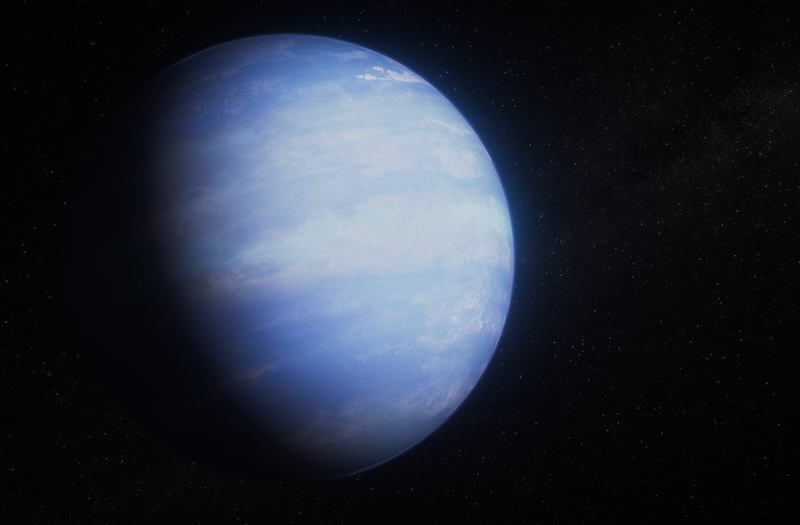 View larger. | Artist’s concept of WASP-107 b, another super-puff planet. Image via NASA/ ESA/ CSA/ Ralf Crawford (STScI).
Another planet, a hot Neptune, TIC365102760 b, is also puffy. Discovered in 2024, it is 1,840 light-years from Earth and is 6.2 times larger than our planet. And this one orbits a red giant star. It’s the smallest planet so far found orbiting a red giant. And somehow it survived when its original star began dying and expanded into a red giant.
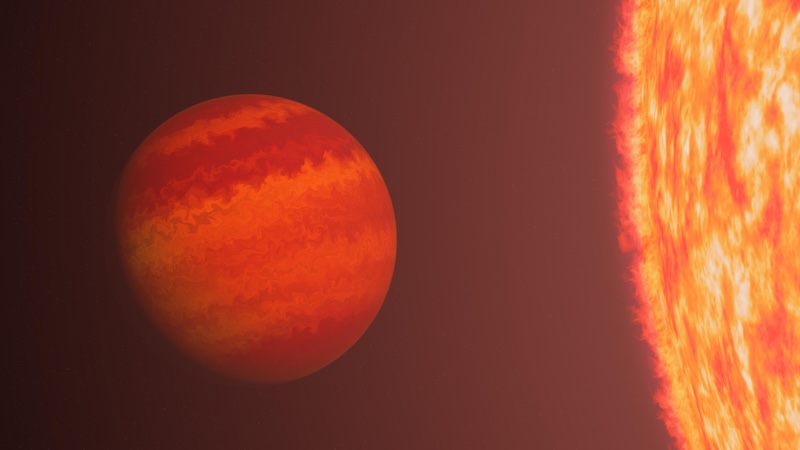 View larger. | Artist’s concept of the hot Neptune exoplanet TIC365102760 b, nicknamed Phoenix. It orbits a red giant star and also has a puffy atmosphere. Image via Roberto Molar Candanosa/ Johns Hopkins University.
Bottom line: Astronomers have discovered the two puffiest exoplanets known so far. They are similar in size to Jupiter, but have the density of cotton candy.
Read more: Webb solves mystery of puffy exoplanet WASP-107 b
Read more: Phoenix exoplanet’s puffy atmosphere survives red giant star
Paul Scott Anderson has had a passion for space exploration that began when he was a child when he watched Carl Sagan’s Cosmos. He studied English, writing, art and computer/publication design in high school and college. He later started his blog The Meridiani Journal in 2005, which was later renamed Planetaria. He also later started the blog Fermi Paradoxica, about the search for life elsewhere in the universe. While interested in all aspects of space exploration, his primary passion is planetary science and SETI. In 2011, he started writing about space on a freelance basis with Universe Today. He has also written for SpaceFlight Insider and AmericaSpace and has also been published in The Mars Quarterly. He also did some supplementary writing for the iOS app Exoplanet. He has been writing for EarthSky since 2018, and also assists with proofing and social media.
| # | Наименование новости | Тональность | Информативность | Дата публикации |
|---|---|---|---|---|
| 1 | Astronomers found two rare super puff planets lighter than cotton candy | 0 | 7.7 | 27-06-2026 |
| 2 | Cotton-Candy Exoplanets: Two for the Price of One! | 0 | 10.76 | 02-07-2026 |
| 3 | Astronomers Discover Two Super Puff Planets Lighter Than Cotton Candy | 0 | 15.69 | 21-07-2026 |
| 4 | ‘Superpuff‘ planets are as dense as cotton candy | 0 | 15.82 | 10-08-2026 |
| 5 | Астрономы нашли две планеты с плотностью меньше, чем у сахарной ... | 5 | 7 | 30-06-2026 |
| 6 | Rare Pair of Improbably Light ‘Super-Puff’ Planets Is Discovered | 2 | 7 | 17-07-2026 |
| 7 | Учёные обнаружили глубоко в космосе планеты легче сахарной ваты Фото: ... | 5 | 7 | 27-06-2026 |
| 8 | Учёные обнаружили глубоко в космосе планеты легче сахарной ваты Фото: ... | 0 | 7 | 27-06-2026 |
| 9 | Учёные обнаружили глубоко в космосе планеты легче сахарной ваты Фото: ... | 1 | 7 | 27-06-2026 |
| 10 | Астрономы нашли планеты с плотностью меньше, чем у сахарной ваты | 0 | 7 | 30-06-2026 |