Просмотр новости
Найдите то, что Вас интересует
 Спутники
 РН
РН SpaceX
 Роскосмос
 NASA
NASA
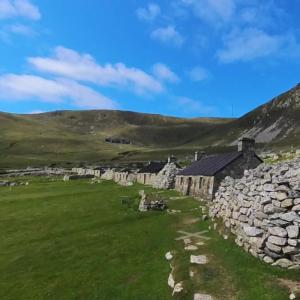
СпутникиРНSpaceXРоскосмосNASAAbandoned village of St. KildaBy jbottero(2026-07-08)St Kilda is a remote archipelago situated 35 nautical miles west-northwest of North Uist in the North Atlantic Ocean. It contains the westernmost islands of the Outer Hebrides of Scotland. Numerous factors led to the evacuation of St Kilda. The islands' inhabitants had existed for centuries in relative isolation until tourism and the presence of the military during the First World War led the islanders to seek alternatives to privations they routinely suffered. After the end of the Great War, most of the young men left the island, and the population fell from 73 in 1920 to 37 in 1928. After the death of four men from influenza in 1926, there was a succession of crop failures in the 1920s. Investigations by the University of Aberdeen into the soil where crops had been grown have shown that there had been contamination by lead and other pollutants, caused by the use of seabird carcasses and peat ash in the manure used on the fields. This occurred over a lengthy period of time, as manuring practices became more intensive, and may have been a factor in the evacuation. On 29 August 1930, the ship HMS Harebell took the remaining 36 inhabitants to Morvern on the Scottish mainland, a decision they took collectively themselves.
Also seen HERE at Virtual Globetrotting.
© Google Maps
St Kilda is a remote archipelago situated 35 nautical miles west-northwest of North Uist in the North Atlantic Ocean. It contains the westernmost islands of the Outer Hebrides of Scotland. Numerous factors led to the evacuation of St Kilda. The islands' inhabitants had existed for centuries in relative isolation until tourism and the presence of the military during the First World War led the islanders to seek alternatives to privations they routinely suffered. After the end of the Great War, most of the young men left the island, and the population fell from 73 in 1920 to 37 in 1928. After the death of four men from influenza in 1926, there was a succession of crop failures in the 1920s. Investigations by the University of Aberdeen into the soil where crops had been grown have shown that there had been contamination by lead and other pollutants, caused by the use of seabird carcasses and peat ash in the manure used on the fields. This occurred over a lengthy period of time, as manuring practices became more intensive, and may have been a factor in the evacuation. On 29 August 1930, the ship HMS Harebell took the remaining 36 inhabitants to Morvern on the Scottish mainland, a decision they took collectively themselves.
Also seen HERE at Virtual Globetrotting.
39 views

Unrated
| # | Наименование новости | Тональность | Информативность | Дата публикации |
|---|---|---|---|---|
| 1 | Dalquharran Castle | 0 | 5 | 09-07-2026 |
| 2 | Dalquharran Castle | 0 | 5 | 09-07-2026 |
| 3 | Castle Stalker | 0 | 6 | 09-07-2026 |
| 4 | Таинственный остров Кильдин. Почему он стал почти необитаем и как живут те, кто остался | 0 | 0 | 22-07-2020 |
| 5 | Cycling Scotland’s lost highways and byways: a two-wheel odyssey in the wilds of Sutherland | 5 | 7 | 02-07-2026 |
| 6 | Remote Scottish island with Caribbean-like beach has cottages to rent | 5 | 7 | 02-07-2026 |
| 7 | Carnbooth Anti-Aircraft Battery | 0 | 6 | 09-07-2026 |
| 8 | Seucheninsel North Brother Island: Dieser Lost Place in New York darf nicht betreten werden | 0 | 5 | 02-07-2026 |
| 9 | Αρκούδι Ηλείας: Το παραθαλάσσιο «νησί» του Ιονίου που μαγεύει τους επισκέπτες | 5 | 6 | 21-06-2026 |