Просмотр новости
Найдите то, что Вас интересует
 Спутники
 РН
РН SpaceX
 Роскосмос
 NASA
NASA
СпутникиРНSpaceXРоскосмосNASAAt Google I/O 2026, Sundar Pichai unveiled Google’s vision for an “Agentic Gemini Era,” where AI moves beyond simple assistants to autonomous systems deeply integrated across Search, Android, Workspace, YouTube, Cloud, and developer tools. The company revealed explosive AI adoption numbers, including 3.2 quadrillion tokens processed monthly and over 900 million Gemini app users, while introducing major upgrades like conversational AI Search agents, Ask YouTube, Docs Live, Gemini Omni, and Gemini 3.5 Flash.
At Google I/O 2026, Sundar Pichai unveiled what may be Google’s most ambitious AI roadmap yet, signaling a shift from AI-powered features to fully agentic computing experiences. The keynote focused on how artificial intelligence is now deeply embedded across Google’s entire ecosystem, from Search and Workspace to Android, YouTube, Cloud, and developer platforms.
The company described the last year as a period of “hyper progress,” driven by rapid advances in AI models, infrastructure, and products used by billions of people every day. Ten years after declaring itself an “AI-first” company, Google says it is now entering a new phase where AI is no longer experimental, but central to how people search, create, work, and interact with technology.
One of the clearest themes from Google I/O 2026 was scale.
Google revealed that it is now processing more than 3.2 quadrillion tokens per month across its AI-powered products and services, a dramatic jump from 480 trillion tokens at I/O 2025 and just 9.7 trillion two years ago. The company also shared that:
These numbers reflect the accelerating adoption of AI tools by consumers, developers, and enterprises alike.
Google highlighted how Gemini AI models are now driving engagement across nearly all of its major products.
Google Search continues to be at the center of its AI strategy. According to the company:
Google says Search is evolving from a traditional query-based engine into something that feels more like an ongoing conversation. Users are increasingly asking longer, more complex questions and interacting with Search in a more natural way.
The company also announced new “information agents” for Search. These agents will work continuously in the background, helping users track topics, monitor information, and take actions automatically.
Google is also introducing dynamic AI-generated interfaces directly inside Search. Using Gemini 3.5 and Google’s Antigravity platform, Search will soon generate custom layouts, visuals, and even persistent mini dashboards tailored to individual queries.
Gemini App Doubles in SizeThe Gemini app has seen massive growth over the past year.
At I/O 2025, the app had 400 million monthly active users. In 2026, Google says the app has crossed 900 million users, while daily AI requests have increased more than sevenfold.
Google also revealed that over 50 billion images have been generated using its Nano Banana image generation models, showcasing the growing role of AI creativity tools.
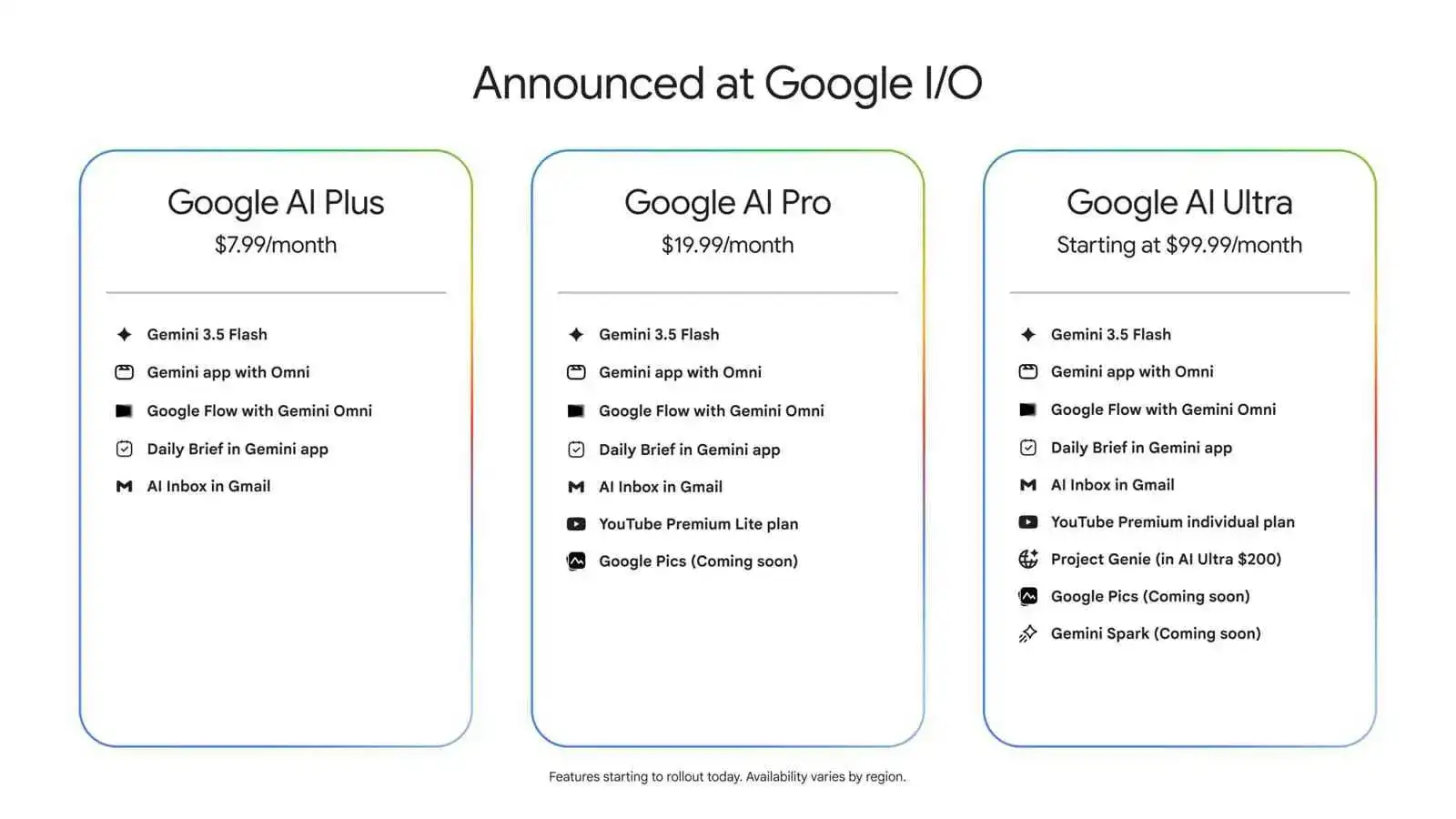
One of the standout announcements was Ask YouTube, a new AI-powered search experience for YouTube.
Instead of forcing users to manually browse videos, Ask YouTube can answer complex questions conversationally and jump directly to the most relevant parts of videos. The feature aims to make learning from YouTube faster and more intuitive.
For example, users can ask detailed questions like how to teach a child to ride a bicycle, and the system surfaces precise video segments instead of full-length videos.
Google says Ask YouTube will roll out broadly in the U.S. this summer.
Docs Live Brings Voice-Powered ProductivityGoogle also introduced Docs Live, a new Gemini-powered Workspace feature that allows users to create documents using natural speech.
Rather than typing structured prompts, users can simply speak naturally while Gemini organizes thoughts into a polished document. Google says future versions will support complete voice-based editing and document management.
Voice capabilities are also expanding to Gmail and Keep later this year.
Massive Infrastructure InvestmentsTo support its expanding AI ecosystem, Google announced a dramatic increase in infrastructure spending.
The company expects annual capital expenditures to reach approximately $180 to $190 billion this year, nearly six times what it spent in 2022.
A major part of that investment centers around Google’s custom Tensor Processing Units (TPUs).
TPU 8t and TPU 8i
Google introduced its eighth-generation TPU architecture featuring two specialized chips:
Google says TPU 8t delivers nearly three times the compute power of its previous generation and can scale training workloads across more than one million TPUs globally using JAX and Pathways.
Meanwhile, TPU 8i focuses on low latency and energy efficiency, delivering up to twice the performance-per-watt compared to earlier generations.
Gemini Omni: AI That Understands Every ModalityGoogle also introduced Gemini Omni, a new multimodal model capable of generating outputs across multiple formats from almost any input type.
The first release, Gemini Omni Flash, initially focuses on video generation but will later expand to image and text outputs. The model combines Gemini’s reasoning capabilities with Google’s generative media systems like Veo and Lyria.
Google says Omni Flash will be available across:
A major technical announcement at I/O 2026 was Gemini 3.5 Flash.
Google positioned the model as a breakthrough in balancing high intelligence with extremely fast output speeds. According to the company, Gemini 3.5 Flash is:
Google says the model is already transforming internal development workflows through its “agent-first” development environment called Antigravity.
The company also emphasized cost efficiency, claiming enterprises could save billions annually by shifting workloads to Gemini 3.5 Flash compared to more expensive frontier AI models.
Antigravity 2.0 and the Rise of AI AgentsPerhaps the biggest strategic shift announced at I/O was Google’s move toward AI agents.
Google introduced Antigravity 2.0, a new platform for building and orchestrating autonomous AI agents capable of performing long-running tasks independently.
This powers the new Gemini Spark, described as a personal AI agent that can operate 24/7 on behalf of users.
Gemini Spark can:
Google says Spark runs on dedicated cloud-based virtual machines and can continue operating even when users are offline.
AI Transparency and SynthID ExpansionWith concerns around deepfakes and AI-generated media growing, Google expanded its SynthID watermarking technology.
The company says SynthID has now watermarked:
Google is also expanding Content Credentials verification across Search and Chrome, helping users identify whether content originated from AI tools or traditional cameras.
In a notable industry collaboration, Google announced that companies including OpenAI, NVIDIA, Kakao, and ElevenLabs are adopting SynthID standards.
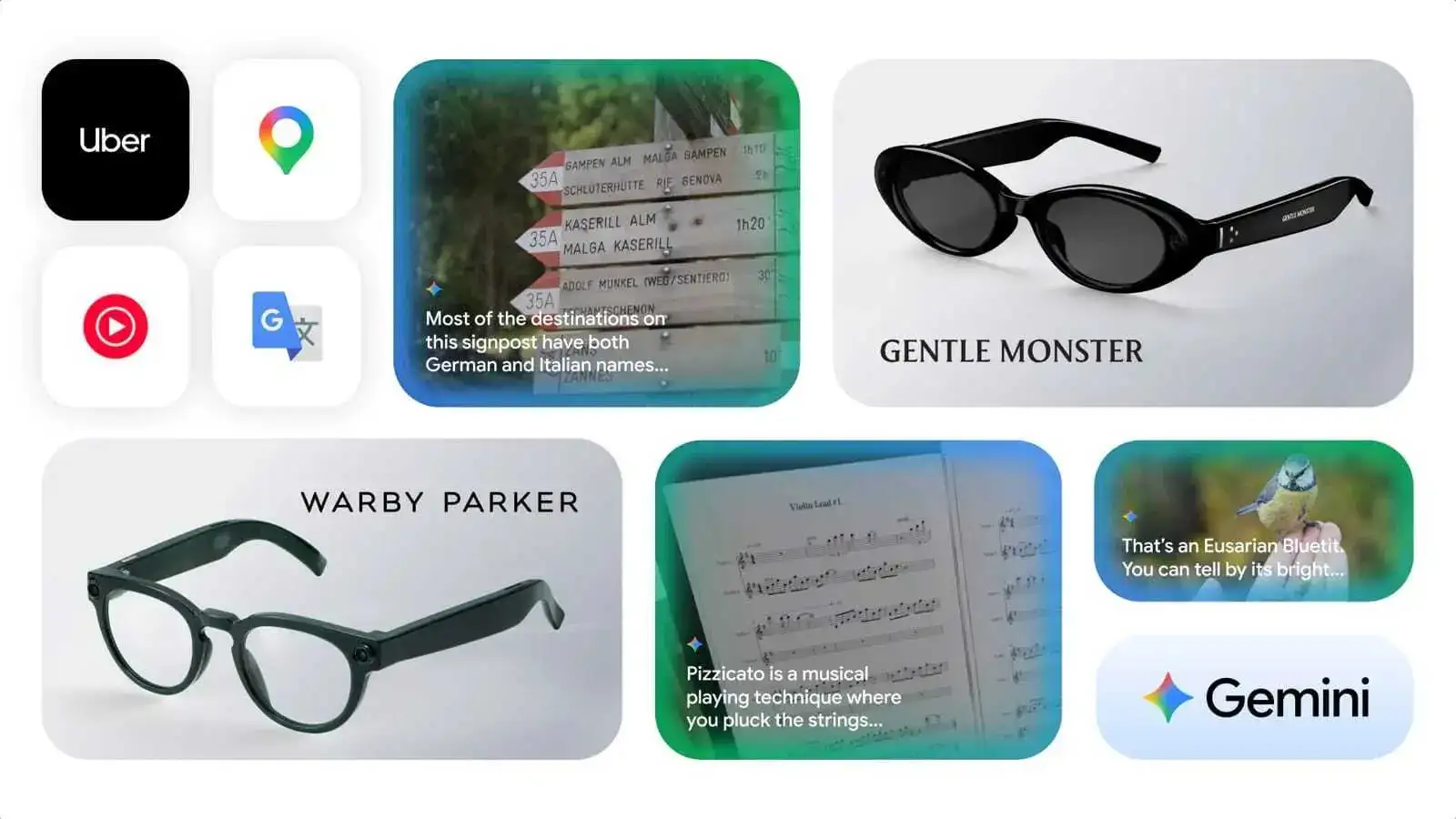
AI Comes to Wearables and ScienceGoogle also previewed new intelligent eyewear powered by Gemini. The glasses will provide spoken assistance, navigation, messaging, and contextual information without requiring users to pull out a smartphone.
Audio-based smart glasses are expected to launch later this fall.
In addition, Google introduced Gemini for Science, a suite of AI tools designed to accelerate scientific research by integrating Gemini with major scientific databases and research systems.
Google I/O 2026 made one thing clear: the company believes the future of computing will revolve around autonomous AI agents that can reason, act, and assist continuously across every surface.
From Search and Workspace to Chrome, Android, YouTube, and Cloud, Google is embedding Gemini deeply into its ecosystem while building the infrastructure required to support AI at unprecedented scale.
Rather than presenting AI as a standalone feature, Google’s vision at I/O 2026 was about transforming the internet itself into a more conversational, proactive, and agent-driven experience.
| # | Наименование новости | Тональность | Информативность | Дата публикации |
|---|---|---|---|---|
| 1 | I/O 2026: Welcome to the agentic Gemini era | 5 | 3 | 19-05-2026 |
| 2 | 12 главных анонсов Google I/O 2026 | 7 | 8 | 20-05-2026 |
| 3 | Gemini Intelligence, Googlebook and Android 17 take center stage at Google’s Android show 2026 | 5 | 7 | 13-05-2026 |
| 4 | How we used Gemini to build Google I/O 2026 | 0 | 15.4 | 01-06-2026 |
| 5 | Hey Google, these are the Gemini features I want in 2026 | 0 | 19.04 | 21-06-2026 |
| 6 | Google’s Biggest Announcements of 2026: Gemini, Android 17, and More | 0 | 12.24 | 03-08-2026 |
| 7 | Google’s Gemini AI app passes 1 billion monthly active users | 0 | 7.23 | 11-08-2026 |
| 8 | Google's Gemini AI assistant reaches one billion users | 0 | 5.8 | 12-08-2026 |
| 9 | Gemini will create mobile & desktop apps in the future as AI Studio for Android, iOS is canceled | 0 | 10.77 | 31-07-2026 |
| 10 | Google’s Android XR Glasses Put Gemini at the Center of Everyday Life, Taking on Meta’s Wearables Push | 2 | 7 | 19-05-2026 |