Просмотр новости
Найдите то, что Вас интересует
 Спутники
 РН
РН SpaceX
 Роскосмос
 NASA
NASA
СпутникиРНSpaceXРоскосмосNASAWarning to shipping companies, on top of Iran’s chokehold on strait of Hormuz, may severely affect Saudi oil exportsMiddle East crisis live – latest updatesYemen’s Iranian-aligned Houthis have warned shipping companies that their tankers risk being attacked if they use Saudi Arabian ports, as the militia moved quickly to enforce a blockade announced the previous day.The Houthi warning for the Red Sea, coming on top of Iran’s threat to shipping on the other side of the Arabian peninsular in the Gulf, could affect the substantial Saudi oil exports that have so far been unscathed by the months-long conflict and deepen the rapidly escalating crisis in the region. Continue reading...
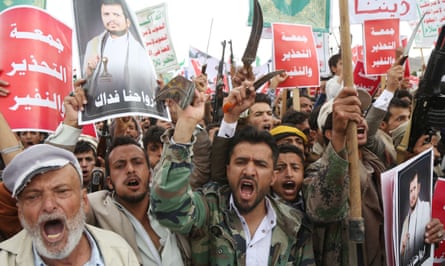
Yemen’s Iranian-aligned Houthis have warned shipping companies that their tankers risk being attacked if they use Saudi Arabian ports, as the militia moved quickly to enforce a blockade announced the previous day.
The Houthi warning for the Red Sea, coming on top of Iran’s threat to shipping on the other side of the Arabian peninsular in the Gulf, could affect the substantial Saudi oil exports that have so far been unscathed by the months-long conflict and deepen the rapidly escalating crisis in the region.
Underlining how seriously the Houthi threat is being taken, two oil tankers that had loaded Saudi crude this week for China and India made U-turns on Tuesday away from Houthi-controlled coast at the mouth of the Red Sea and headed towards the Suez canal. The Houthis claimed six ships had changed course.
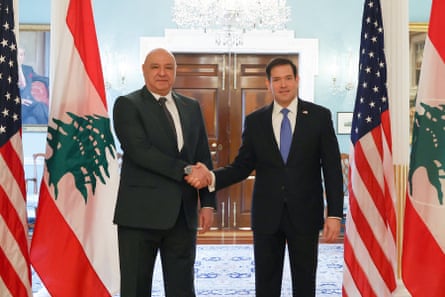
Donald Trump on Tuesday said the US would “just have to take care of business” if the Houthis followed through on their threats. “You know, we’ve done that with the Houthis before, and we haven’t heard from them in a while since we did what we did originally,” he said at White House meeting with the Lebanese president, Joseph Aoun.
The Houthi threat came as diplomats sought to salvage the collapsed interim deal between Iran and the US even as both countries continued to launch attacks in a 10th day of renewed fighting, including a visit to Pakistan by the Iranian interior minister, Eskandar Momeni, an important mediator in the conflict.
Sources suggested that behind the scenes there were indications that both sides might be seeking a way out of the latest round of intensive strikes. The news site Axios suggested that the Trump administration was weighing whether to escalate the conflict further or to seek a 10-day ceasefire to create the space for a new round of talks.
The US secretary of state, Marco Rubio, said Washington remained open to negotiating with Iran but that “it has to be real”.
The Houthis control northern Yemen, including territory along the Bab el-Mandeb, the strait at the southern end of the Red Sea. While the Houthis have not formally announced the closure of the waterway, as some had feared might happen, the militia group’s threat to vessels using Saudi ports has raised serious questions over the safety of navigating a channel used by 7% of global maritime traffic.
Shipping companies were told in an email from the Houthis on Monday that they should not load or discharge cargo at Saudi Arabian ports and such activity may result in being targeted “in any location” within its reach.
“We strongly recommend that your company exercise due diligence and the utmost care in all its dealings,” the email said, which was sent to multiple companies shortly after the Houthis said Monday they were imposing a naval blockade on Saudi Arabia.
The significance of the move was underlined by Allison Minor, a Middle East expert at the Atlantic Council thinktank. “The Houthis have not yet clarified which ships they will target, but their intent to blockade Saudi ports implies that any ship visiting Saudi ports and carrying Saudi oil would be in the crosshairs,” she said.
“The oil currently transiting the strait from the north is going primarily to Asian markets. During their earlier Red Sea campaign, the Houthis cut deals with Russia and China to permit their ships to pass – but the Houthis may be less willing to cut deals with Chinese ships carrying Saudi oil.”
Between 2023 and 2025, the Houthis had used small boats, drones and missiles to attack more than 100 commercial ships and render “the waters of the 20-mile-wide strait too risky for most shippers,” she added.
While the Houthis have their own agenda relating to their long-term hostilities with Riyadh, which has at times seen them target Saudi energy facilities with long range attacks, Iran has also been trying to drag Yemen into a wider conflict aimed at throttling global energy supplies. It has previously pressed the Houthis to close the Bab el-Mandeb if the US continued to attack Iranian power infrastructure and Tehran has made clear it sees threats to maritime traffic around the Bab el-Mandeb as a counterweight to US efforts to block Iran in the strait of Hormuz, demonstrating Iran’s continued room for manoeuvre a week and a half into renewed full-scale hostilities.
With 25% of oil and gas shipments passing through the strait of Hormuz and Bab el-Mandeb combined, any significant restrictions on traffic would have a major global economic impact.
Heavy strikes have meanwhile continued on both sides of the conflict.
US military’s central command said on Tuesday it had targeted “Iranian military command centres, maritime capabilities, missile and drone launch sites and air defence systems”. Iranian state media reported that explosions were heard in the provinces of Fars, Hormozgan, Ilam, Kerman, and Sistan and Baluchestan.
Tehran also attacked US allies throughout the Middle East. Jordan’s military said Iran had targeted it with five drones and three missiles, all of which were shot down.
The Kuwaiti government said Iran had struck desalination and power plants for a fourth straight day on Monday night. Authorities said the attacks sparked fires and caused damage.
The US state department has also issued a warning to Americans that “Iran and groups supportive of Iran may target other US interests overseas or at locations associated with the United States and Americans throughout the world.”
| # | Наименование новости | Тональность | Информативность | Дата публикации |
|---|---|---|---|---|
| 1 | Houthi threats in Red Sea risk new front in US-Iran war | 0 | 8.89 | 22-07-2026 |
| 2 | Houthi threats in Red Sea risk new front in US-Iran war | 0 | 8.89 | 22-07-2026 |
| 3 | Houthis claim strikes on Saudi oil tankers in Red Sea (VIDEO) | 0 | 8.18 | 23-07-2026 |
| 4 | Iran Expands Oil Chokepoint Threat as Houthis Eye Red Sea Shipping | -2 | 8 | 17-07-2026 |
| 5 | US continues to attack Iran as tension expands to Red Sea | 0 | 11.5 | 21-07-2026 |
| 6 | US continues attacks on Iran, Houthis strike two Saudi oil tankers | 0 | 10.19 | 23-07-2026 |
| 7 | Reuters: Иран попросил хуситов подготовиться к перекрытию Красного моря | -3 | 7 | 17-07-2026 |
| 8 | Экономика: Блокада Саудовской Аравии поможет бюджету России | 0 | 6 | 21-07-2026 |
| 9 | Yemen’s Huthis: More on the group who reportedly struck a vessel in the Red Sea | 0 | 6.58 | 12-08-2026 |
| 10 | War Risk Insurance Costs Surge for Southern Red Sea Voyages After Houthi Attacks | 0 | 11.17 | 23-07-2026 |