Просмотр новости
Найдите то, что Вас интересует
 Спутники
 РН
РН SpaceX
 Роскосмос
 NASA
NASA
СпутникиРНSpaceXРоскосмосNASAAlthough the architect did not achieve the same level of international prominence as Gaudí, his work exerted a notable influence beyond Spain
Aníbal González is best known for shaping the architectural identity of modern Seville through his designs for the Ibero-American exposition of 1929. Born in Seville in 1876, this year marks the 150th anniversary of his birth, a date which the city has marked with several initiatives.
Although González did not achieve the same level of international prominence as architects such as Gaudí, his work nonetheless exerted a notable influence beyond Spain, particularly in Latin America, where elements of his regionalist style inspired architects and urban planners.
The 1929 Ibero-American exposition was conceived to strengthen cultural and economic ties between Spain and the nations of Latin America. As a result, architects, diplomats and government officials from across the Spanish-speaking world gathered in Seville, where they encountered González's distinctive architectural style.
The spectacular Plaza de España in Seville is one of the largest and most impressive areas in the capital of Andalucía. Known as the 'Venice of Seville', it was designed, along with numerous other outstanding edifices, by González for the world exhibition, an event that changed the face of Seville and pinned it on the world map.
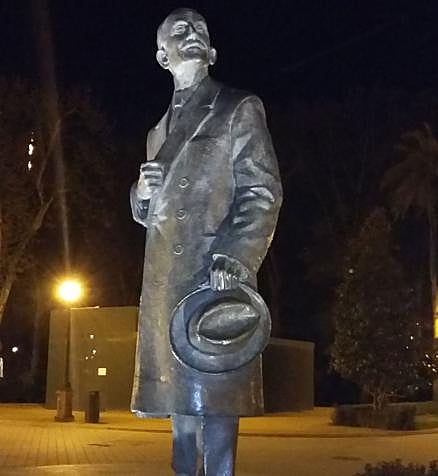
González was celebrated for blending Neo-Mudéjar architecture with Renaissance Revival, Baroque Revival and traditional Andalusian regional styles, creating a distinctive architectural expression. This helped reinforce a revival of 'Hispanic' architectural styles in parts of Latin America during the early twentieth century, particularly in civic and institutional buildings.
The Spanish Colonial Revival movement drew inspiration from multiple sources, but González's richly decorative interpretations of historic Spanish architecture became an influential part of the visual vocabulary embraced by architects worldwide. His use of exposed brick, colourful ceramic tiles, magnificent towers, Moorish-style arched courtyards and elaborate ornamentation paralleled trends that became popular in places such as California, Florida, Argentina and parts of Mexico.
Plaza de España has become one of the world's most recognisable civic spaces. Its influence has been amplified through architectural and tourism publications, along with being the backdrop for several films, the most renowned being Star Wars: Episode II - Attack of the Clones.
Today, González is regarded as one of the architects who helped define how traditional Spanish architecture came to be imagined internationally during the twentieth century.
| # | Наименование новости | Тональность | Информативность | Дата публикации |
|---|---|---|---|---|
| 1 | Raimundo Amador Inspiring cross-cultural fusion | 0 | 14.17 | 24-07-2026 |
| 2 | 'Paris House' by Eiffel in the south of Spain | 0 | 7.09 | 14-07-2026 |
| 3 | AR Reading List 083: Antoni Gaudí | 0 | 13.53 | 23-01-2026 |
| 4 | The Andalusian who ‘conquered’ Argentina | 0 | 9.37 | 20-07-2026 |
| 5 | The rise of Spanish-language music | 0 | 9.28 | 13-07-2026 |
| 6 | María Zambrano: A philosopher in exile | 0 | 7.26 | 17-07-2026 |
| 7 | Aitor Karanka's pride as former Middlesbrough boss plays key role in Spain's World Cup glory | 0 | 7.43 | 22-07-2026 |
| 8 | Сегодня у нас виртуальная экскурсия в самое сердце Барселоны — ... | 5 | 7 | 03-07-2026 |
| 9 | Camisa blanca de mi esperanza | 0 | 8.62 | 19-07-2026 |