Просмотр новости
Найдите то, что Вас интересует
 Спутники
 РН
РН SpaceX
 Роскосмос
 NASA
NASA
СпутникиРНSpaceXРоскосмосNASAThe Airbus H140 is due to head to Leadville, Colorado, over the next few days to begin high altitude flight testing, having wrapped up a hot weather campaign in Lake Havasu, Arizona.
The post Airbus H140 heads to Leadville for high altitude testing appeared first on Vertical Mag.
The Airbus H140 is due to head to Leadville, Colorado, over the next few days to begin high altitude flight testing, having wrapped up a hot weather campaign in Lake Havasu, Arizona.
The type — a new light twin developed from the Airbus H135, but with significant design enhancements — was unveiled at VAI Verticon in March 2026. A rapid program development timeline sees Airbus targeting certification in 2028.
Earlier this year, Dirk Petry, head of the H135 and H140 programs at Airbus, said 2026 would be “the year of testing” for the H140. The second prototype of the aircraft (PT2) completed cold testing and a snow campaign at the start of the year in Finland and Norway, respectively.
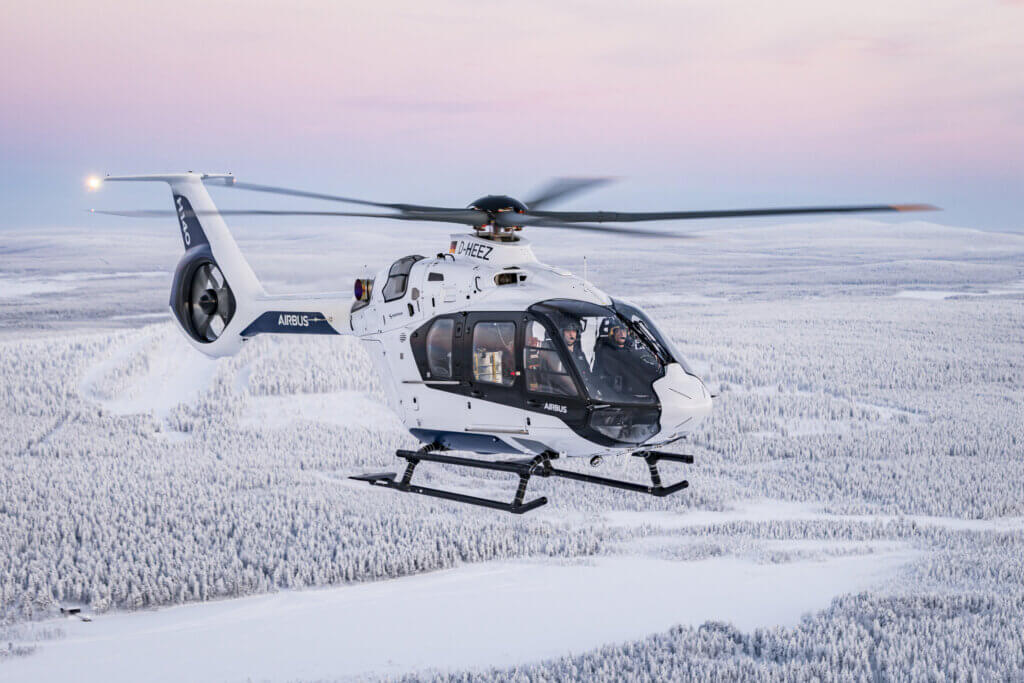 Airbus Helicopters Photo
The same aircraft is flying the “hot and high” campaign in the U.S. this summer, which began at Lake Havasu. There, it flew in temperatures of up to 48 C (118 F).
Petry said the type’s performance was “very much in line” with the manufacturer’s expectations.
“It’s not a big surprise, because last year we were doing an engineering flight test campaign in in the south of Spain where we were also above 40 degrees,” he said. “We used this data to update our performance analysis and performance predictions with the aircraft, and now what we are doing now is about certification. . . . It’s really to acquire certification data with the involvement of the authorities — with EASA [European Union Aviation Safety Agency] and FAA [Federal Aviation Administration].”
The hot and high campaign will include inlet barrier filter (IBF) and standard air intake testing, said Petry.
“The majority of customers go for an IBF configuration,” he said. “Only the ones that [operate in] very high [altitudes] or that operate in very secured areas, from hospital to hospital, they sometimes go for [an H140] without an IBF.”
Airbus isn’t releasing current order numbers for the H140, but it had totalled over 100 commitments by the start of 2026. In March, the company introduced the ACH140 — a VIP version of the type — at this year’s edition of VAI Verticon.
Petry said the company had received “super positive feedback” on the ACH version, securing orders with several undisclosed customers.
The introduction plan for the H140 will see the emergency medical services (EMS) variant debut first, as it was the primary target market for the type, with its large, open cabin.
This will be followed by a passenger transport version, and then the ACH140, offshore, and then law enforcement.
Petry said the company and completion centers are already developing options for the EMS version, in parallel with the type’s development.
“The benefit of the 140 in air medical operation is the large cabin gives you more mission flexibility, and you can accept more missions with the machine then you could accept with 135,” said Petry. “If I speak to air medical operators in the U.S., they say they can accept roughly 10% more missions with 140 than they can with the 135. That, in the end, means more missions and higher use rate of the machine.”
The third H140 prototype (PT3) is currently undergoing maintenance at Airbus Helicopters’ facility in Donauworth, Germany — where the aircraft is being developed and will be manufactured. It is being used for standard certification activities, said Petry, such as autopilot tuning and developing options for EMS operations.
A fourth prototype is being assembled following serial production processes, and is set to join the flight test program in the winter. It will be used for major certification testing under certain mission conditions.
Petry said the program team is “fully on track” to meet the target of entry-into-service in 2028, and has involved the FAA from the beginning of the certification process to help ensure rapid approval from the regulator following EASA certification.
“We are dependent on a very small gap between EASA and FAA certification, because more or less half of our customers for the 140 are in the U.S.,” he said.
| # | Наименование новости | Тональность | Информативность | Дата публикации |
|---|---|---|---|---|
| 1 | THC orders eight more Airbus H145s | 0 | 10.38 | 20-07-2026 |
| 2 | Upgraded CH-149 Cormorant performs first flight | 0 | 6.01 | 03-07-2026 |
| 3 | Voyageur Aviation to introduce Airbus U030 Flexrotor to Canada | 0 | 6.44 | 21-07-2026 |
| 4 | FAA begins tests in Bell 525 systems integration lab | 0 | 9.87 | 22-07-2026 |
| 5 | What makes a strong leader in helicopter maintenance and beyond? Experts offer leadership advice | 0 | 5.21 | 29-07-2026 |
| 6 | В Китае начались лётные испытания высокогорной версии самолёта C919-600 Plateau | 0 | 6.71 | 29-07-2026 |
| 7 | SureStreamer Heli takes airborne video downlinking to cellular networks | 0 | 5.83 | 24-07-2026 |
| 8 | AirTEP platform enables rapid helicopter group rescue capability | 0 | 9.03 | 22-07-2026 |
| 9 | Vertical Valor Plus’s Summer issue is live! | 0 | 9.23 | 13-07-2026 |
| 10 | COMAC приступила к наземным испытаниям укороченного C919 для Тибета | 0 | 5.68 | 22-06-2026 |