Просмотр новости
Найдите то, что Вас интересует
 Спутники
 РН
РН SpaceX
 Роскосмос
 NASA
NASA
СпутникиРНSpaceXРоскосмосNASAASU researchers found that genetics alone cannot explain the origins of eusociality. Inside an ant colony, queens reproduce while workers care for young and maintain a society built around shared labor. For more than six decades, evolutionary biologists have debated whether this extraordinary arrangement, known as eusociality, arose partly because ants, bees, and wasps share [...]
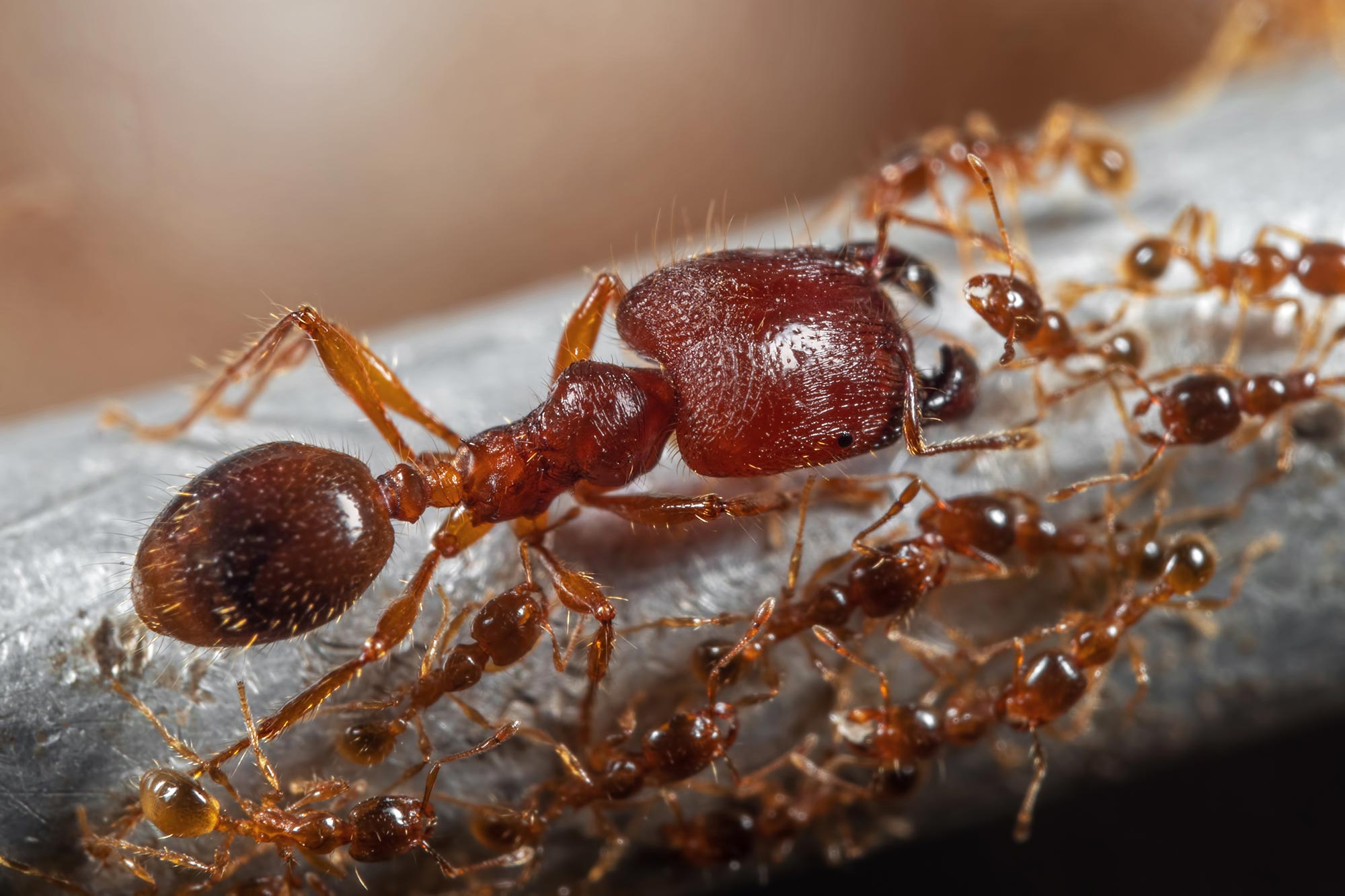 A sweeping analysis of nearly 69,000 insect species challenges a long-standing genetic explanation for the evolution of eusociality. Credit: Shutterstock
ASU researchers found that genetics alone cannot explain the origins of eusociality.
Inside an ant colony, queens reproduce while workers care for young and maintain a society built around shared labor. For more than six decades, evolutionary biologists have debated whether this extraordinary arrangement, known as eusociality, arose partly because ants, bees, and wasps share an unusual system of genetic inheritance.
Research from Arizona State University now challenges the idea that this genetic system can explain the pattern on its own.
The study, published in Current Biology, examined haplodiploidy, in which females carry two sets of chromosomes while males carry only one. Eusociality initially appeared to evolve more often among insects with this system, but nearly the entire association came from one evolutionary branch: the aculeate Hymenoptera, which includes ants, bees, and stinging wasps.
Across insects as a whole, haplodiploidy did not independently predict whether eusociality evolved. The results instead suggest that complex insect societies repeatedly emerged because of traits associated with particular lineages, rather than chromosome inheritance alone.
“People have been discussing this hypothesis for about 60 years,” said Sachin Suresh, a PhD student in the School of Life Sciences at Arizona State University and lead author of the study. “There were many theoretical predictions, but formal comparative tests across insects have been surprisingly rare.”
Why haplodiploidy seemed convincingEusociality is among the most advanced forms of social organization in nature. Colonies contain overlapping generations, members cooperate in raising young, and reproduction is limited to one or a few individuals while the others serve as workers.
Every ant species is eusocial, along with honey bees and certain wasps. The behavior has evolved far less often in other insect groups, including termites, thrips, aphids, and a small number of beetles.
Haplodiploidy has long offered a possible explanation for this pattern. Females develop from fertilized eggs and receive two chromosome sets, while males emerge from unfertilized eggs with only one set.
Under some circumstances, this arrangement can make sisters more closely related to each other than they would be to their own offspring. Evolutionary theory therefore proposed that females might gain more by helping raise their siblings than by reproducing independently.
The idea became influential across evolutionary biology and remains common in textbooks. Yet researchers had rarely evaluated it using empirical data spanning large numbers of insect species.
A broad test changes the pictureTo conduct that wider test, Suresh and senior author Timothy Linksvayer assembled information on social behavior and genetic systems for tens of thousands of insect species. They mapped those characteristics onto two of the largest available species-level insect family trees.
The researchers then applied phylogenetic comparative methods, which account for evolutionary relationships, to estimate how frequently eusociality arose under different forms of genetic inheritance.
The first results appeared to support the established hypothesis. Haplodiploid insects seemed to make the transition to eusociality more frequently than insects with other genetic systems.
A more detailed analysis, however, showed that almost all of this pattern originated within one branch of the insect family tree.
“When we formally tested it, we found there is no real association between the genetic determination system and eusociality,” Suresh said. “It has more to do with environmental factors and the life-history traits of insects.”
After accounting for the unusual evolutionary history of aculeate Hymenoptera, the researchers found that haplodiploid insects outside this group developed eusociality at rates similar to diploid insects.
By examining nearly 69,000 species across the full diversity of insects, the ASU researchers also helped clarify why recent studies have questioned the importance of haplodiploidy. What appears to be a broad connection between genetics and eusociality instead reflects the evolutionary history of one especially successful lineage.
Other traits may explain eusocialityThe findings shift attention toward other characteristics that may have helped cooperative societies evolve repeatedly among ants, bees, and wasps.
Stingers, specialized nesting behaviors, environmental conditions, and other features of these insects may have created circumstances that favored colonies organized around shared care and divided reproduction.
The study offers one of the most extensive empirical evaluations of a foundational evolutionary hypothesis. It also demonstrates how large comparative datasets can reveal when a long-standing biological pattern reflects one exceptional lineage rather than a universal rule.
Reference: “Haplodiploidy alone does not predict the evolution of eusociality” by Sachin Suresh and Timothy A. Linksvayer, 3 August 2026, Current Biology.
DOI: 10.1016/j.cub.2026.06.041
Never miss a breakthrough: Join the SciTechDaily newsletter.
Follow us on Google and Google News.
| # | Наименование новости | Тональность | Информативность | Дата публикации |
|---|---|---|---|---|
| 1 | A 60-year-old theory about ants, bees and wasps may be wrong | 0 | 7.83 | 15-08-2026 |
| 2 | Wax: The Secret Ingredient In Making A Honeybee Queen | 0 | 13.13 | 13-08-2026 |
| 3 | Ant brains reveal how evolution turned hunger into parenting | 0 | 6.49 | 01-08-2026 |
| 4 | Ученые опровергли 60-летнюю теорию о том, почему пчелы и муравьи стали «коллективными» видами | 0 | 2.13 | 17-08-2026 |
| 5 | Forget the sperm race: Fertilization may depend on teamwork | 0 | 8.51 | 06-08-2026 |
| 6 | Why Are Wasps Disappearing This Summer? | 0 | 19.84 | 08-08-2026 |
| 7 | Queen bee pheromones help daughters decide whether to stay or leave the nest | 0 | 5.68 | 28-07-2026 |
| 8 | Benefits in Flexibility: Responses to Changing Social and Environmental Conditions in Bumble Bees | 0 | 6.96 | 04-08-2026 |
| 9 | Coffee’s Most Destructive Pest Is Accidentally Helping the Ants That Hunt It | 0 | 18.71 | 03-08-2026 |
| 10 | Spider-like creatures help uncover the surprising origins of fatherhood | 0 | 10.14 | 12-07-2026 |