Просмотр новости
Найдите то, что Вас интересует
 Спутники
 РН
РН SpaceX
 Роскосмос
 NASA
NASA
СпутникиРНSpaceXРоскосмосNASABosnia must remember that Ukrainian peacekeepers prevented another Srebrenica
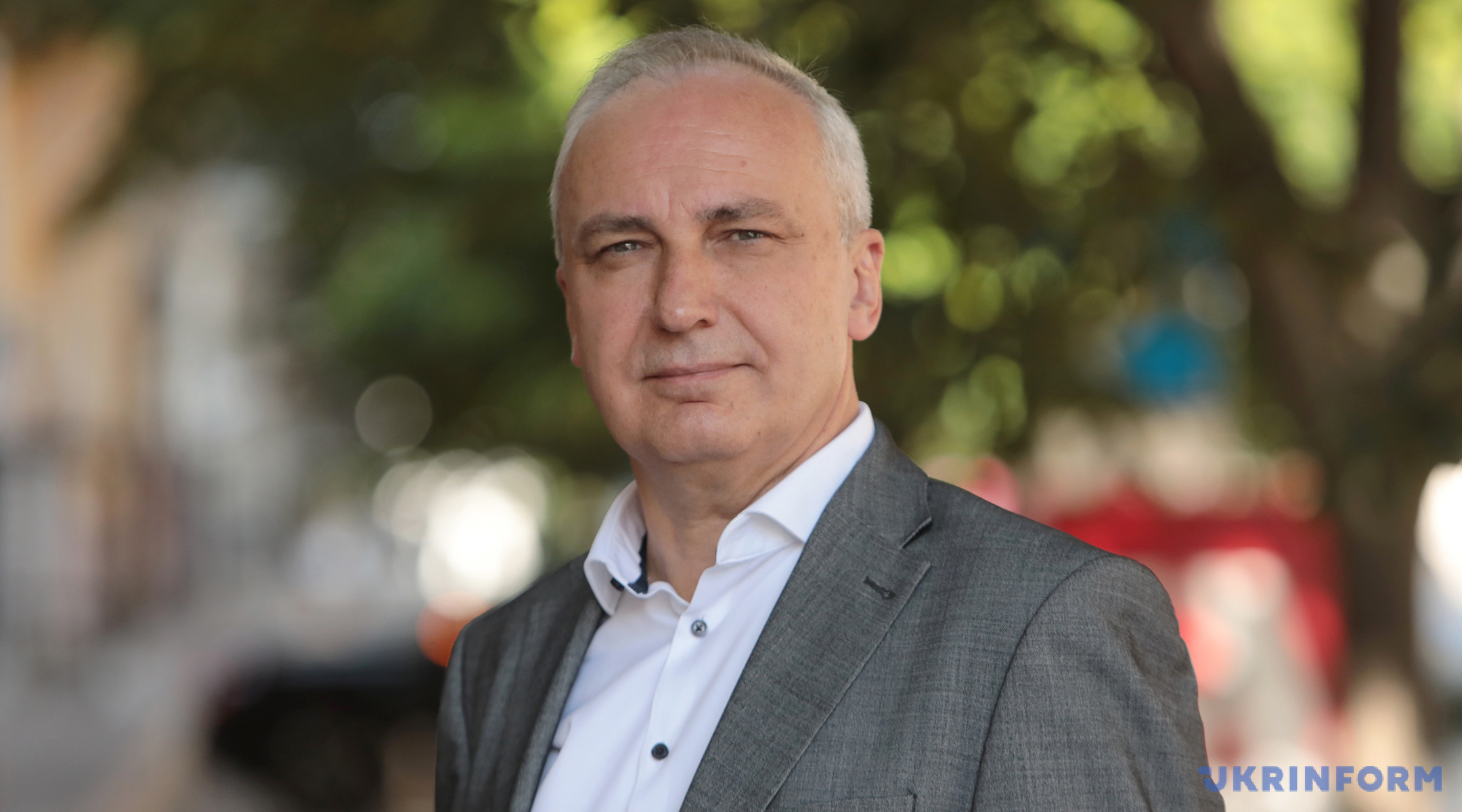
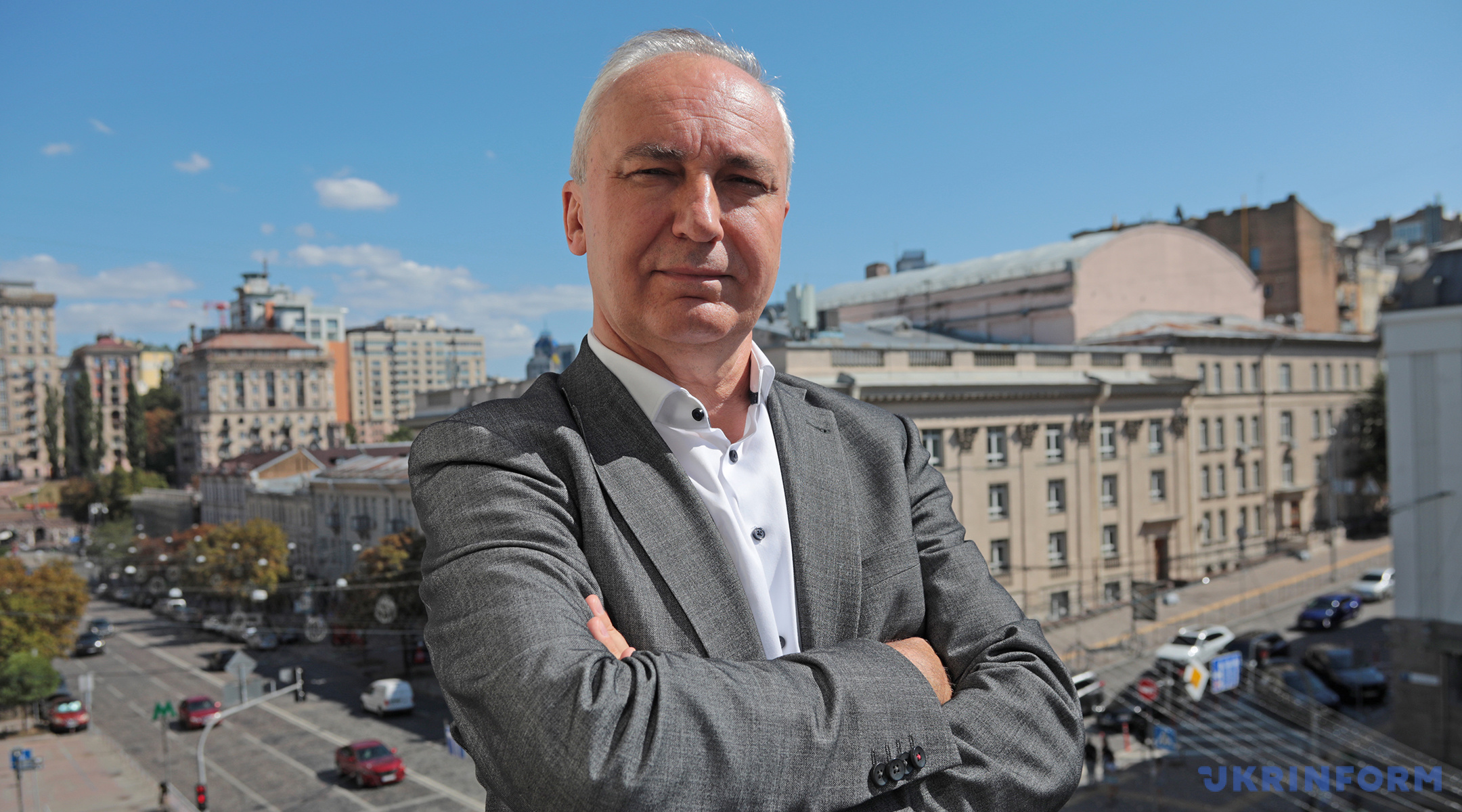
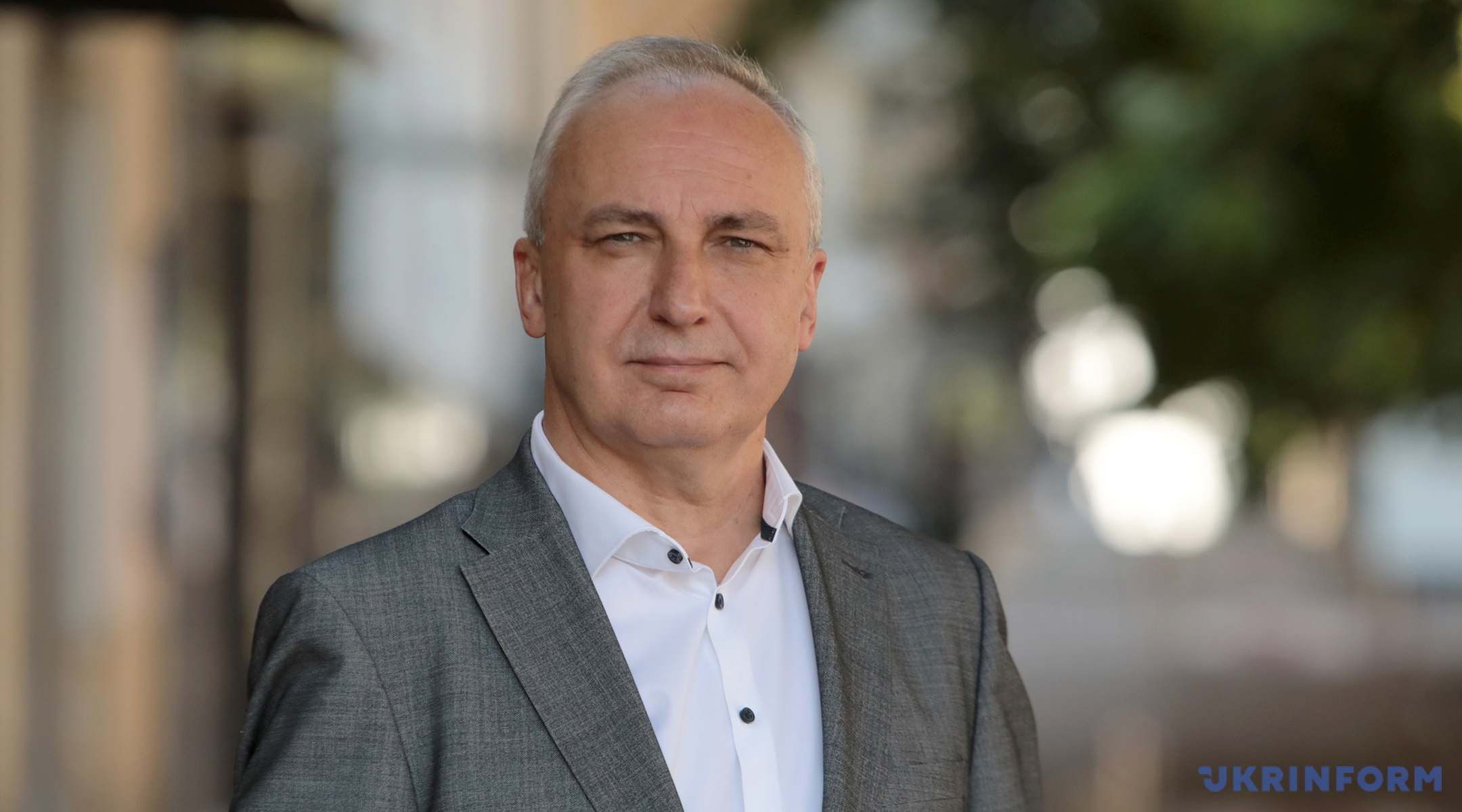
Volodymyr Bachynskyi was appointed Ambassador Extraordinary and Plenipotentiary of Ukraine to Bosnia and Herzegovina on July 21 last year. He became the first head of Ukraine’s embassy with a permanent residence in Sarajevo; previously, Ukraine was represented in Bosnia and Herzegovina by non-resident ambassadors.
According to the diplomat, the appointment of a Ukrainian ambassador to Bosnia and Herzegovina was well received in the country. He also noted that the opening of a fully fledged Ukrainian embassy in Sarajevo is particularly important amid the full-scale war, when the position of every country matters. Bosnia and Herzegovina is a member of the UN and other international organizations and has consistently supported Ukraine.
In a conversation with Ukrinform, Volodymyr Bachynskyi spoke about the challenges of working within Bosnia and Herzegovina’s complex political system, Russian influence in the Balkans, Bosnia’s experience of post-war reconciliation, why Srebrenica remains a painful issue for Bosnian society, the role played by Ukrainian peacekeepers in Žepa, and why Ukraine should make greater use of Bosnia and Herzegovina’s tourism and cultural potential.
TRACES OF BULLET HOLES CAN STILL BE SEEN ON THE FACADES OF BUILDINGS IN CENTRAL SARAJEVO
Ukrinform (UI): Mr. Ambassador, Bosnia and Herzegovina does not have a unified position on the Russian-Ukrainian war: the Federation of Bosnia and Herzegovina is generally supportive of Ukraine, while the leadership of Republika Srpska openly sympathizes with the Kremlin. How does the Ukrainian Embassy engage with the different entities and institutions across the country under these circumstances?
Volodymyr Bachynskyi (VB): It is home to three main peoples: Bosniaks, Croats, and Serbs. Each has its own view of the current situation in Ukraine and of Russian aggression in particular.
One of the system’s peculiarities is that important foreign policy and defense decisions require the consent of all three members of the Presidency of Bosnia and Herzegovina, each representing one of the three constituent peoples.
Since I took office last autumn, we have managed to secure Bosnia and Herzegovina’s support for all resolutions concerning Ukraine put to a vote at the UN and other international organizations. In many cases, the country has also co-sponsored them.
In addition, Bosnia and Herzegovina has joined important political statements and declarations, including the declaration marking the 40th anniversary of the Chornobyl nuclear disaster.
The country also supported Ukraine’s candidacy for the UNESCO Executive Board and the Executive Council of the Organization for the Prohibition of Chemical Weapons.
Recently, Bosnia and Herzegovina became the 50th member of the International Coalition for the Return of Ukrainian Children. This is a very positive signal.
So, despite the differing views and positions of certain segments of Bosnian society, we are currently managing to ensure the country’s support for Ukraine.
UI: Do you communicate Ukraine’s position in the same way to all three peoples of the country, or do you tailor your messages to each community?
VB: Of course, diplomacy is multifaceted, and you have to find an individual approach to everyone. But the message is the same, and it is simple: Ukraine has been subjected to aggression by Russia, and this constitutes a violation of international law and the UN Charter.
Bosnia itself experienced a war more than 30 years ago, and many people, especially those of the older generation, remember it well.
During conversations, people tell me, “We know that war is the most terrible thing that can happen, so we understand you very well and support you.”
I would like to mention a little-known fact in Ukraine. During the Bosnian War, the capital of Bosnia and Herzegovina, Sarajevo, was under siege by Serbian forces for 1,425 days, or nearly four years.
To help the city’s residents survive and ensure the delivery of ammunition, food, and medicine, a tunnel was built beneath the runway of Sarajevo Airport. Throughout the siege, it was used to bring essential supplies into the completely encircled city, saving the lives of thousands of its residents. Today, a museum stands at the site.
This chapter of Bosnia’s history illustrates the full brutality of aggression and war. Civilians sought every possible way to survive. Nevertheless, some 11,500 civilians, including around 1,600 children, were killed by gunfire and artillery shelling during the siege.
Traces of bullet holes can still be seen on the facades of buildings in central Sarajevo. The city’s main thoroughfare, which runs along the river, became known as “Sniper Alley” because Serbian snipers were positioned on the hillsides on both sides of the road. The street was under constant sniper fire, and residents who had to cross it often became victims.
Despite this, Sarajevo survived. Following intervention by the international community, the siege was lifted, and more than 30 years ago Bosnia and Herzegovina began its path toward peaceful recovery.
BOSNIA IS ALREADY A FRONT LINE FOR RUSSIAN PROPAGANDA
UI: International and Ukrainian experts warn that Bosnia and Herzegovina could become one of the new fronts in Russia’s hybrid war in the Balkans. To what extent do you share these concerns?
VB: Bosnia is already experiencing the active influence of Russian propaganda.
Let us start with the fact that Russian citizens do not need visas to enter Bosnia and Herzegovina. As a result, there are many Russians in the country—we will consider them tourists, although perhaps not all of them are.
In addition, Bosnia and Herzegovina is 100 percent dependent on Russian energy supplies, which is also a means of influence.
I was also surprised to find that Gazprom gas stations operate in the country. They are located not only in Republika Srpska, where the Serbian population predominates, but also in the Federation of Bosnia and Herzegovina, where Bosniaks and Croats live.
Russia has one of the largest embassies in Sarajevo. It has also opened an office in Banja Luka, the capital of Republika Srpska, and is actively spreading Russian narratives there.
At the same time, it should be noted that Russian diplomats have limited access to the country’s leadership. At least during my time in Bosnia and Herzegovina, the members of the Presidency representing the Bosniak and Croat peoples have had no contact with them.
By contrast, the leadership of Republika Srpska—including its notorious former leader Milorad Dodik and other government officials—readily receives Russian diplomats, including those arriving from Moscow.
UI: Among the possible scenarios for military escalation, experts most often mention an attempt by Serbian forces to establish a corridor through Brčko District in order to connect the eastern and western parts of Republika Srpska. Do you consider Brčko a potential flashpoint for escalation?
VB: I do not think there is such a threat at present. Let me explain why.
By Ukrainian standards, Brčko District is essentially equivalent to a district-level administrative center. It was established in 1999, after the signing of the Dayton Peace Agreement, to underscore the multiethnic character of the region.
When the Dayton Accords were being negotiated in 1995 and the territories of the new political entities were being defined, it became clear that the population of the city and surrounding areas was roughly evenly divided among the different ethnic communities. As a result, it was impossible to decide whether Brčko should be assigned to Republika Srpska or to the Federation of Bosnia and Herzegovina.
Today, Brčko District has a life of its own and, thankfully, the situation there is relatively calm.
At the same time, the district is closely monitored by the Office of the High Representative of the international community, which operates under the Dayton Peace Agreement. The Acting High Representative regularly visits the district, meets with local authorities, and keeps the situation under control.
UKRAINE HAS ITS OWN PATH TO THE EU, WHILE THE WESTERN BALKAN COUNTRIES HAVE THEIRS
UI: Bosnia and Herzegovina’s Foreign Minister Elmedin Konaković has described Ukraine’s accelerated progress toward EU membership as “unfair” to the Western Balkan countries that have been waiting for accession for decades. In your view, could this discontent turn into political opposition to Ukraine’s European integration or create a negative climate around Ukraine’s accession to the EU?
VB: No, I do not see a threat here, because this criticism was directed not at Ukraine, but rather at Brussels, which is conducting the relevant assessment.
And the fact that even Bosnia and Herzegovina’s Foreign Minister acknowledged that Ukraine is moving ahead shows that we are doing everything right.
Clearly, the issue of EU membership for the Western Balkan countries has been on the agenda for a long time. However, Ukraine and Moldova started later and have managed to overtake some of the other candidate countries.
As a result, the countries of the region, and Bosnia and Herzegovina in particular, viewed this somewhat warily: “We have been waiting for a long time, and we are doing our part as well.”
But it must be said frankly that Bosnia faces certain challenges in its European integration process. Decision-making is difficult and not fast enough, which is why Sarajevo has come under criticism from Brussels.
EU representatives constantly emphasize that Bosnia is not moving quickly enough along the path to European integration and that financial assistance depends on this. Of the €976.6 million in EU funds allocated to the country for this year, Bosnia has already lost €108 million for failing to meet its commitments. More than €300 million is also at risk.
That money could have been used to fund numerous projects, primarily in the economic sphere.
One of the reasons for this situation is that the three constituent peoples have been unable to reach agreement and pass the laws needed to accelerate the country’s progress toward EU membership.
So I do not think this should harm Ukraine in any way. We have our own path, our own direction, and our own objectives, while the Western Balkan countries have theirs.
UI: You have already mentioned Bosnia and Herzegovina’s complete dependence on Russian gas. How serious and consistent is the country’s intention to end this dependence by implementing the South Gas Interconnector project, which is intended to connect the gas transmission systems of Croatia and Bosnia and Herzegovina?
VB: This project is being implemented with the assistance and support of the United States. It is important because it will diversify energy supplies, while phasing out Russian natural gas is one of the key tasks on the path to EU membership.
Therefore, implementing the South Gas Interconnector project is extremely important.
The relevant agreement with Croatia has already been signed. The project is currently at the preparation and funding stage. I think it could be launched in the near future.
UI: Is Russia opposing this project?
VB: Russia may express its dissatisfaction, but it will not be able to directly influence the construction of this gas pipeline.
WE SENT THE BOSNIAN SIDE THE TEXT OF THE FREE TRADE AGREEMENT BACK IN JANUARY, BUT THERE HAS BEEN NO RESPONSE SO FAR
UI: In May, Ukraine and Bosnia and Herzegovina agreed to liberalize freight road transport, and a “visa-free freight transport regime” is due to take effect on January 1, 2027. What impact do you expect this decision to have on bilateral trade?
VB: This agreement will undoubtedly benefit Ukraine, since significantly more Ukrainian carriers transport goods to Bosnia and Herzegovina than Bosnian carriers transport goods to Ukraine.
Without a doubt, this will help increase trade turnover, which, unfortunately, is currently quite modest—only a few dozen million US dollars in 2025.
Bosnia currently imposes a 10 percent duty on imports of goods from Ukraine, which automatically increases the cost of Ukrainian products on the domestic market.
Bosnia is a small country with a population of just over 2 million, so its domestic market is limited. But we are looking for opportunities to increase Ukrainian exports.
For example, last year, Ukrainian sugar exports to Bosnia and Herzegovina increased by 7 percent, which is quite significant growth. Ukraine also supplies Bosnia with pharmaceutical products, timber, processed wood products, and other important goods.
We are now actively working to conclude a free trade agreement between the two countries.
The issue has been discussed at all levels, from the country’s leadership to the Chamber of Commerce and Industry.
The initiative came from Ukraine. The text of the agreement was sent to the Bosnian side back in January 2026. We are currently awaiting a response. Unfortunately, there has been none so far.
The process of agreeing on the text of the document will take some time. But I continue to convey to the Bosnian side that such an agreement should be concluded, especially since Ukraine has already concluded, or is working to conclude, free trade agreements with most countries in the region.
THERE WERE HOPES THAT THE INTERNAL BORDERS OF BOSNIA AND HERZEGOVINA WOULD DISAPPEAR WITHIN 10–15 YEARS, BUT THAT DID NOT HAPPEN
UI: Ukraine is already thinking about how, after the war ends, to return people to the liberated territories, work with veterans, rebuild communities, and address the consequences of war crimes. Bosnia and Herzegovina has its own very difficult experience with post-war reconciliation. What lessons from this experience could Ukraine apply, and what mistakes, conversely, should it avoid?
VB: Of course, Bosnia has such experience, but I would not say it has been entirely positive. The Bosnians themselves acknowledge this.
The hostilities had gone on for so long and become so brutal that the international community essentially forced representatives of the three sides to sit down at the negotiating table and sign the Dayton Peace Agreement.
It was a compromise. Each side expected to gain much more, but ultimately they had to make concessions—on territory, powers, and other matters. Nevertheless, this post-war framework has existed for 30 years.
I think that when the Dayton Peace Agreement was concluded, everyone hoped that, over time, perhaps within 10–15 years, the internal borders would disappear. But, as the current situation shows, that did not happen.
The three peoples essentially live in one country, but to a large extent remain within their own communities, with their own rules and their own interpretation of history.
Of course, one can speak of greater rapprochement among ordinary people. But tensions are usually fueled by politicians, especially ahead of elections, when they once again raise issues they consider unresolved.
Bosnia and Herzegovina is currently going through a rather tense period, as general elections are scheduled for October 4. Three members of the Presidency, one representing each of the three peoples, as well as parliament and other government bodies will be elected. Unfortunately, since the beginning of this year, politicians have continued to provoke tensions and play the ethnic card.
For example, some politicians have recently been asking why the Croat people do not have their own entity—a separate political or administrative unit with its own governing bodies and a certain degree of autonomy—while the Serbs do.
These are rather troubling trends, which have never led to anything good.
And you understand that, despite 30 years of stability, the Balkans—and Bosnia and Herzegovina in particular—have always been something of a “powder keg” of Europe.

IF IT WERE NOT FOR THE UKRAINIAN PEACEKEEPERS, THE TRAGEDY COULD HAVE REPEATED ITSELF IN ŽEPA, NEAR SREBRENICA
UI: Srebrenica became one of the most horrific crimes in Europe since World War II. At the same time, there are still political forces in Republika Srpska that deny or downplay the genocide of Bosnian Muslims. How is this viewed in Bosnia and Herzegovina?
VB: The genocide in Srebrenica was undoubtedly a crime of global significance.
I was in Srebrenica on July 11, when the 31st anniversary of the tragedy was commemorated. The event was attended by the country’s leadership, the diplomatic corps, and many ordinary citizens.
The site is deeply moving because 8,372 boys, teenagers, and adult men were killed simply because they were Bosniak Muslims.
This tragedy continues to weigh heavily on the hearts of the entire nation. Bosnia and Herzegovina is actively seeking to ensure that the date of the Srebrenica tragedy is commemorated around the world.
UI: Why, then, do some people in Bosnia and Herzegovina attempt to deny or downplay this tragedy?
VB: As a rule, this is done by the Serbian side.
But this was the mass killing of unarmed people. Srebrenica was encircled, and the male population of the city and surrounding areas was effectively wiped out.
There is another episode in this story. The town of Žepa, not far from Srebrenica, could have suffered a similar fate. Had it not been for the Ukrainian peacekeepers from the 240th Separate Special Battalion stationed there at the time, the number of civilian casualties could have been significantly higher.
Why did the tragedy in Srebrenica happen? Because the Dutch peacekeepers stationed there failed to fully carry out the mission entrusted to them, unlike the Ukrainian servicemen, who, in a similar situation, did everything they could to protect the civilian population.
UI: And do people in Žepa remember the role Ukrainians played in saving civilians?
VB: Unfortunately, I have not personally been there yet, but I very much want to go and meet with local authorities and residents. I think they should remember this.
When I presented my credentials to the then Chairman of the Presidency of Bosnia and Herzegovina, Željko Komšić, who had fought in the Bosnian Army, I gave him a patch from the 240th Battalion.
As it happened, one of the Ukrainian officers who had served in the battalion sent several patches to our embassy just a week before the presentation of my credentials and asked us to donate them to the Museum of the History of the War in Bosnia and Herzegovina. I took one of them with me and gave it to Željko Komšić, saying, “Please remember that Ukraine once helped you.”
As a former serviceman, he was, of course, familiar with these events and praised the courage and bravery of our soldiers. The other patches from the 240th Battalion are now kept at a museum in Sarajevo.
We are planning a trip to Žepa to once again emphasize that Ukrainian peacekeepers played an exceptionally important role during the Bosnian War and saved several thousand civilians.
фото
I WANT TO SEE MORE UKRAINIANS AMONG THE TOURISTS IN BOSNIA
UI: Recently, well-known American blogger Laura Loomer, who had previously been openly pro-Russian, visited Ukraine and changed her attitude toward our country after the trip. Renowned film director Emir Kusturica, who was born in Sarajevo, also has an openly pro-Russian stance. Perhaps he, too, should be invited to Ukraine so that he could see with his own eyes what Ukraine is fighting for and how people live here, and then tell Bosnians and the world about it?
VB: It seems to me that although Kusturica was born in Sarajevo, he identifies with the Serbian people. Unfortunately, he has supported Russia’s aggression against Ukraine and is unlikely to change his position anytime soon.
Undoubtedly, culture and cultural figures are an important instrument of diplomacy that should be used.
We are currently looking for ways to harness this cultural potential through joint projects and other initiatives aimed at supporting Ukraine.
UI: What have you discovered for yourself during your time working in the country?
VB: Sadly, I have found that Ukrainians know very little about Bosnia and Herzegovina. First, there are not many Ukrainians there, and second, Ukrainian media also devote little coverage to the country. They mostly mention the war, the fact that the country is now being rebuilt, and that is about it.
But I want to stress that Bosnia and Herzegovina is greatly underrated. It is a country with a long history, rich traditions, and a vibrant culture.
For about 400 years, Bosnia was part of the Ottoman Empire, and then for roughly 40 years it was part of the Austro-Hungarian Monarchy. Each left its mark on the country’s culture and architecture. Sarajevo, for example, seems to consist of several historical layers. The central part is an old Ottoman city that in some ways resembles Istanbul. The next layer is Austro-Hungarian architecture, reminiscent of buildings in Vienna, Lviv, or Kraków. And the third layer is the architecture of the Yugoslav period.
Bosnia also has access to the Adriatic Sea. And although its coastline is small—only about 7.5 kilometers long—the sea there is just as beautiful as in neighboring Croatia, while a holiday there can cost less.
Sarajevo, home to about 320,000 people, attracts millions of visitors every year. I would very much like to see more Ukrainians among them.
Today, Ukrainians traveling to Bosnia and Herzegovina mainly visit the town of Medjugorje, a religious pilgrimage destination for Catholics and Greek Catholics. It is a fascinating and important place, but Bosnia and Herzegovina has so much more to offer.
Several months ago, representatives of Ukraine’s State Tourism Development Agency visited Bosnia and Herzegovina to explore the tourism potential of different regions of the country. Particular attention was paid to Bosnia and Herzegovina’s experience with memorial tourism—the practice of visiting sites of remembrance associated with wartime tragedies and commemorating those who died. This is particularly important for Ukraine.
The tourism industry can become another important pillar of our bilateral ties. The more Ukrainians visit Bosnia and Herzegovina, the better we will get to know one another and the stronger our relations will become.
Nadiia Yurchenko led this conversation. Kyiv
Photos by Hennadii Minchenko / Ukrinform
| # | Наименование новости | Тональность | Информативность | Дата публикации |
|---|---|---|---|---|
| 1 | Президент Сербии поставил Украину перед фактом | 0 | 5 | 08-07-2026 |
| 2 | Natalka Cmoc, Ambassador of Canada to Ukraine | 0 | 10 | 01-07-2026 |
| 3 | Посол РФ в Белграде указал на схожие действия Запада в операциях против Сербии и России | 0 | 0 | 04-08-2023 |
| 4 | Президент Сербии высказался о сотрудничестве с Украиной | 0 | 10 | 23-07-2026 |
| 5 | Yvan Baker, Chair of the Canada-Ukraine Parliamentary Friendship Group | 0 | 16.67 | 30-06-2026 |
| 6 | Украина напомнила ООН о предложении по размещению миротворцев | 0 | 0 | 23-02-2022 |
| 7 | Ihor Kharchenko, Ambassador, Chief Adviser to the Pylyp Orlyk Foundation | 0 | 11.13 | 27-07-2026 |
| 8 | Il presidente ucraino, Volodymyr Zelenskyy, visita la Serbia | 0 | 10 | 08-08-2026 |
| 9 | Спецпредставитель ОБСЕ заявил о необходимости полного восстановления суверенитета Украины | 0 | 0 | 17-02-2022 |
| 10 | Serbia not supplying weapons to Kiev, arms may leak through gray markets — ambassador | 0 | 14.17 | 18-08-2026 |