Просмотр новости
Найдите то, что Вас интересует
 Спутники
 РН
РН SpaceX
 Роскосмос
 NASA
NASA
СпутникиРНSpaceXРоскосмосNASAIndian nuclear equipment makers are expanding capacities for anticipated increased demand. New legislation allows private companies to establish nuclear power plants in India. Major power producers have announced plans to enter the nuclear energy sector. The government targets one hundred gigawatts of nuclear capacity by 2047. This expansion offers significant opportunities for component suppliers.
Synopsis
Indian nuclear equipment makers are expanding capacities for anticipated increased demand. New legislation allows private companies to establish nuclear power plants in India. Major power producers have announced plans to enter the nuclear energy sector. The government targets one hundred gigawatts of nuclear capacity by 2047. This expansion offers significant opportunities for component suppliers.
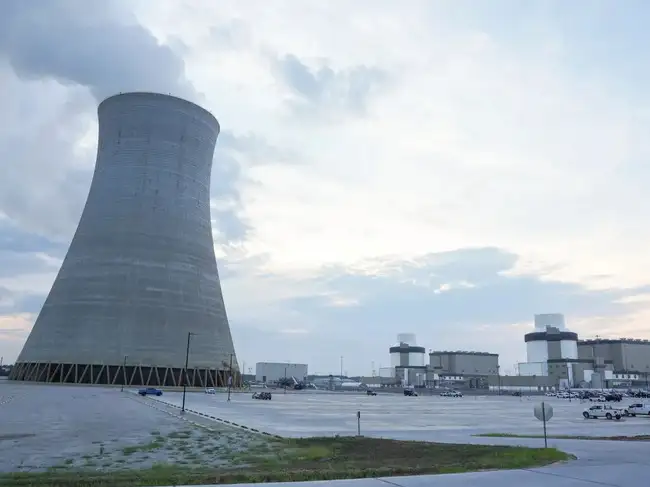 ReutersIndian nuclear equipment makers are expanding capacities for anticipated increased demand
Nuclear equipment makers in India are preparing to expand capacities on expectations of increased demand from power producers, several of which have tied up with states to set up nuclear energy projects following the 2025 legislation to overhaul the sector.
Companies such as Tema India, Walchandnagar Industries, KSB Ltd and Electronet Equipments that supply critical components, precision systems and specialised equipment to the sector have either prepared plans or are set to ramp up capacities, said industry executives.
Also Read: India sets sights on easier N-plant site selection
The Sustainable Harnessing and Advancement of Nuclear Energy for Transforming India (SHANTI) Act, promulgated in December last year, allows private companies to set up nuclear power plants in India. Since then, major power producers including NTPC, Tata Power, Adani Power and Jindal Nuclear have announced plans to enter the sector.
The government, meanwhile, has announced a target to take India’s nuclear energy capacity to 100 GW by 2047, providing equipment makers with a roadmap on the scale of requirement. The deal India signed on Thursday with Australia to source uranium to power its reactors is expected to help meet this target.
The vendor base is currently largely limited to the outlined capacity of Nuclear Power Corporation of India (NPCI), the hitherto sovereign monopoly that intends to have 22 GW of nuclear energy capacity by 2032 and around 54 GW by 2047.
Nuclear equipment makers stand to benefit from the SHANTI Act, because it caps supplier liability and removes unlimited exposure in the event of accidents caused by faulty components.
Also Read: Nuclear power output to rise 44% in 10 years; India, China key drivers
"The opportunities at scale for companies supplying pumps, heat exchangers, forgings, precision components and other nuclear-island equipment are significant," said Anish De, global head, Energy and Natural Resources, at KPMG.
Equipment makers already having a base with ongoing nuclear power projects are likely to benefit from the augmentation of nuclear energy capacity. Industry leaders also pointed to the need of having more suppliers entering the segment to keep up with the project demand.
Maharashtra-based Tema India, which makes instrument support stands and distillation column assemblies, among others, for some of the under-construction nuclear power units in India, is in the process of having more partnerships with local and overseas companies to expand capacity.
It is aiming to have an orderbook of ₹3,000 crore in five years from ₹850 crore now, the company told ET.
It also plans to make spent fuel storage racks, spent fuel disposal, uranium transport cylinders and safety-related equipment for nuclear power plants, along with providing advisory services.
Suppliers that have proven metallurgy, precision fabrication, seismic qualification, inspection discipline and lifetime reliability are likely to see a multi-decadal order pipeline as the build-out of capacity starts, KPMG's De said.
Walchandnagar Industries plans to go beyond its core equipment and expand its portfolio of offerings, including in the emerging small modular reactor (SMR) segment, and have strategic partnerships for innovation. The company plans to triple its nuclear manufacturing capacity with an investment of Rs 300-400 crore in the next few years.